By David Shepardson
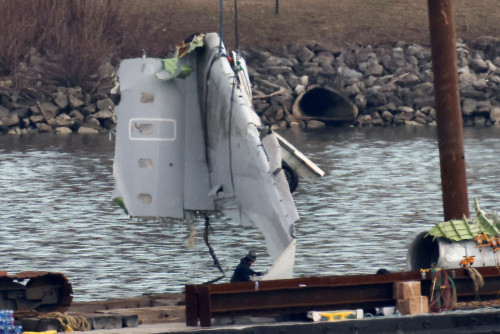
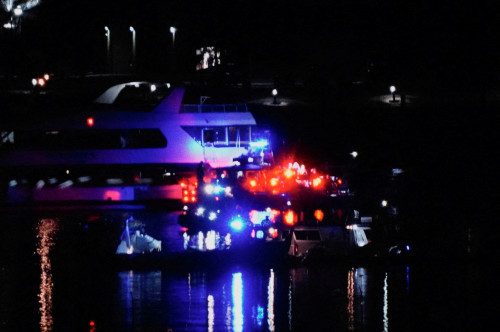
WASHINGTON, Jan 27 (Reuters) – The Federal Aviation Administration suffered a series of failures before a fatal January 2025 collision between an American Airlines regional jet and an Army Black Hawk helicopter near Ronald Reagan Washington National Airport, which killed 67 people, the National Transportation Safety Board said.
The FAA safety culture is badly in need of reform and the agency did not act on a recommendation to move helicopter traffic away from Reagan, the board said during a day-long hearing.
NTSB Chair Jennifer Homendy said the FAA should have known there was a problem, citing repeated failures. “The data was there. The data was in their own systems,” Homendy said. “This was 100% preventable … There’s definitely need for serious reform.”
The hearing quickly turned into a lengthy rebuke of the FAA by the safety board, shedding light on the serious communication, culture and safety issues surrounding the 26th busiest U.S. airport which has the single busiest U.S. runway and is regularly used by members of Congress. It also raised questions about the Army’s actions in the busy airspace.
The FAA did not immediately comment but on Monday the Trump administration said it was restructuring the agency’s organizational structure to improve safety oversight.
The FAA displayed dramatic animation of the collision and some anguished families wearing photographs of their loved ones left the hearing room before it was shown.
Homendy also said there could be other hot spots, saying commercial airlines have reached out to her to say “the next midair is going to be at Burbank, and nobody at FAA is paying attention.” She added, “people are raising red flags.”
Reuters reported in October the FAA has been scrutinizing airplane traffic flows around Hollywood Burbank Airport and Van Nuys Airport in the Los Angeles area, which are fewer than 10 miles apart and serve a mix of aircraft with closely spaced arrival and departure paths.
The NTSB is making numerous recommendations to the FAA, citing a series of failures before the crash. The NTSB disclosed in March that since 2021 there were 15,200 air separation incidents near Reagan between commercial airplanes and helicopters, including 85 close-call events.
The NTSB also has found issues with how the FAA handles traffic at Reagan and questioned why the agency had downgraded the Reagan tower in 2018, saying the FAA had declined to offer criteria or metrics for why it was downgraded. The FAA also rejected advice to add hot spots to a helicopter route chart.
The NTSB said airplane pilots were unaware of the possible conflict between helicopter routes because aeronautical charts do not provide adequate information and the FAA could not provide documentation of required annual reviews for the Baltimore, Washington helicopter route chart.
In December, the Justice Department said the federal government was liable in the crash. The government admitted it “owed a duty of care to plaintiffs, which it breached, thereby proximately causing the tragic accident” and that the pilots of the Army helicopter and regional jet “failed to maintain vigilance so as to see and avoid each other.”
The NTSB said the controller should have issued a safety alert, which “may have allowed action to be taken to avert the collision.”
Homendy noted that the FAA did not review the helicopter routes and had routes that were not designed to ensure separation.
“We have an entire tower who took it upon themselves to try to raise concerns over and over and over and over again, only to get squashed by management and everybody above them,” Homendy said. “Were they set up for failure?”
She also said a key safety system known as ADS-B In and Out could have given the passenger plane pilot an alert 59 seconds before the collision and the helicopter crew 48 seconds before. Lawmakers are trying to mandate the technology.
U.S. LIABILITY FOR DAMAGES
The maximum altitude for the route the helicopter was taking was 200 feet (61 meters), but the collision occurred at an altitude of nearly 300 feet.
The Justice Department said an air traffic controller also did not comply with an FAA order and, as a result of both agencies’ conduct, the United States was liable for damages.
The crash over the Potomac River was the deadliest U.S. air disaster in more than 20 years.
The NTSB disclosed last year that in 2022 members of an FAA air traffic working group had urged moving helicopter traffic away from Reagan airport and to establish airborne “hot spots” but it was rejected because the issue was considered “too political,” an FAA official said, citing internal agency politics.
The NTSB also found Reagan routinely received less than required spacing of airplanes from the Potomac FAA facility.
The FAA restricted helicopter flights in March after the NTSB said their presence posed an “intolerable risk” to civilian aircraft near Reagan National.
In May, the FAA barred the Army from helicopter flights around the Pentagon after a close call that forced two civilian planes to abort landings.
(Reporting by David Shepardson in Washington; Editing by Franklin Paul, Bill Berkrot and Matthew Lewis)