June 10, 2026
The Aluminum Trade Hidden in Plain Sight
Hormuz, $AA, and What Traders Need to Know Before July 15
The part that matters most is the part most people skipped.
LME aluminum warehouse inventories were already down 28.4% year-on-year before the Strait of Hormuz closed on February 28. The market had no cushion. When the disruption hit, there was nothing to absorb it. That is why prices moved the way they did.
By late May, LME cash aluminum hit $3,720 per tonne. Four-year high. The market moved into backwardation, with cash metal at a $59 premium over three-month contracts. Backwardation in aluminum is not normal. It means buyers need metal today and cannot wait. That only happens when physical supply is genuinely short.
Jim Rickards Predicts: Trump’s Next Big Buy
This tiny $2 stock holds the exclusive rights to the largest gold reserve in the country.
And it has the potential to be the biggest fortune maker in Trump’s second term.
According to Jim Rickards…
Trump is about to take a direct stake in this $2 stock.
And if you’d like to learn how to stake your claim in this asset before President Trump and his administration make a move…
You need to act before June 30.
Click here to see Jim’s big prediction: “Trump’s Next Big Buy.”
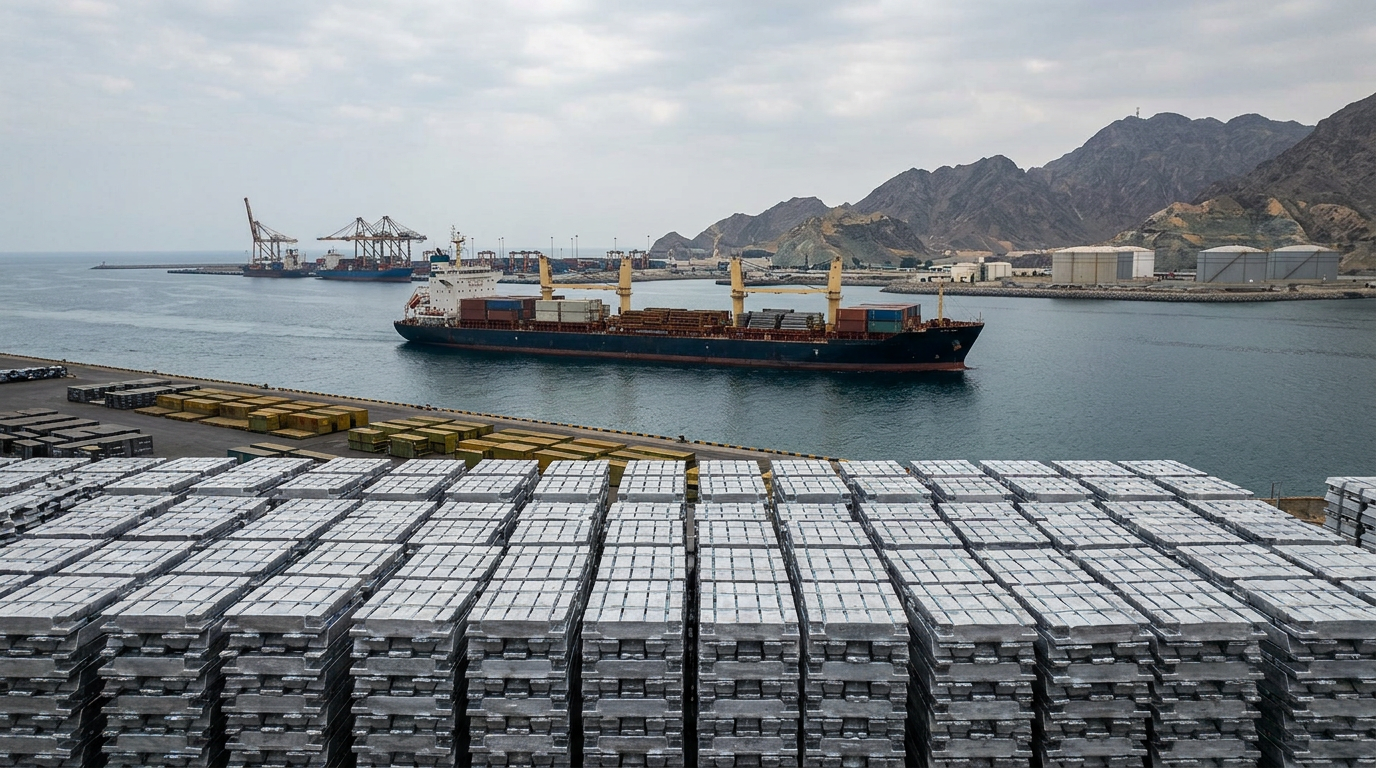
The Strait carries roughly 25% of global seaborne oil trade. More than 5 million tonnes of aluminum passed through it last year. Brent crude jumped from $71 to $94 per barrel in 10 days. Hapag-Lloyd suspended all transit. About 90% of Strait traffic was rerouted immediately.
What matters is the recovery timeline, not the conflict itself. Pot line restarts at Gulf smelters take three to six months under ideal conditions. Full operational restoration could take up to 12 months. A ceasefire does not reopen the supply chain overnight. That lag is where this trade lives.
European regional premiums have risen approximately 70%. U.S. Midwest aluminum contracts exceeded $2,550 per tonne. Those surcharges go directly to producers outside the Gulf with stable supply chains.
Alcoa ($AA) sits at the upstream end of this chain. Bauxite mining, alumina refining, aluminum smelting. When raw aluminum prices move, Alcoa moves with them.
FY2025 net income was $1.17 billion. That is up from $60 million in FY2024. Revenue hit $12.83 billion. The company generated $1.6 billion in cash. That turnaround happened before the current crisis accelerated prices.
Q1 2026 extended it. Net income of $425 million. Diluted EPS of $1.60. Adjusted EBITDA of $595 million, up $68 million sequentially. Average realized aluminum prices rose 31% year-over-year to $4,209 per tonne.
The risk worth knowing: alumina prices dropped 43.7% year-over-year to $324 per tonne. The Alumina segment posted negative adjusted EBITDA. Free cash flow was negative $298 million in Q1. These are real headwinds on the other side of the ledger.
The structural edge: Alcoa’s spot electricity exposure is less than 1% of total consumption. Long-term power contracts insulate margins while Gulf competitors face rising energy costs tied directly to oil. The San Ciprian smelter in Spain restarted in April 2026. Management guided for higher shipments and lower production costs in Q2.
Demand floor that does not depend on Hormuz: Boeing and Airbus combined backlog was 15,461 aircraft at end of 2025. More than 11 years to clear at current build rates. The DoD’s FY2025 industrial strategy explicitly prioritized reshoring critical materials. That demand does not disappear when the conflict ends.
Analyst consensus: 14 Buy ratings. Average 12-month price target near $76. UBS at $80. B. Riley at $92. Wells Fargo at $70. Stock up approximately 49% over the past 12 months. ROE of 21.9% through Q1 2026.
July 9th: the deadline that reprices this stock
Three fuses are already lit.
10/14/25: Microsoft killed Windows 10. Over a billion PCs forced to upgrade to ghost-chip hardware.
1/9/26: Defense Secretary Hegseth signed the off-grid AI mandate.
7/9/26: Every defense contractor must demonstrate ghost-chip capability. That’s when the hardware orders become irrevocable.
Every single order pays a royalty to the same company.
The last time an architecture monopoly emerged at this scale, early investors turned $2,000 into $279,160.
See all three “Ghost-Chip Trinity” stocks before July 9th >>
$AA Trading Cheat Sheet
- 52-week range: $25.84 to $77.70. Currently trading near the high. Up 24% from April 29 pivot bottom.
- Support levels: $71.83 primary. $67.18 secondary. Close below $67 signals breakdown.
- Upside targets: $76 consensus. $80 UBS. $92 B. Riley. $92.63 fan-theory projection.
- LME aluminum levels: ~$3,571 current. 20-day MA ~$3,468. 50-day ~$3,387. Support zone $3,380 to $3,420. Bull target $4,000 per tonne.
- Market signal: Backwardation confirmed. Cash +$59 over three-month. MACD positive. Higher highs and higher lows since late February.
- Bull trigger: Conflict extends past 60 days. LME holds above $3,600. Q2 EBITDA builds on $595M Q1 base.
- Base case: Partial H2 resolution. LME $3,200 to $3,600. Revenue holds above $12.83B. Stock tracks toward $75 to $76.
- Bear trigger: Hormuz reopens within 30 days. Backwardation unwinds. Alumina stays negative. Close below $67 is the exit.
- Key catalyst: Q2 2026 earnings July 15, 2026. This is the confirmation event. Watch whether aluminum pricing flows through to reported numbers or alumina drag offsets the gains.
- Primary risk: Conflict duration. This is a geopolitical commodity duration trade. Know your levels before you size the position.
Alcoa’s income swing from $60 million to $1.17 billion happened before Hormuz became a problem. The crisis did not create this trade. It extended one that was already forming.
July 15 is the next date that actually matters. That is when traders find out if the LME move is showing up in reported earnings, or if the alumina drag and working capital headwinds are eating into it. The geopolitics cannot be forecast. The earnings report is a known event with known things to look for.
Take a closer look before that date arrives.
For informational and educational purposes only. Not investment advice. Trading involves risk, including loss of principal.