September 12, 2026
The number matters well beyond China’s borders.
Tuesday night brings the data point that matters most to anyone holding copper, mining stocks, or China-exposed equities heading into the Sept. 24 Trump-Xi summit. Beijing releases August industrial production, fixed-asset investment, home sales, and retail sales in one block, and the bar is low enough that even clearing it barely counts as good news.
Big Tech is bidding against itself for dead mines
Google quietly backstopped a bitcoin miner for 1.8 billion dollars.
Amazon signed 5.5 billion with a second one. Microsoft wired 9.7 billion to a third.
Roughly 63 billion dollars of Big Tech money landed on bitcoin miners inside a single year.
None of it is about bitcoin.
They are bidding for something the miners picked up cheap in 2021, and once a site is taken it is gone for twenty years.
Market Snapshot
What the consensus says: Analysts expect retail sales to rise 0.6% year on year in August, unchanged from July. That is not a recovery number. Retail sales eked out 0.6% growth in July, slowing from 1% growth in June and missing a 1.5% estimate in a Reuters poll. Weak big-ticket spending weighed heavily, with automobile sales plunging 17%. The question for Tuesday is whether August repeats that split: services holding up while goods demand stays soft.
Retail sales and fixed-asset investment numbers are likely to underline the continued divergence between resilient services demand and weak momentum for goods and investments. In the January to July 2026 data, manufacturing investment fell 1.7%, infrastructure dropped 3.6%, and real estate investment plunged 19.2% year to date.
Trump Set to Invoke 219-Year-Old, Civil War-Era Law
It’s been used just a handful of times in history – Lincoln reached for it to hold the Union together; Eisenhower, to desegregate the South. Now, Trump is preparing to unleash the same law against his enemies. And Wall Street could get caught in the cross-fire. One former advisor to four U.S. presidents warns investors could lose half their money as the chaos hits this summer.
Stocks in Focus
- BABA / PDD: Alibaba is one of the most geopolitically sensitive mega-cap stocks in the world and can gap 5-10% on U.S.-China headlines that break outside regular market hours. A retail miss at open after Tuesday’s overnight release is exactly that kind of catalyst. As recently as Aug. 27, Alibaba fell 4% to $115.31 in a single session, while PDD Holdings dropped 3% to $83.79. Both names are acutely levered to China consumer health, and a second straight month of 0.6% retail growth confirms the demand problem rather than suggesting it is fading.
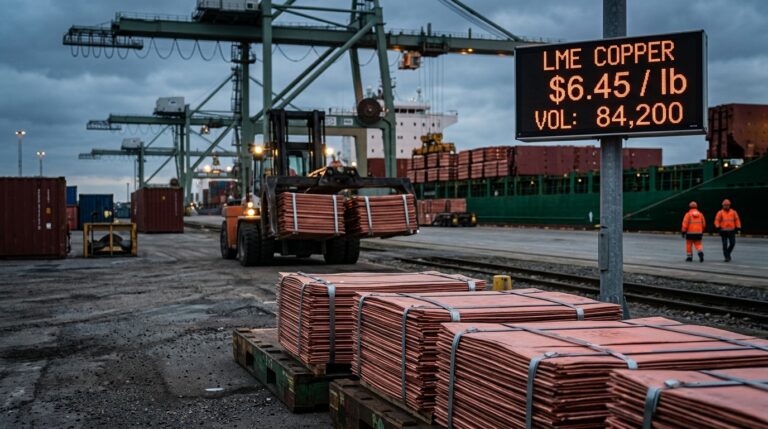
- FXI / Copper: The iShares China Large-Cap ETF is the clean, liquid expression of the overnight reaction. Copper futures have been pricing China’s energy transition demand against a still-weak property sector, and that tension resolves sharply on a miss. Freeport-McMoRan and Southern Copper are two names most directly exposed, both moving more than the futures tracker itself on China-driven sessions. A retail number that signals domestic demand is not recovering will pressure both at the open.
Why the Summit Multiplies the Stakes
Trump and Xi are expected to meet in Washington on Sept. 24 for their third face-to-face talks in the past year. Negotiators are striving to implement reciprocal tariff reductions on $30 billion worth of goods “at an early date” from each side. Barclays noted this week that trade will be “front and center” at the summit, with the tariff truce expiring Nov. 10.
Weak August data does not derail those talks, but it changes what Xi brings to the table. A Chinese consumer who is not spending is a Chinese leader with less domestic political room to offer concessions on goods access. Both sides still seem interested in avoiding moves that would risk torpedoing the current trade truce, which means Xi arrives with incentive to project stability. A bad data release twelve days before the summit undercuts that positioning and gives markets reason to adjust expectations for the summit outcome.
5 Little-Known Stocks Behind Today’s Defense Tech Shift
Behind the headlines, a major transformation is underway.
Modern warfare is being driven by AI, autonomous systems, and next generation technology. A handful of lesser known companies are helping power this shift.
This report uncovers five stocks quietly playing a critical role in the future of defense.
Technical Radar
FXI has been rangebound in the low-to-mid $30s for most of September. A retail miss that breaks the lower end of that range on volume opens a retest of August lows. Copper front-month contracts have traded in the mid-$6-per-pound range in early September; a weak demand read puts the $6.40 level in play. Conversely, a beat on retail sales, even a modest one, combined with any upward revision to industrial output, could trigger a sharp short-covering rally in both the metal and the miners before the U.S. open.
The Cheat Sheet
- Top Theme: China’s domestic demand is the missing piece in a manufacturing-heavy recovery, and Tuesday’s data either confirms or complicates that picture ten days before a summit where trade policy hangs in the balance.
- Stock to Watch: BABA. Most sensitive single name to the overnight reaction, with the range of outcomes spanning several percentage points at the open.
- Sector to Watch: Materials. Copper and the miners are the clearest real-money read on what Tuesday’s data means for global demand.
- Biggest Risk: A miss that is bad enough to revive stimulus speculation in China could create a confusing signal: stocks rally on hope even as the underlying data deteriorates.
- One Thing to Remember: Persistent weakness in goods demand is likely to keep overall retail sales growth subdued regardless of Tuesday’s print. The question is whether the number is bad enough to move markets, or merely confirms what most traders already believe.