September 13, 2026
Bonus Content: Trump Says a Canada Deal Is Coming. Auto Suppliers Disagree.
Special system spots Wall Street moves – before the market

I created a proprietary indicator…
That flags Wall Street money moves – before the market sees them.
Our backtest shows 85% of the stocks my system flags have gone up.
In fact, the average stock doubled…
And that includes the losers.
Trump Says a Canada Deal Is Coming. Auto Suppliers Disagree.
Speaking Saturday alongside Irish Taoiseach Micheál Martin in Dublin, President Donald Trump expressed optimism about resolving a trade war with Canada, saying that a deal could come “fairly soon,” but provided no details on whether formal talks between the two economies had resumed. The tone shift is striking. Trump’s remarks came after negotiations collapsed on August 22, when Prime Minister Mark Carney said he had suspended trade negotiations and directed Canada’s negotiators to return to Ottawa after the U.S. “asked too much and offered too little.” Five days earlier, he was threatening to shut Bombardier out of the United States entirely.
Trump had suggested he would bar the Montreal-based plane maker’s business south of the border unless it moved its operations stateside. Bombardier does the final assembly of its Challenger and Global business jets in Canada, while more than half of its revenue stems from American customers. The threat landed hard and fast: Bombardier’s stock fell about 6% on September 8, the first trading session after the threat. The company pushed back, noting that “Bombardier aircraft are built with American-made components such as engines, avionics, and many more key systems provided by great American companies.”
The backdrop to Saturday’s conciliatory language is a live tariff conflict. Effective September 8, Canada applied counter-tariffs of 15%, 25%, and 50% on U.S. imports covering CA$27.6 billion of goods, matching the corresponding U.S. tariff rates. The measures affect products in sectors including steel and aluminum, dairy, appliances, agricultural equipment, pulp and paper, and electronics. Those retaliatory levies followed Washington’s prior move: the U.S. imposed 50% tariffs on about $20 billion of Canadian goods effective August 22, including products such as hockey equipment.
Stocks in Focus
Bombardier (BBD.B): Watch whether Saturday’s softer rhetoric prompts any recovery after the September 8 sell-off. The sales-ban threat was never formalized into policy, but the overhang remains until Ottawa and Washington reach written terms. No formal talks have been confirmed.
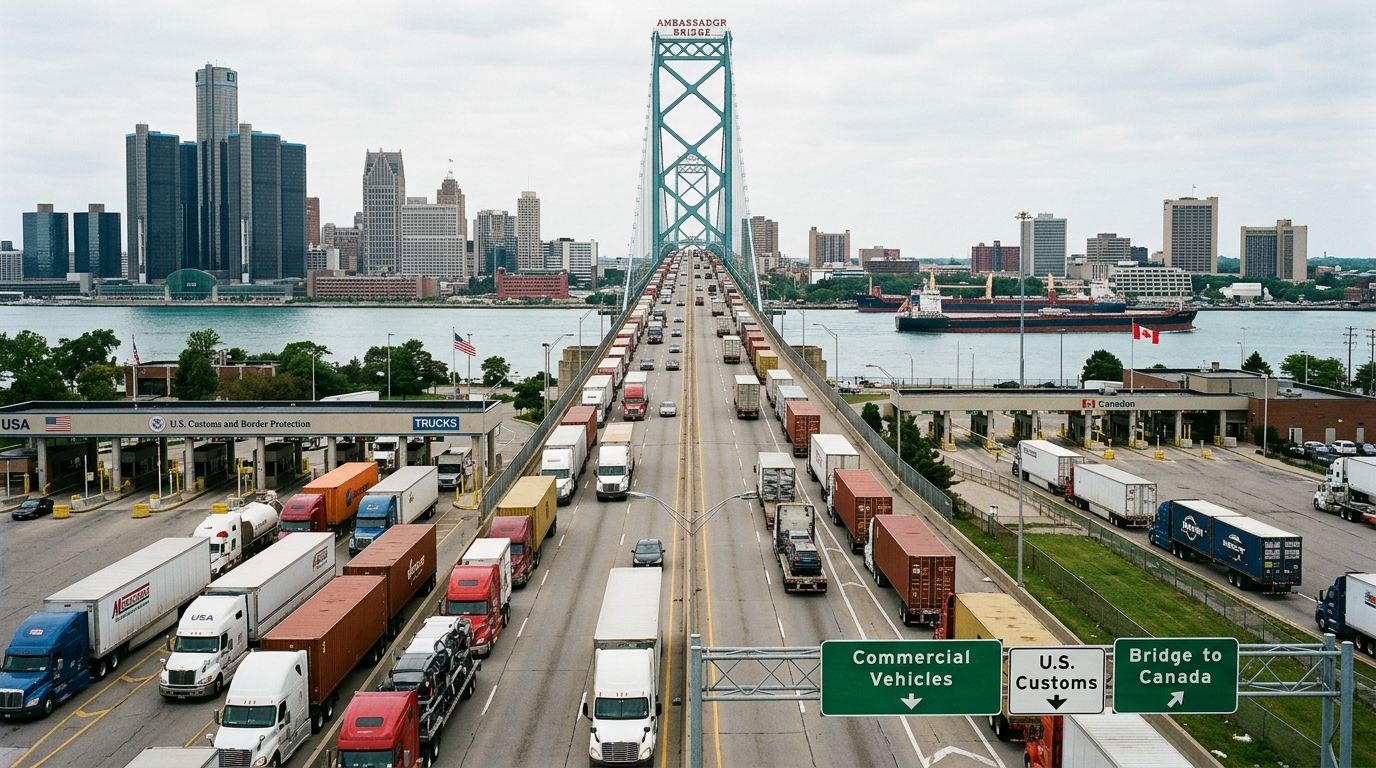
GM, Ford, Stellantis: The cross-border auto supply chain is the most direct transmission channel for any deal or breakdown. GM has raised its full-year 2026 guidance after a strong first half but has said it expects gross tariff costs of $2.5 billion to $3.5 billion for the full year, with the quarterly impact in the second half similar to the second quarter, around $900 million. Ford carries its own cross-border exposure; even as a U.S. company that manufactures in Canada, it will face tariff exposure on vehicles made there if duties apply. Stellantis remains one of the most battered, down roughly 52% year-to-date and trading near its 52-week low. Any credible deal framework that rolls back auto duties would be a meaningful positive for all three, particularly GM and Ford given their Canadian assembly footprint.
Currency and Catalyst Watch
The Canadian dollar is the cleanest real-time read on how seriously markets take Trump’s Dublin remarks. Softer trade language tends to firm CAD; a breakdown in follow-up talks sends it back toward recent lows. Watch whether the Carney government responds publicly before Monday’s North American open, and whether any joint statement references formal negotiating timelines.
Trump expressed optimism about resolving a trade war with Canada, saying that a deal could come “fairly soon,” but provided no details on whether formal talks between the two economies had resumed. That gap between optimism and process is precisely where traders need to be careful. Weekend rhetoric from Dublin has not yet been matched by a resumption of the formal talks that Carney said Canada suspended after the U.S. proposed new terms that were “uneconomic” and “unfair,” adding that the U.S. asked too much and offered too little in return.
The Cheat Sheet
- Top Theme: U.S.-Canada trade tension is showing signs of de-escalation in tone, not yet in policy.
- Stock to Watch: GM. The largest disclosed tariff exposure among the Big Three, and the most to recover if auto duties ease.
- Sector to Watch: Auto suppliers. Deeply integrated across the border and acutely sensitive to any written deal terms.
- Biggest Risk: Trump’s optimism is unaccompanied by confirmed talks. Ottawa could read the silence differently than markets do.
- Biggest Opportunity: CAD and Canadian-exposed industrials are priced for prolonged conflict. Any credible progress can reset that quickly.
- One Thing to Remember: The Bombardier episode ran from threat to partial recovery in under a week. This negotiation can move fast in either direction.