
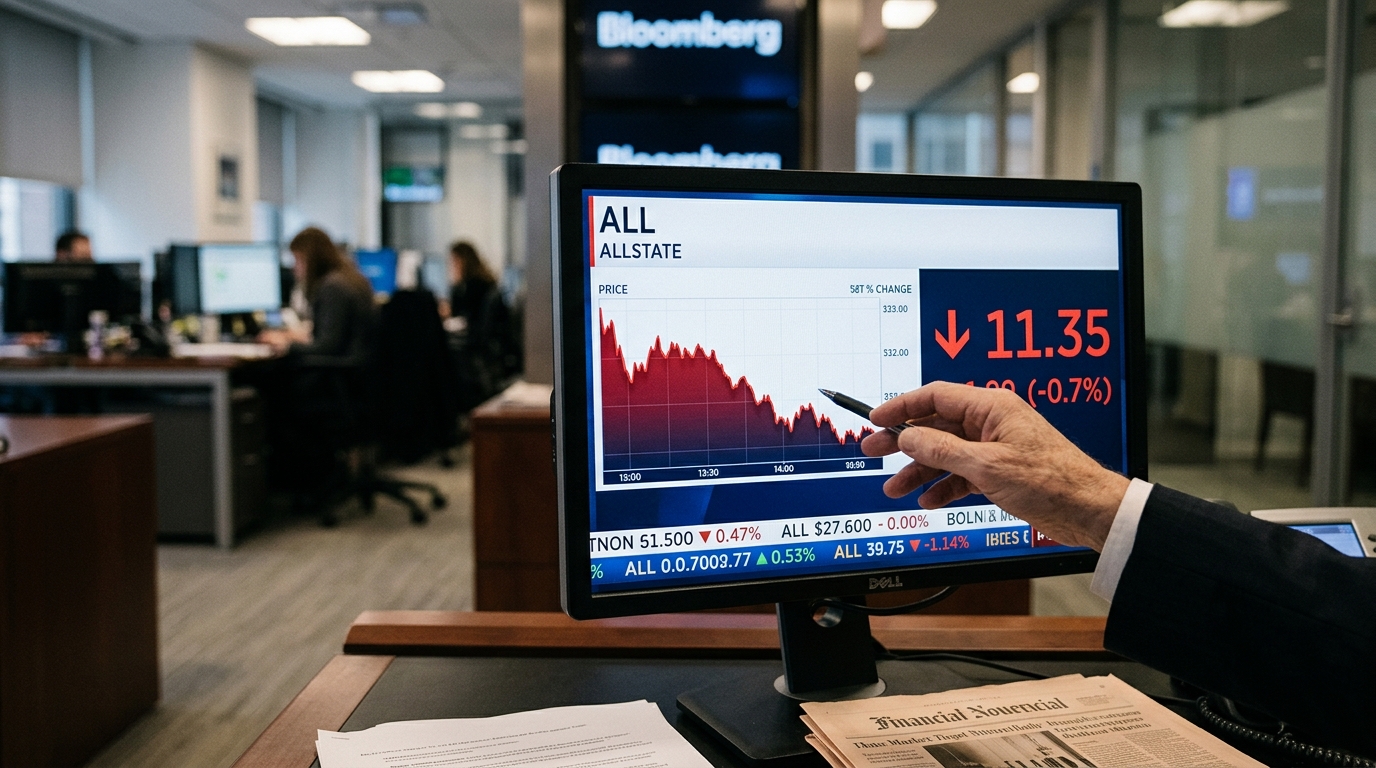
Allstate has now absorbed $1.43 billion in pre-tax catastrophe losses across just two months, and the stock is making investors feel every dollar of it. The company reported August catastrophe losses of $748 million pre-tax, stemming from 21 separate events, with roughly half tied to a single wind and hail storm. Combined with July, total catastrophe losses for the two-month period reached $1.43 billion pre-tax. Then the selling accelerated. On September 22, shares fell 5.5% to $229.50, marking a decline of 10.8% over the prior week and 9.2% over the prior month.
The Bigger Trend
This is not a one-season problem. It is the central question hanging over every personal lines insurer right now: can pricing keep pace with a loss environment that keeps surprising to the upside?
Allstate had already reported catastrophe losses of $1.72 billion for the second quarter of 2026, making the cumulative weather-related claims burden substantial well before July and August were even counted. Meanwhile, Keefe Bruyette and Woods lowered its view to a moderate sell in August, pointing to an estimated $682 million in July pre-tax catastrophe losses and roughly $2.4 billion year-to-date. At that pace, full-year catastrophe losses could challenge anything Allstate has absorbed in recent memory.
The contrast with peers is sharp. Travelers saw Q2 pre-tax catastrophe losses drop to $518 million from $927 million in Q2 2025, and the company said the jump in earnings was driven by lower catastrophe losses, higher net favorable prior year reserve development, and higher net investment income. Despite Allstate posting Q2 2026 adjusted net income per diluted share of $8.99 and revenue of $18.6 billion that beat estimates, slowing premium growth and higher catastrophe losses have led analysts to reassess its near-term risk profile. Progressive, carrying its own storm exposure, has been more disciplined about reinsurance layering, maintaining a retention threshold of $300 million per occurrence on its personal property business and securing $1.9 billion in per occurrence excess-of-loss protection above that level.
The Investment Case
Here is where it gets genuinely complicated for long-term investors. Allstate is not a struggling company on its fundamentals. Shareholders’ equity stood at $33.70 billion as of June 30, 2026, up from $30.61 billion at year-end 2025, and book value per diluted share reached $123.38, a 49.7% increase from a year earlier. That is not a balance sheet in distress.
The dividend record is equally compelling. Allstate has increased its dividend for 16 consecutive years. In February 2026, the company raised the quarterly dividend 8% from $1.00 to $1.08 per share, lifting the annualized rate from $4.00 to $4.32. The payout ratio sits at just 10.51%, well below industry norms, leaving significant earnings coverage. Even with catastrophe losses piling up, the payout is not structurally at risk.
Analysts are split. Mizuho raised its price target to $300 on September 18 while maintaining an Outperform rating. A separate analyst maintains a Buy with a $297 price target. With shares near $229, that implies meaningful upside if losses normalize.
Risks to Monitor
The bear case is not subtle. Analysts expect Allstate to report EPS of about $6.5 for the upcoming quarter, a decline of roughly 40% from the prior-year period. That is the direct arithmetic of the catastrophe burden flowing through to earnings. Insider selling has been notable too, though the specific dollar figure varies by data provider.
The structural issue is harder to solve than any single quarter’s results. Allstate’s personal lines concentration means it absorbs weather volatility more directly than a commercial-heavy insurer like Chubb. Until premium rate increases outpace loss trends in a sustained way, the quarterly surprises are likely to continue.
Daily Wealth Takeaway
A falling stock with a rising dividend and a battered balance sheet is not automatically a bargain. With Allstate, the dividend is durable and the balance sheet is sound, but the loss pattern is the variable that no price target fully captures. Investors considering a position here are, in effect, betting that the weather cooperates or that rate increases eventually close the gap. Neither is guaranteed. For those with a long enough horizon and a genuine tolerance for volatility, a small, patient position can make sense. Chasing the bounce after a week like this one almost never does.