One pipeline. Seven million barrels a day. Gone.
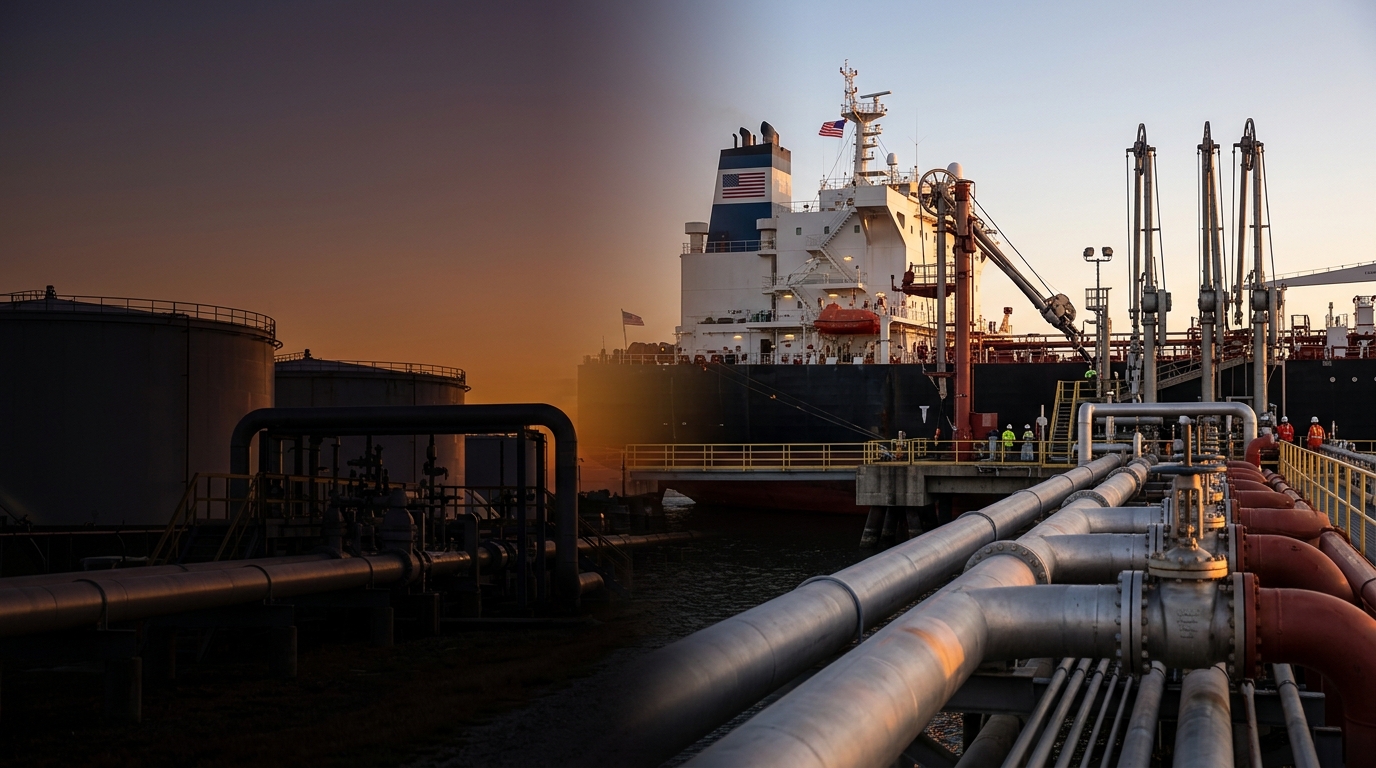
Drones launched from Iraq shut down the 1,200km East-West pipeline to Yanbu in mid-September, and the Houthis then seized Perim Island and the port city of Mocha, putting them in physical control of the Bab al-Mandeb’s narrowest point. That ten-day sequence did something the Strait of Hormuz closure alone had not managed: it eliminated Saudi Arabia’s last reliable export route.
The East-West pipeline, running to the Red Sea port of Yanbu and feeding Saudi coastal refineries, had proved critical in re-routing millions of barrels during the war. Up to 4% of the world’s oil supply could now be taken offline, according to Reuters citing buyers and traders.
The EIA’s October forecast, released Monday, tells you exactly what that math means for prices. The agency raised its global price outlook, now forecasting Brent at $105 per barrel in the fourth quarter.
WTI traded around $90 in early October, still sharply higher than a year ago, which is the number that matters most for domestic producers running Permian and Eagle Ford wells at breakeven costs well below $50.
Refining Margins Are the Hidden Story
Physical crude destruction overseas is not just a supply problem. It is a margin gift to American refiners competing for the same product demand.
Crack spreads have been elevated across the barrel in recent months, driven by tight global supply for refined products. Diesel at the pump crossed $6 a gallon nationally in late September, according to AAA data cited by CNN.
E&P Free Cash Flow Is Compounding Quickly
The producers best positioned are not the integrated majors hedged across refining and chemicals. They are the lean domestic pure-plays. EOG Resources illustrates the leverage. In the second quarter, EOG earned net income of $2.72 billion and generated $2.8 billion of free cash flow, returning $1.8 billion to shareholders through dividends and share repurchases.
Higher oil prices have boosted cash flow broadly for Lower 48 producers this year. Devon, after closing its Coterra merger, has pitched the combined company as a scale Permian-heavy cash flow story, but specific revenue and net income figures cited here could not be verified in Devon’s merger and outlook releases and are removed.
E&P companies are direct, high-leverage plays on crude prices. When WTI rises from $60 to $90 per barrel, a well-run producer’s free cash flow generation can triple or quadruple. That math is now playing out in real filings, not projections.
What Traders Watch Next
The repair timeline for the East-West pipeline is unknown. Reuters reported in mid-September that crude loadings at Yanbu were suspended and Saudi Arabia had canceled some cargo deliveries to European customers. Every week that repair drags extends the premium embedded in WTI. Ukrainian drone attacks have also damaged Russian refining infrastructure repeatedly in 2026; by mid-September, Reuters reported that three of Russia’s six largest diesel-producing refineries had either substantially reduced production or stopped.
Two disrupted pipelines. One very clear trade: domestic producers with low breakevens, no Middle East exposure, and free cash flow yields that rise with every headline out of Riyadh.