October 19, 2026
Bonus Content: HON’s Hidden sCO2 Valve Position Reports Thursday
|
A SPECIAL INVESTOR STORY · FALL 2026 Are Pesticides An essential global industry is facing a familiar collision of public pressure, regulation and technological change. |
For decades, tobacco looked permanent.
It was deeply embedded in daily life, supported by powerful companies and protected by enormous demand. Then the evidence, lawsuits, regulation and public sentiment began to converge.
The industry did not disappear overnight. But capital, consumer behavior and corporate strategy began to move.
|
Chemical pest control is essential to agriculture, public health, homes and businesses. Yet concern around conventional formulations continues to grow – from exposure and residues to resistance and environmental impact.
That creates a paradox investors should not ignore:
|
The world could quit smoking. |
If pressure forces the category to evolve, demand does not vanish. It may migrate toward products designed to meet changing expectations.
|
One small company has spent years building botanical pest-control products for professional and consumer use. Its name is Med-X, Inc. The company is currently private and has reserved MXRX for possible use following a successful future Nasdaq listing. Its Nature-Cide portfolio sits directly inside this developing conversation.
This is not a prediction that pesticides will become tobacco. It is a question about what happens when an indispensable industry can no longer remain exactly as it was.
|
Discover the evidence, the market transition and the company positioned inside it.
HON’s Hidden sCO2 Valve Position Reports Thursday
Market Snapshot
Honeywell Technologies (NASDAQ: HON) reports Q3 2026 results Thursday before the open. The Zacks consensus pegs Q3 revenue at $5.01 billion, a decline of 51.8% from the prior-year quarter, with earnings estimated at $2.17 per share. The year-over-year drop is almost entirely mechanical: on June 29, Honeywell Technologies became a standalone company following the spin-off of its Aerospace Technologies business, and that separation is what is weighing on the comparison. Strip that out and the underlying automation franchise is doing fine. Building Automation revenue is expected to come in around $2.0 billion, up roughly 7% year over year.
Stocks in Focus: HON
What happened: Honeywell Technologies trades on Nasdaq under the ticker HON as a pure-play automation company after completing the Aerospace spin-off. That restructuring removed roughly half the revenue base but concentrated the remaining business around process automation, building controls, and energy technology, including the $2.16 billion Sundyne acquisition closed in June 2025. Sundyne designs, manufactures and supports pumps and gas compressors used in process industries, and its customer relationships are expected to unlock strategic growth in Honeywell UOP’s refining, LNG, and clean fuel value chains.
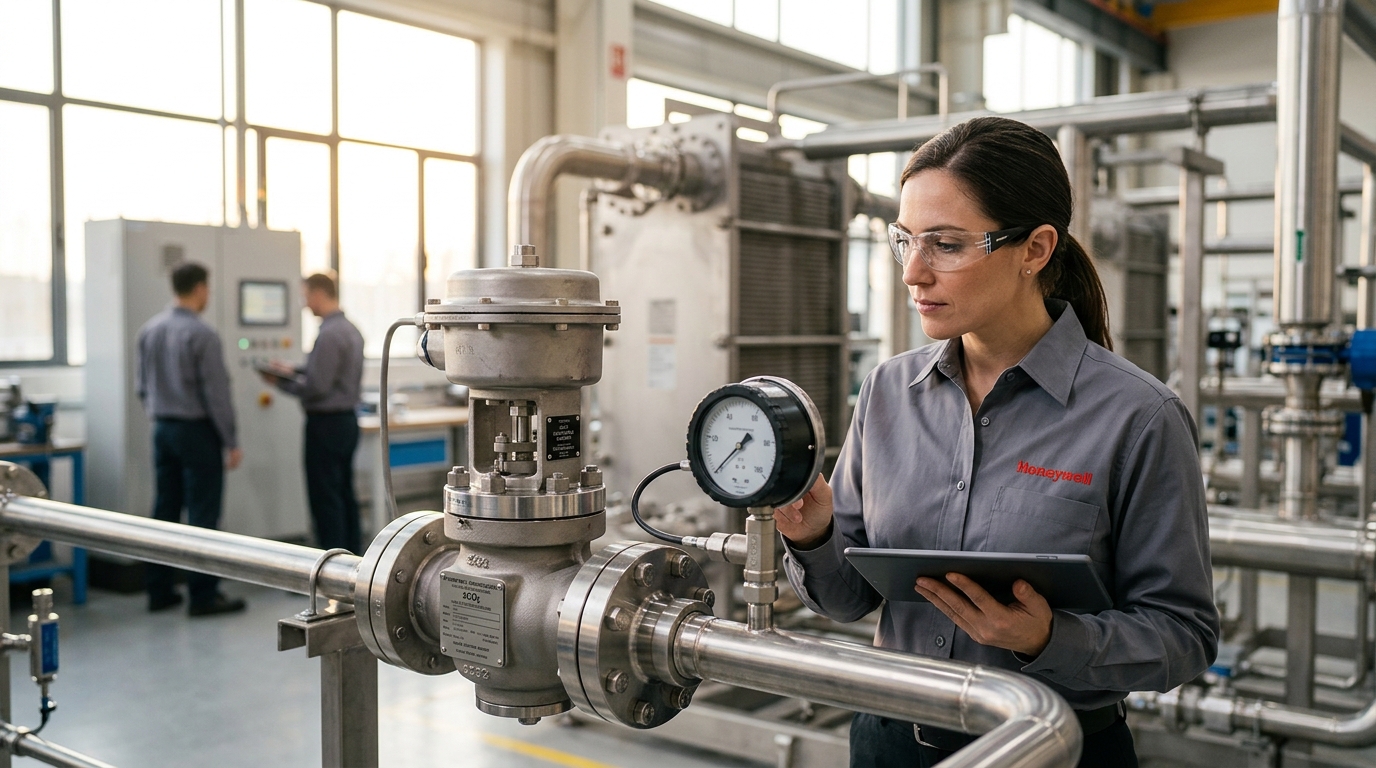
Why it matters now: The sCO2 market just got its loudest commercial signal in years. American Supercritical emerged from stealth in September 2026 with $8 million to commercialize supercritical CO2 power blocks as factory-built equipment. U.S. simple-cycle gas turbine capacity reached 136,074 MW as of May 31, 2026, and Echogen has identified 127,498 MW of that fleet as potentially eligible for an sCO2 bottoming cycle. That addressable base is enormous. The commercial bottleneck is not the turbine itself; it is the control valve. Flow control to the turbine in extreme conditions can require specialized valve materials and sealing approaches, with high-temperature nickel alloys such as HAYNES 282 often cited as candidates for supercritical CO2 power-cycle hardware. Honeywell’s process automation and instrumentation portfolio sits squarely in that critical path, and Sundyne’s compressor expertise deepens the moat. Industry surveys indicate more than 40% of leading manufacturers plan to expand supercritical CO2 capabilities within the next three years.
What traders watch Wednesday: Honeywell Technologies is guiding to 4% to 6% organic sales growth long-term, approximately 24% segment margin, and free cash flow above $3 billion with 90%+ conversion. The number that matters most is Energy and Sustainability Solutions segment margin. If Sundyne is integrating cleanly and pulling through aftermarket revenue, that line moves. Any commentary on sCO2-adjacent contract activity or CCUS instrumentation backlog would be a secondary signal worth tracking.
Sector Watch
The global transcritical CO2 systems market is estimated at $41.43 billion in 2026 and is projected to reach $120.66 billion by 2033, a 16.5% compound annual growth rate. Capital is moving toward companies with certified, extreme-tolerance components. Buyers increasingly require ISO 15848 fugitive-emission testing, NACE MR0175 compliance, and full material traceability, and suppliers with accredited documentation win the premium contracts. HON holds that certification infrastructure. Smaller valve makers competing on price alone are losing bids.
Risk Radar
HON’s Q3 headline numbers will look ugly against a prior-year period that included Aerospace. Any trader who does not adjust for the spin-off comparison will misread the result. The structural risk is slower-than-expected Sundyne integration dragging segment margin below the 19% Q3 floor. HON has traded roughly between $195 and $260 over the past 52 weeks, leaving meaningful room for a re-rating in either direction depending on what management says about forward backlog.
The Cheat Sheet
- Top Theme: HON’s automation identity is being tested at its first standalone earnings call, while the market it dominates in high-pressure CO2 valves is accelerating toward commercial scale.
- Stock to Watch: HON, reporting Thursday before the open. Watch Energy and Sustainability Solutions margin and any Sundyne revenue comment.
- Sector to Watch: Industrial process automation, specifically companies certified for extreme-pressure CO2 service.
- Biggest Risk: Spin-off comparison noise obscures a genuine ESS segment miss.
- One Thing to Remember: The turbine is the headline. The valve is the bottleneck. HON owns the bottleneck.