Chevron reports Q3 results before the bell on October 30. Analysts expect earnings of about $4.7 to $4.9 per share, which would imply year-over-year growth of roughly 155% to 165% off a low base in last year’s quarter. The big-picture story is oil above $100 and Hess synergies. The one investors are underweighting sits closer to the ground.
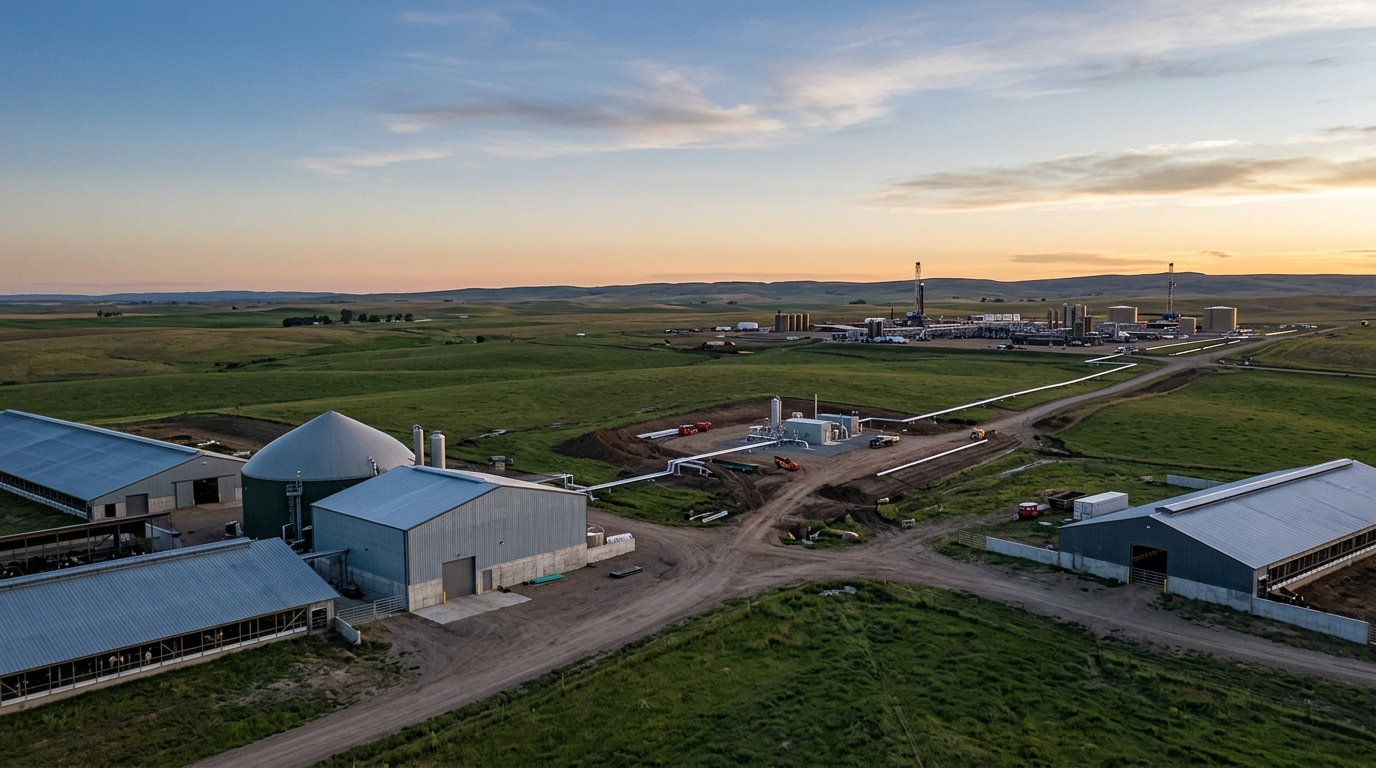
Chevron has been quietly building a cluster infrastructure model for capturing agricultural methane and converting it to renewable natural gas. Through its CalBioGas joint venture with California Bioenergy LLC, Chevron secured initial funding to build infrastructure for dairy biomethane projects in California’s Merced County. The agreement covers as many as seven digesters and one central upgrading facility across a cluster of dairy farms. That is the liquefier model in miniature: hyper-localized field infrastructure pulling agricultural emissions out of the waste stream and monetizing them.
The Hilmar central processing facility has been described by Chevron and CalBio as complete, with renewable natural gas injected into a utility pipeline and marketed as an alternative fuel for transportation. The RNG produced is often described as carbon negative on a lifecycle basis under California’s Low Carbon Fuel Standard, depending on the pathway and carbon-intensity score assigned. The estimated annual emissions reduction has been cited at approximately 95,000 metric tons of CO2e per year. That is not a rounding error.
The Economics Are the Point
The IEA’s 2026 Global Methane Tracker says more than 35 million tonnes of methane could be avoided at no net cost, because the required capital and operating costs of abatement are lower than the market value of the gas captured and sold, based on average energy prices in 2025. Chevron’s dairy digester clusters are a direct expression of that calculus. The gas would otherwise vent into the atmosphere. Instead, it travels to a central facility, gets upgraded, enters a utility pipeline, and can earn Low Carbon Fuel Standard credits on top of the commodity price.
The commodity price floor underneath that captured gas matters too. Oil volatility running at more than three times the VIX signals that the energy price environment supporting RNG economics remains structurally elevated.
Those credits matter. California’s LCFS framework assigns a carbon intensity score, and dairy biomethane can score deeply negative, which can translate into premium credit values above the raw gas price. Chevron markets the output. The margin on captured agricultural methane can run well above conventional natural gas on a per-unit basis.
The Liability Side
The same satellite infrastructure making this business model legible is also exposing risk. Recent public reporting has said the most recent public methane observation at Chevron’s Gorgon LNG facility in Australia was made on August 29 by Carbon Mapper’s Tanager-1 satellite and triggered an alert from the United Nations, which issues notifications to operators and governments on urgent methane emissions events. The same reporting estimated the average emissions rate across five quantified releases at about 4.9 tonnes per hour, placing it among the highest end of plumes the group has quantified for the oil and gas sector.
Chevron is not the only major facing a dual narrative on October 30. ExxonMobil enters the same earnings date with doubled Pioneer synergies and its own Guyana free-cash-flow milestone to defend.
Carbon Mapper says its Tanager-2 satellite launched October 1 aboard a SpaceX rideshare mission, developed through a partnership with Planet Labs. A second satellite increases revisit frequency and multiplies the volume of methane emissions data made publicly available. Chevron can no longer choose when this data enters the public record.
What to Watch October 30
The Q3 call will not likely feature a dedicated agricultural methane segment. But two signals are worth tracking. First, any update on RNG volumes or renewable fuel revenue within New Energies: Chevron’s lower-carbon work includes renewable natural gas from dairy biomethane alongside the Geismar renewable-diesel plant and the Bayou Bend carbon-capture joint venture. Second, how management addresses the Gorgon satellite data and the UN alert from late August, which remains publicly unresolved.
The agricultural methane capture model is not Chevron’s core thesis going into October 30. Upstream earnings and Guyana production will dominate. But the structural margin in upgrading what would otherwise be a liability, and doing it at farm scale, is the kind of optionality that tends to get priced slowly and then all at once.