
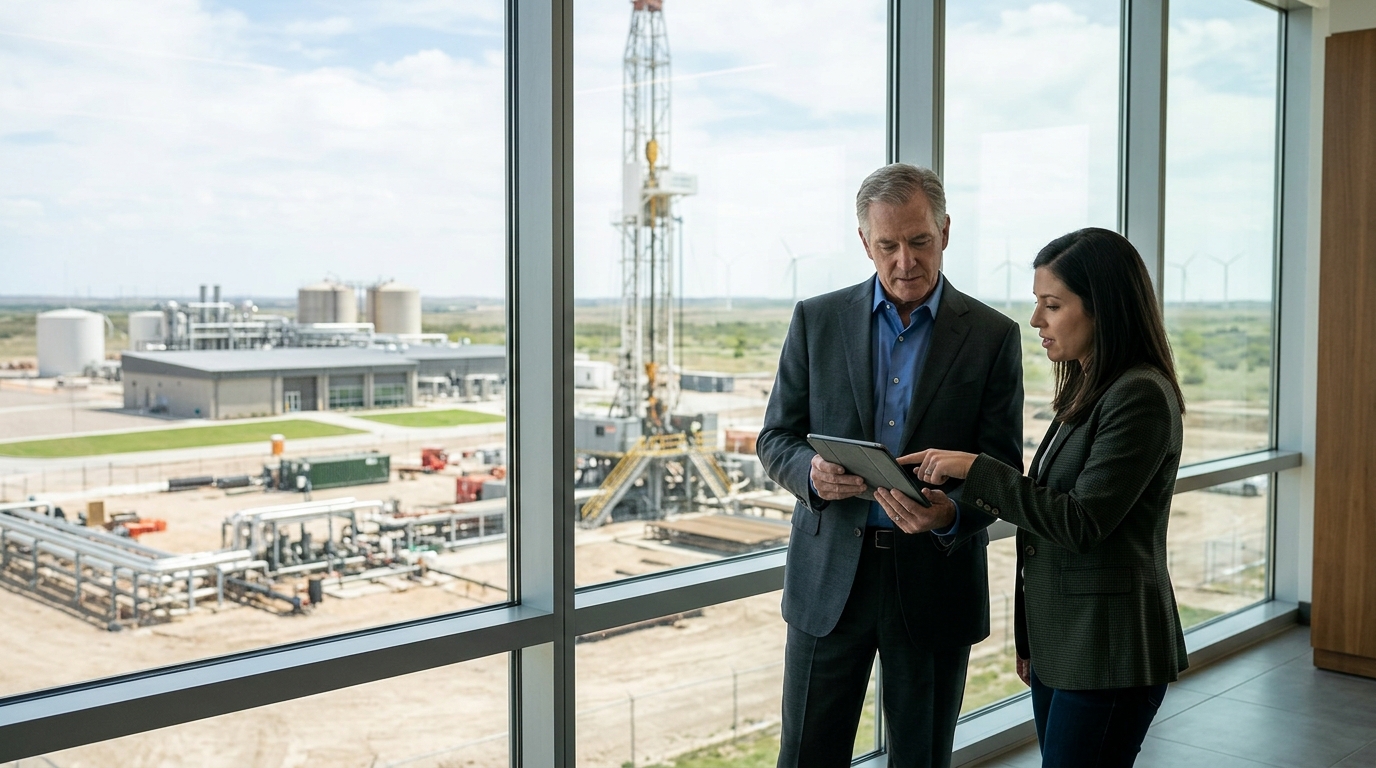
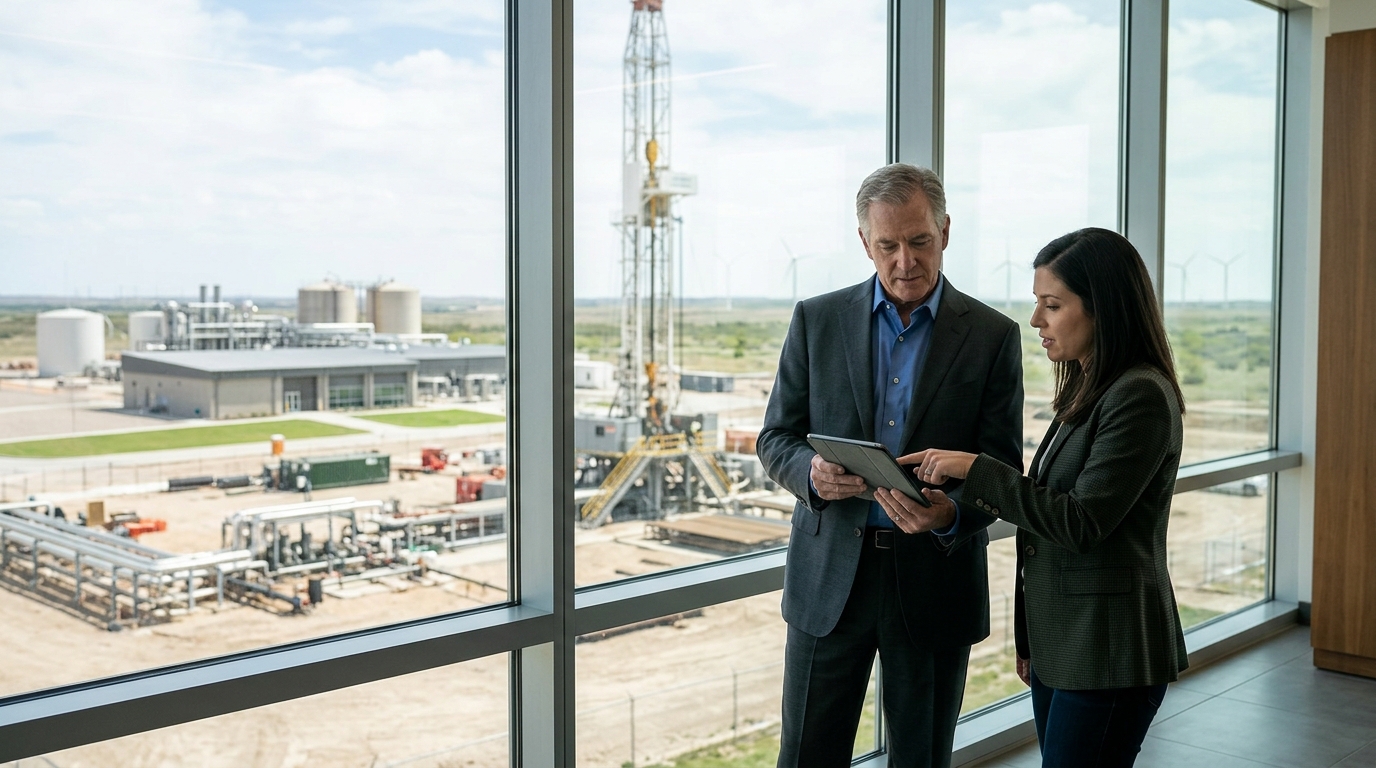
Chevron is no longer purely an oil company. The evidence is piling up fast. Chevron signed a 20-year agreement with Microsoft to supply natural gas-fired electricity for a proposed West Texas data center project that Chevron says could ramp to about 2.67 gigawatts over time. For Chevron, the shift moves part of its business model from selling raw hydrocarbons to selling long-term contracted power, tying Permian gas output to a single large buyer with two decades of revenue visibility.
That is a meaningful strategic turn. But it is still gas. The next step, and the smarter one, is geothermal. Specifically, Eavor Technologies.
Chevron Already Has a Seat at the Table
Chevron Technology Ventures participated in Eavor’s $40 million funding round alongside BP Ventures, Temasek, BDC Capital, Eversource, and Vickers Venture Partners. That equity stake buys insight into the company’s technology, its cost structure, and its project pipeline. It is the kind of position from which a full acquisition becomes obvious rather than speculative.
CEO Mike Wirth has described geothermal as a promising growth area, citing Chevron’s long-standing strengths in subsurface engineering, drilling, and project execution as the natural fit. Those are exactly the capabilities Eavor needs to scale.
Why Eavor and Why Now
In December 2025, Calgary-based Eavor began delivering power to the German grid from its Geretsried facility in Bavaria, which the company described as the first electricity produced from closed-loop multilateral wells. That grid feed-in was a milestone, but outside reporting in 2026 has also raised questions about how much power was ultimately delivered versus initial targets.
The Eavor-Loop system moves beyond the geographic limitations of traditional geothermal development, engineered to operate in a wider range of locations. That is the key distinction. Conventional geothermal is tied to geology. Eavor is trying to be less so.
The concept circulates a proprietary working fluid through a sealed underground heat exchanger, harvesting geothermal heat without relying on naturally permeable reservoirs or hydraulic stimulation. The company has also emphasized the need to work with partners that have deep drilling and project execution expertise. Chevron fits that description more precisely than any other major.
The Depleted Well Arbitrage
Here is where the financial logic sharpens. Drilling often represents a large share of geothermal project capital cost, with credible estimates commonly placing it at roughly 30% to more than 50% depending on the resource and design. Chevron already owns thousands of mature and partially depleted wellbores in the Permian and elsewhere. Still, the idea that a closed-loop system can simply be inserted into existing oil and gas well casings, without meaningful new drilling, is not something Eavor has demonstrated as a standard commercial approach. What Eavor has commercialized to date is purpose-drilled, multilateral closed-loop infrastructure.
Chelvron’s decommissioning obligations run into the billions. If closed-loop geothermal can be deployed at scale in a way that reduces end-of-life costs while producing usable heat or electricity, it could turn part of that burden into an asset. But that conversion case remains unproven for large inventories of legacy oil and gas wells.
The capital Chevron is directing toward geothermal and power infrastructure is being funded by an extraordinary earnings cycle. Chevron’s blowout quarterly profit revealed the two overlapping forces — geopolitical windfall and operational transformation — that are financing this strategic pivot.
What Traders Should Watch
- Eavor’s partnership signals: The company has said it is pursuing strategic partnerships and expanding into heat and power markets where closed-loop geothermal may offer unique advantages. Any announcement of a deeper commercial agreement with Chevron would be the tell.
- CVX’s power capex trajectory: Chevron has said it has allocated $10 billion of lower carbon capital between 2021 and 2028. Where that allocation shifts in the next earnings cycle matters. Chevron’s 3Q 2026 earnings conference call is scheduled for October 30, 2026.
- Competing bidders: BP holds a stake in Eavor alongside Chevron. Neither has moved to consolidate. The window will not stay open indefinitely if geothermal demand from data center operators accelerates.
Chevron’s 2026 story is about becoming an energy company, not just an oil company. Eavor is the kind of asset that could make that transition concrete rather than aspirational, but only if closed-loop geothermal can prove repeatable economics at commercial scale.