

The Shocking Truth about the AI Bubble
In just 48 hours, a tidal wave of bad news battered AI stocks:
- Chip giant Intel dropped 29%…
- Google had its worst day ever, losing $500 billion in value…
- And tech stocks plummeted by more than $1 trillion in one trading day…
That’s more than $153 billion vaporized each hour!
Top internet news site Drudge Report had this headline screaming at the top of the page…
“$10 trillion ‘AI Boom” starting to crack…”

So is the AI bubble finally bursting?
It sure as heck looks like it…
But here’s the shocking truth: it isn’t bursting for every stock.
On the same day Intel plunged 29%, the S&P 500 fell just 1.8%.
In other words, the stock market is splitting in two.
And the independent millionaire who recommended NVDA at $6 saw this coming.
He calls this stock market split the Great AI Shock.
On one side, the most hyped AI stocks could see a 77% meltdown…
On the other side, a little-known corner of AI that NVDA’s CEO calls a “once-in-a-generation opportunity” could produce triple digit gains over the coming months…
And the recent carnage is only the beginning – because the stock market split is just getting started…
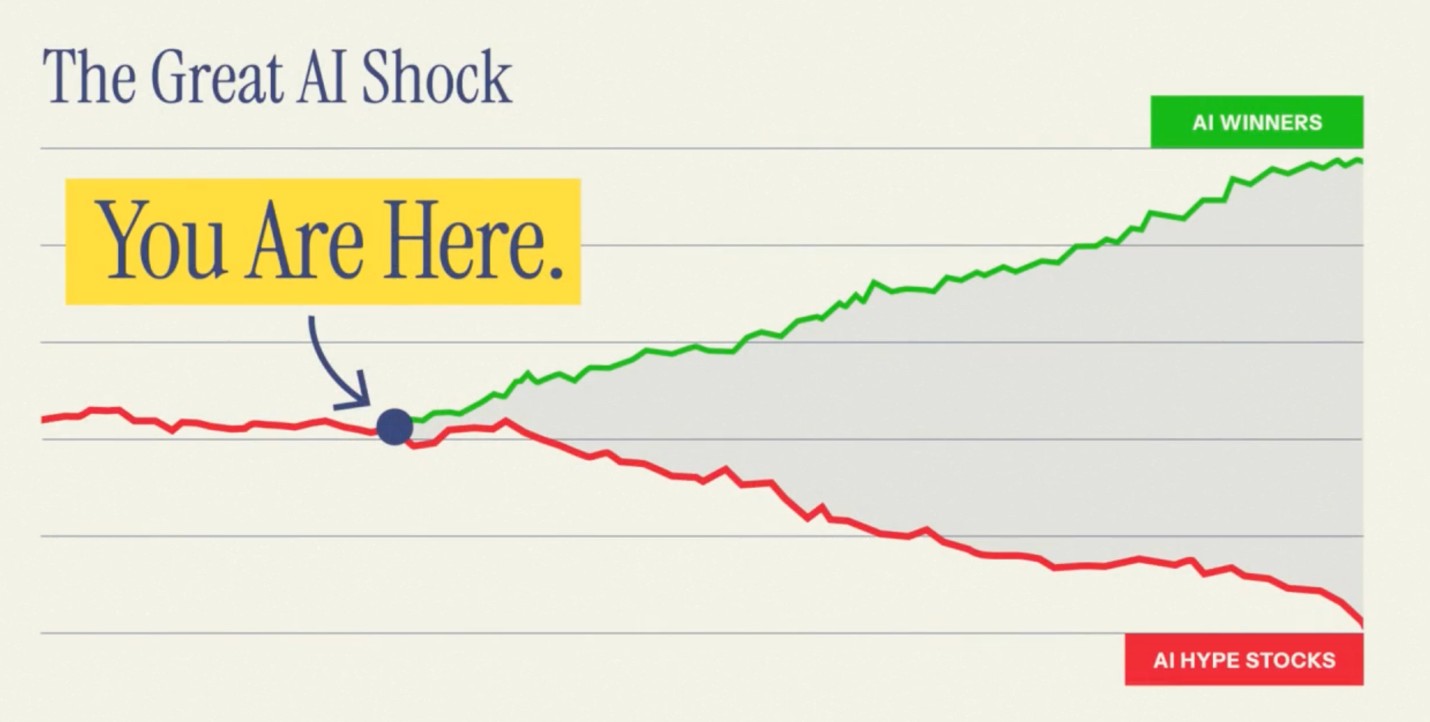
If you own any AI stocks, you need to decide which side of the split you’re on…
And you need to decide soon.
See the full story here, including details on the #1 stock on the right side of the split.
Dillard’s Reports Thursday. The Buyback Has Paused.

Dillard’s built its post-pandemic reputation on one idea: shrink the share count aggressively enough that earnings per share can grow even when revenue does not. For four years it worked brilliantly. The company has reduced shares outstanding by roughly half over the last nine years, compressing the float and amplifying per-share metrics regardless of top-line direction. Then, quietly, the engine stalled.
Dillard’s did not repurchase any shares in Q1 2026, even with $165.2 million remaining under the active buyback plan. The Q2 filing showed no meaningful change. Trailing-twelve-month buybacks have collapsed to a negligible level, a rounding error against the billions retired in prior years. That pause matters more than the revenue line Thursday morning.
The demand backdrop gives management little cover. Department store demand has been soft, and the recent tone across consumer spending research points to more caution among middle-income shoppers alongside a slowing at the high end. Dillard’s skews toward the middle-to-upper tier of the value spectrum, which puts it squarely in the path of that spending deceleration.
The pressure on middle-income department store shoppers does not fall evenly across retail. TJX has been accelerating its store expansion directly into the anchor spaces that department stores are vacating, capturing the same value-oriented shopper Dillard’s is losing.
Inventory adds another layer of pressure. Inventory declined sequentially from Q1 to Q2 2026 but was still up roughly 5% year over year, with trade accounts payable and accrued expenses up about 2.9% alongside it. If sales remain flat, slower inventory turnover could pressure future markdowns and cash flow. The Q2 retail gross margin of 40.9% was flattered by $37.2 million in IEEPA tariff refunds. Strip those out and the underlying margin picture looks considerably thinner heading into Q3.
Analysts expect earnings of about $8.05 per share on revenue of $1.48 billion when results drop Thursday before the open. The consensus implies a modest year-over-year decline from the prior Q3 figure. That is the official bar. The unofficial one is whether management explains the buyback pause.
If the pause continues, investors may question whether management sees fewer chances to buy stock at attractive prices or wants to keep more cash on hand. Neither interpretation is reassuring at a stock trading at a forward price-to-earnings multiple around the high teens, a premium to much of the department store peer group.
Dillard’s does not give formal guidance. UBS expects the retailer to skip annual guidance and Q4 commentary while still pointing to improving operating trends. That means Thursday’s call carries extra weight: comparable-store sales direction, any inventory commentary, and whether management signals a return to repurchases will all move the stock more than the headline EPS number. The key catalysts remain execution on margins and inventory, plus how management uses cash now that repurchases are on hold. A beat means little if the cash engine stays parked.