
Hey Reader,
Ready for a pop quiz?
Thanks to a little-known investment secret…
One man was able to build a single $1,000 investment into a $70,000 income stream – after 60 years – without touching a single stock!

Click Here to Reveal the Answer!
Listen…
It doesn’t matter whether you get it right or wrong…
What matters is that you go here now for the answer.
Because I’ve just uncovered a similar opportunity that could help YOU collect double-digit income from this very sector for yourself.
As of right now, it’s still virtually unknown.
But I don’t expect it to stay that way for long.
So if you want a first mover advantage, you need to check it out ASAP.
Good investing,
Marc Lichtenfeld
Chief Income Strategist, The Oxford Club
P.S. I’d guess only 1 in 100 readers will get this right. And I’m curious if that’ll be you. Find out here.
Green Energy Stocks Jumped. The Hard Work Starts Now.
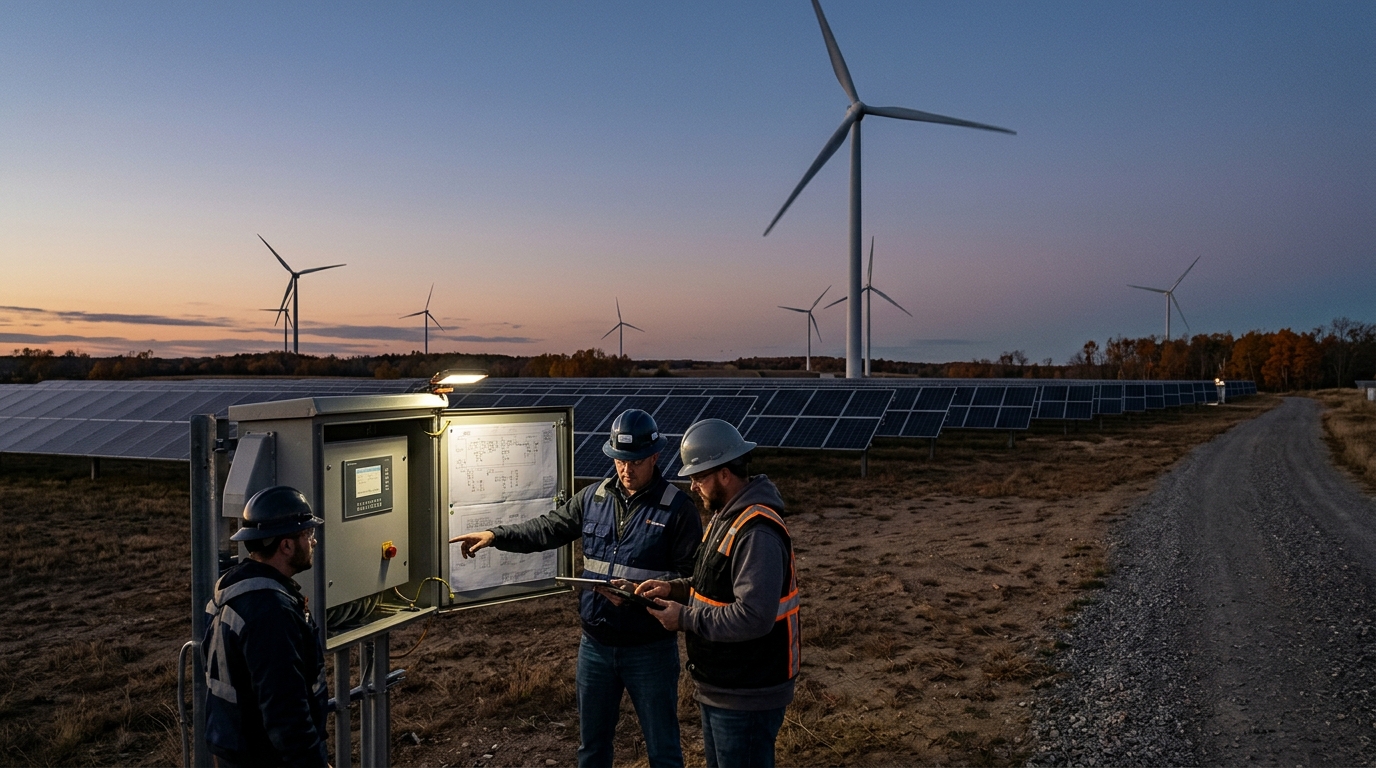
The market gave its verdict on election night. Clean-energy stocks rallied as investors bet Democratic control of Congress could bolster federal support for the sector. First Solar gained 8.4%, Sunrun added 6.9%, Enphase Energy rose 8.8%, and NextEra Energy climbed 4.6%. Renewable energy stocks rallied around the world after Democrats won control of both chambers of Congress, an outcome seen as supporting more favorable policy for the industry.
The excitement is understandable. It is also partially misplaced.
President Trump has vowed to become ‘Mr. Veto’ on legislation he dislikes. The Democratic-majority Congress will need Republican support to overcome that veto, so changes to energy policy are unlikely to be radical, but rather a compromise. Political gridlock could stall energy reforms, with odds of bipartisan permitting legislation passing falling to just 25%, down from 40% before the elections. That is not the unobstructed runway many traders are pricing in.
The more durable opportunity sits at the state level, and that is where the case for green energy gets genuinely compelling. Democrats achieved long-sought trifectas in Arizona, Pennsylvania, and Wisconsin, and they have big plans for climate action. Democrats also took control of the Georgia Public Service Commission for the first time in 30 years. That matters because utility commissions, not Congress, approve the rate structures and procurement contracts that determine whether solar and storage projects actually get built.
Wolfe Research analyst Tobin Marcus flagged that permitting reform remains in play and that some incoming governors are proposing renewable mandates for data center power. That last point is underappreciated. Data centers now consume roughly 4% of U.S. electricity and are growing fast. Governors who can require those facilities to source clean power create immediate, contracted demand that bypasses federal gridlock entirely.
State mandates create the contracted demand, but the asset that captures it most efficiently is not a solar panel. Standalone battery storage now bids directly into wholesale markets, earning capacity payments and arbitrage spreads that solar PPAs cannot match.
The U.S. is on pace to add a record 89 GW of clean energy capacity by the end of 2026, with installations projected to exceed that level in 2027, according to BloombergNEF’s latest U.S. Clean Energy Market Outlook. That buildout was already happening before the election. The midterms reduce regulatory tail risk around it; they do not conjure new demand from nothing.
For traders, the distinction matters. Stocks like First Solar and NextEra are pricing in a policy recovery that may arrive slowly and unevenly. The cleaner expression of this theme, with less Washington risk attached, may be companies with direct exposure to state-level utility procurement and battery storage, where Democratic-controlled commissions can move quickly without waiting for a bill to survive a veto.
The same state-commission dynamic that favors storage procurement also exposes merchant generators to regulatory delay risk. Vistra’s selloff shows how a single grid-operator ruling can reprice a power company faster than any election outcome.
The green energy comeback is real. It just runs through Sacramento, Atlanta, and Madison before it runs through the Capitol.