By Andrea Shalal and Maayan Lubell
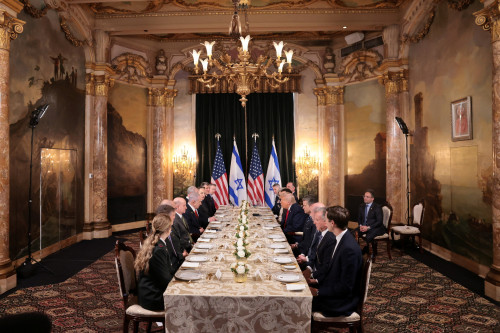
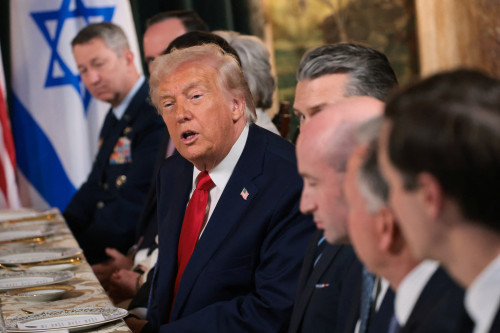
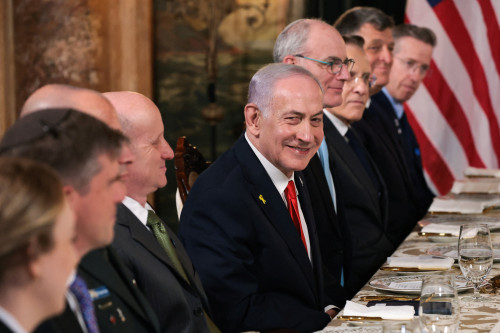
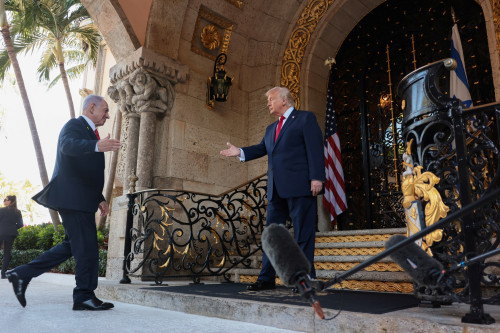
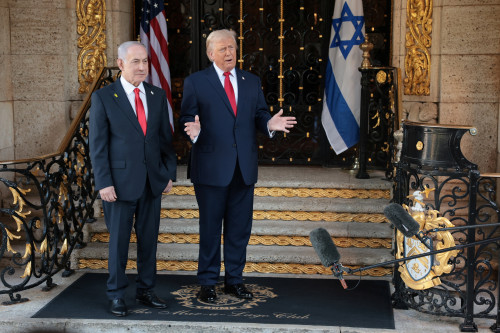
PALM BEACH, Florida, Dec 29 (Reuters) – U.S. President Donald Trump repeated his call for Hamas to disarm on Monday before heading into a meeting with Israeli Prime Minister Benjamin Netanyahu and suggested that he would be open to supporting another Israeli attack on Iran.
Before talks at his Mar-a-Lago estate on breaking the Gaza ceasefire deadlock and addressing Israeli concerns over Iran and Hezbollah, Trump told reporters he hoped Israel could work with Syria despite repeated Israeli incursions across Syria’s border.
The U.S. president said he would support another rapid Israeli attack on Tehran if Iran keeps developing its ballistic missile and nuclear weapons programs. He added that he wanted to move to the second phase of the ceasefire deal between Israel and the Palestinian militant group Hamas as soon as possible, but that “there has to be a disarming of Hamas.”
While Israel and Hamas signed a ceasefire deal in October, alleged violations have been frequent, and little apparent progress has been made on longer-term goals.
Netanyahu said this month that Trump had invited him for the talks, which were ongoing as of the mid-afternoon, as Washington pushes to establish transitional governance and an international security force for the Palestinian enclave amid Israeli reluctance to move forward.
While Washington has brokered three ceasefires involving its longtime ally – between Israel and Hamas, Israel and Iran, and Israel and Lebanon – Netanyahu is wary of Israel’s foes rebuilding their forces after they were considerably weakened in multiple wars.
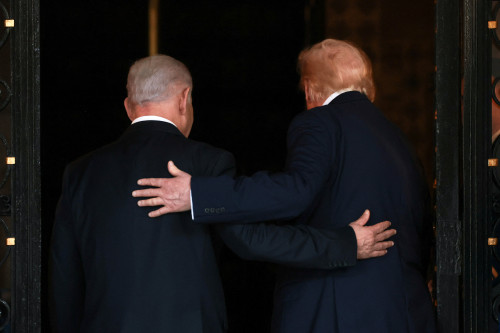
Trump struck a warm tone as he greeted Netanyahu before their meeting, going so far as to say that Israeli President Isaac Herzog had told him he planned to pardon Netanyahu of corruption-related charges – a conversation Herzog’s office immediately denied took place.
“I feel that if you had the wrong prime minister, Israel would not exist,” Trump said.
NEXT STEPS IN GAZA CEASEFIRE PLAN
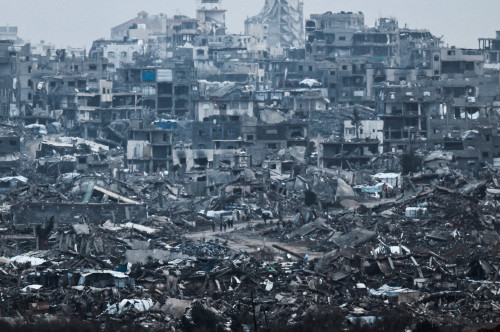
Israel and Hamas agreed in October to Trump’s plan to end a two-year Gaza war, which ultimately calls for Israel to withdraw from the Palestinian territory and Hamas to give up its weapons and forgo a governing role.
The first phase of the ceasefire included a partial Israeli withdrawal, an increase in aid and the exchange of hostages for Palestinian detainees and prisoners.
An Israeli official in Netanyahu’s circle said that the prime minister would demand that the first phase of the ceasefire be completed by Hamas returning the remains of the last Israeli hostage left in Gaza, before moving ahead to the next stages. The family of the deceased hostage, Ran Gvili, joined the prime minister’s visiting entourage.
Israel has yet to open the Rafah crossing between Gaza and Egypt, also a condition of Trump’s plan, saying it will only do so once Gvili’s remains are returned.
Chuck Freilich, a political scientist at Tel Aviv University, said that with an election due in October, Netanyahu was in a tight spot.
“He doesn’t want a clash with Trump in an election year,” Freilich, a former Israeli deputy national security adviser, said. “(Trump) wants to go forward, and Bibi (Netanyahu) is going to have to make some compromises there.”
TENUOUS TRUCE
Ahead of his meeting with Trump, Netanyahu’s office said he met U.S. Secretary of State Marco Rubio and Pentagon chief Pete Hegseth, both of whom were in the Trump-Netanyahu meeting, along with several other U.S. and Israeli officials.
Rubio said last week that Washington wants the transitional administration envisioned in Trump’s plan – a Board of Peace and a body made up of Palestinian technocrats – to be in place soon to govern Gaza, ahead of the deployment of the international security force that was mandated by a November 17 U.N. Security Council resolution.
Israel and Hamas have accused each other of major breaches of the deal and look no closer to accepting the much more difficult steps envisaged for the next phase.
Hamas, which has refused to disarm, has been reasserting its control as Israeli troops remain entrenched in about half the territory.
Israel has indicated that if Hamas is not disarmed peacefully, it will resume military action to make it do so.
During comments to reporters, Trump said he would talk to Netanyahu about the possibility of stationing Turkish peacekeepers in Gaza. That is likely a fraught subject – while Trump has frequently praised Turkish President Tayyip Erdogan, Israel and Ankara have a much more circumspect relationship.
While the fighting in Gaza has abated, it has not stopped entirely. Although the ceasefire officially began in October, Israeli strikes have killed more than 400 Palestinians — most of them civilians, according to Gaza health officials — and Palestinian militants have killed three Israeli soldiers.
Another likely topic of conversation between Trump and Netanyahu was Syria. Trump has supported the government of President Ahmed al-Sharaa, who took power after longtime strongman Bashar al-Assad was deposed last year.
But Israel is suspicious of the new leader, who was once a member of al-Qaeda, going so far as to bomb government buildings in Damascus this July.
LEBANON CEASEFIRE ALSO TESTED
In Lebanon, a U.S.-backed ceasefire in November 2024 ended more than a year of fighting between Israel and Hezbollah and required the disarmament of the powerful Iran-backed Shiite group, beginning in areas south of the river adjacent to Israel.
While Lebanon has said it is close to completing the mission within the year-end deadline of disarming Hezbollah, the group has resisted calls to lay down its weapons.
Israel says progress is partial and slow and has been carrying out near-daily strikes in Lebanon, which it says are meant to stop Hezbollah from rebuilding.
Iran, which fought a 12-day war with Israel in June, said last week that it had conducted missile exercises for the second time this month.
Netanyahu said last week that Israel was not seeking a confrontation with Iran, but was aware of the reports, and said he would raise Tehran’s activities with Trump.
The Israeli official said Netanyahu was expected to present intelligence on Iranian efforts to build up its arms.
The official did not elaborate on any Israeli demands or actions regarding Iran.
Trump in June ordered U.S. strikes on Iranian nuclear sites but has since then broached a potential deal with Tehran.
(Reporting by Andrea Shalal in Palm Beach, Maayan Lubell and Steven Scheer in Jerusalem; Additional reporting by Trevor Hunnicut; Writing by Simon Lewis and Gram Slattery; Editing by Aidan Lewis and Howard Goller)