
June 15, 2026
Fox Just Spent $22 Billion on Roku
The deal changes the streaming landscape overnight
This one caught a lot of people off guard.
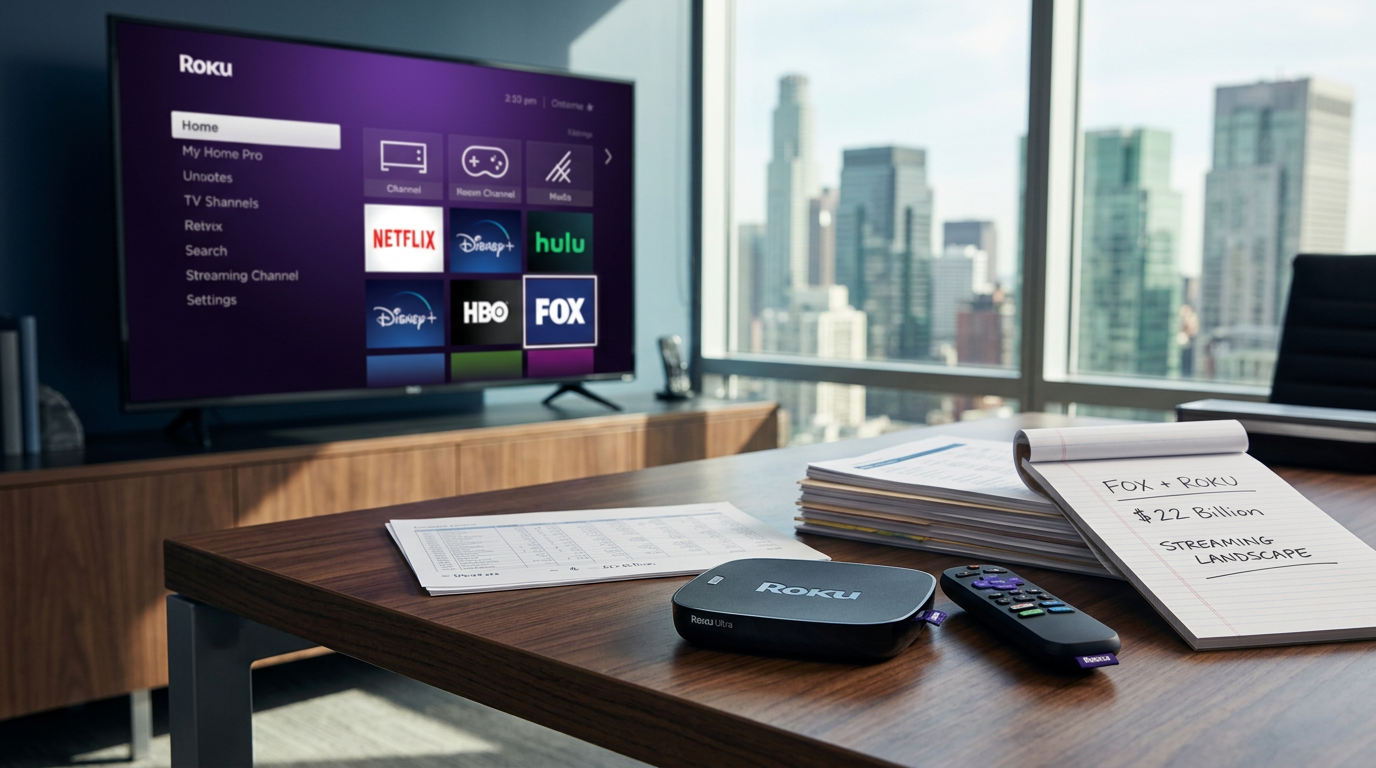
Fox Corporation announced Monday it will acquire Roku for $160 per share in a cash-and-stock transaction, putting the deal’s enterprise value at roughly $22 billion. Fox is borrowing $12 billion to help fund it. The deal is expected to close in the first half of 2027, pending regulatory approval.
On paper, the logic is straightforward. Roku has a direct relationship with more than 100 million global streaming households. Fox has Fox News, Fox Sports, Tubi, and its newer direct-to-consumer product Fox One. Put those together and, according to both companies, the combined entity becomes the third-largest player in U.S. television by share of viewing. That is not a small thing.
The Best Time Of Day To Trade For A Better Retirement
This little known trading window is turning even novices into consistently profitable investors, and now, you can learn to take advantage of it for free!
With expert Dave Aquino’s latest free guide, “How To Master The Retirement Guide”, you’ll get step-by-step instructions to one of the most powerful market plays around today.
But here is what this is really about: advertising data. Roku sits at the center of how people actually watch TV. It controls the interface. It sees what gets clicked, what gets skipped, how long people stay. That first-party data is genuinely valuable, especially as third-party cookies keep disappearing and targeted ad spending gets harder to execute. Fox adding Roku’s data layer on top of Tubi and its broadcast reach is a meaningful upgrade to its ad business.
Slight tangent, but worth noting: Roku only just turned its first annual profit in 2025, posting net income of $88.4 million on $4.74 billion in revenue, up 15% year over year. So Fox is buying a company that figured out profitability roughly five minutes ago. That is either great timing or a sign Fox overpaid. Fox shares fell around 17% Monday morning, which suggests investors lean toward the latter.
Fox CEO Lachlan Murdoch called it a “defining moment.” Roku founder and CEO Anthony Wood, who will join the Fox board after closing, said the two companies are “committed to continuing to operate Roku as an open, partner-friendly platform.” Whether competitors like Amazon and Google actually believe that is another question entirely.
Big Oil walked away. That was the mistake.
Big Oil knew this energy source was there.
Chevron tried to tap it. Texaco tried. Unocal tried. Even the Soviets drilled deeper than Everest is tall trying to reach it.
Then they all walked away.
For decades, Wall Street treated it like a failed science experiment. But in a remote valley in Utah, a drilling crew just cracked the code.
They weren’t drilling for oil. They were drilling for heat. And Dylan Jovine believes one company is positioned at the center of the last energy revolution America may ever need.
The last major Fox deal of this scale was the $71 billion sale of its entertainment assets to Disney back in 2019. This one is smaller, but in some ways more pointed. Fox is not trying to be everything. It is trying to own the room where people watch everything else.
Whether that is enough to compete with Netflix, YouTube, and Amazon long-term is the question nobody has a clean answer to yet.