
The rules of warfare are changing fast.
Low-cost drones are replacing traditional systems.
AI is identifying targets in seconds.
And new technologies are shifting the balance of power.
Most investors are still focused on the old playbook.
But behind the scenes, a new group of companies is emerging.
These companies are not just participating in the shift.
They are driving it.
Our latest report reveals 5 stocks at the center of this transformation.
If this trend continues, they could play a major role in the future of defense.
Sodium Beats Lithium on Grid Storage. The Contracts Prove It.
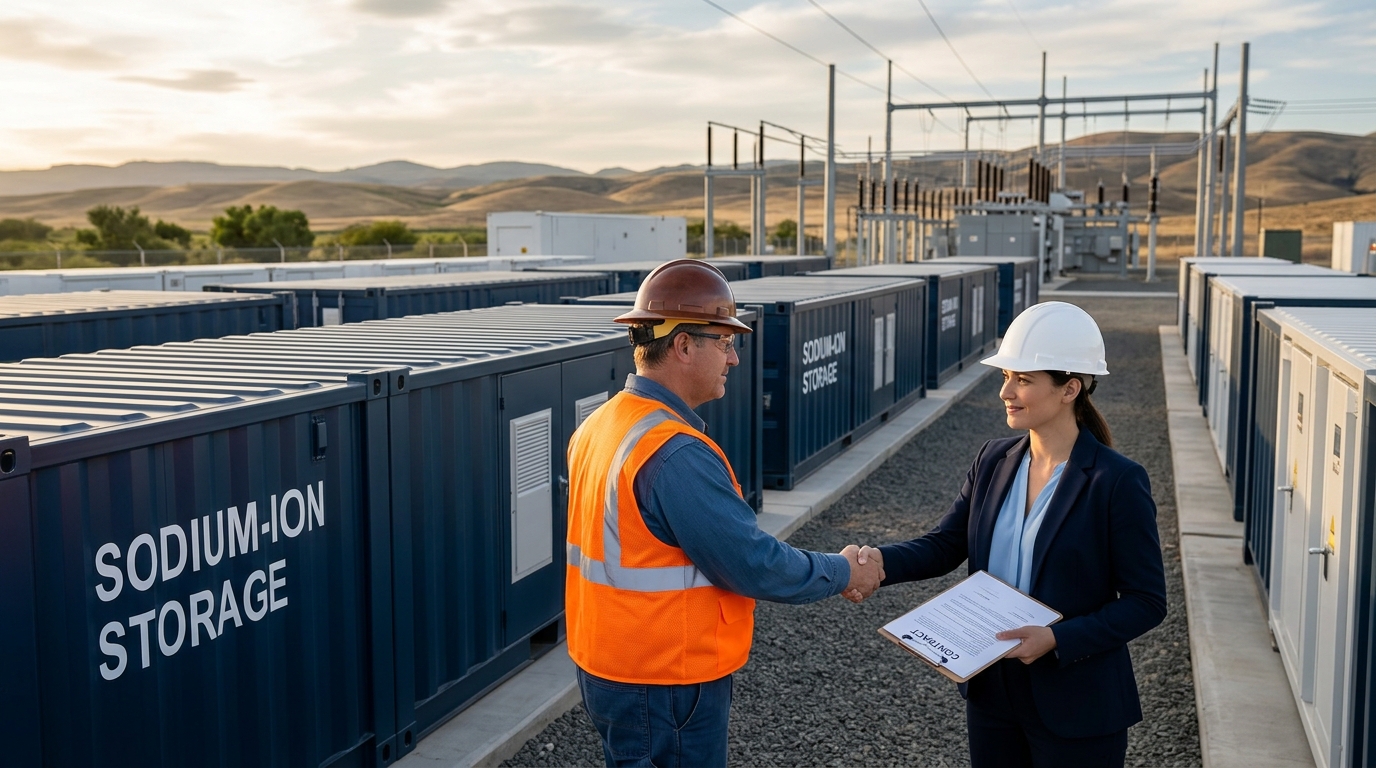
The battery chemistry race on utility grids has a new front-runner, and it does not use lithium. The shift is not theoretical. The contracts are signed, the regulators have weighed in, and the first commercial shipments are scheduled to begin this month.
CATL said it will begin delivering its first sodium-ion battery storage systems to customers in September, with cumulative shipments expected to reach 1 GWh by the end of 2026. That is a commercially meaningful volume, not a demonstration project. CATL has also said its second-generation Naxtra sodium battery has reached cost parity with lithium iron phosphate cells, with 15,000 charge-discharge cycles and an energy density of 175 Wh/kg, and it has described a pathway to fall 15 to 20 percent below LFP pricing by 2028.
The cost argument used to be the easy objection to sodium. That argument is gone. What remains is the procurement argument, and that one is flipping too.
IRS Notice 2026-15, issued February 12, 2026, provided interim guidance implementing Prohibited Foreign Entity rules under the One Big Beautiful Bill Act, and it applies to certain energy storage technologies beginning construction after December 31, 2025. For projects breaking ground in 2026, interim guidance and industry summaries describe a 55% non-PFE material assistance cost ratio threshold for energy storage technology, rising to 75% for energy storage projects that begin construction after 2029. Battery cells are overwhelmingly manufactured in China, which means many standard lithium-ion supply chains can carry tax-credit eligibility risk. Sodium-ion does not automatically solve that, but it can reduce exposure to the lithium and cobalt supply chains that often complicate compliance.
That regulatory pressure is landing directly in procurement decisions. On July 22, 2026, ESS Tech (NYSE: GWH) announced it signed a Letter of Intent with Juniper Energy for deployment of 500 MWh or more of sodium-ion battery energy storage systems. The companies described an initial 10 MW / 80 MWh system in California, targeted for commercial operation in 2027, using ESS’s Bridge modular sodium-ion AC solution. Separately, ESS has said demand for sodium-ion is “unlike anything in our company’s history,” and it has pointed to early-stage opportunities approaching $1 billion across data centers, critical infrastructure, and utility markets.
Safety is the third driver, and it is underweighted in most coverage. Communities across the U.S. are enacting moratoria on battery storage deployments. In New York state, Modo Energy has reported more than 100 local authorities with bans or moratoria in place, covering roughly 8% of the state. High-temperature regions like the Mojave Desert put heavier cooling demands on storage assets, and Alsym Energy says its sodium-ion Na-Series chemistry is non-flammable and is designed to reduce the need for energy-intensive heating and cooling systems, including the ability to operate across a wider passive-cooling window.
The U.S. ended 2025 with 43.6 GW of utility-scale battery storage online, then added another 8.3 GW in just the first six months of 2026, according to the U.S. Energy Information Administration. At that pace, even a modest chemistry shift in new procurement represents billions in redirected capital. Sodium is not replacing lithium wholesale. But it is winning the specific contracts where tax-credit eligibility risk, fire permitting, and extreme-climate operation all converge, which in 2026 is most of the contested ground.