When a famous investor admits a mistake the same morning his stock is collapsing, the market is not being cruel. It is being precise.
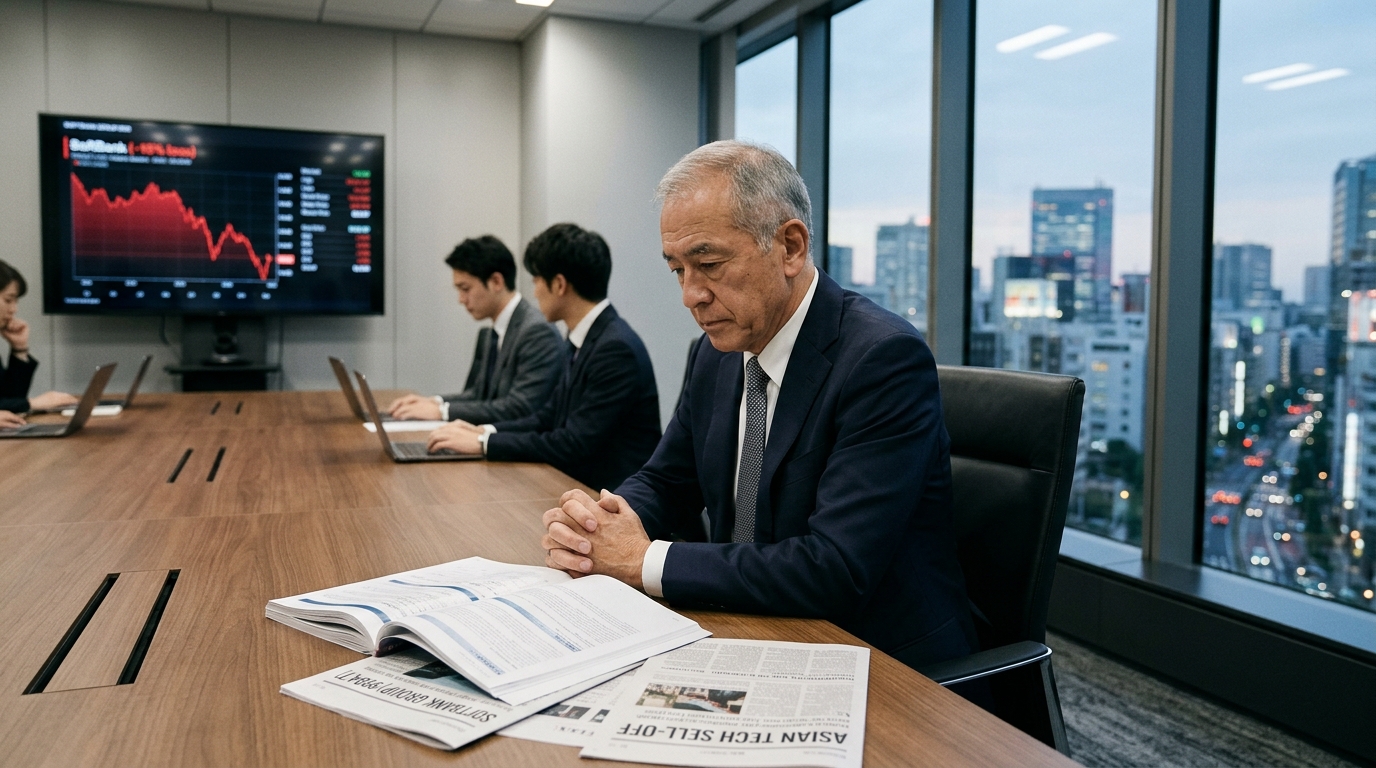
SoftBank Group closed 14.48% lower on Friday, its worst day since August 2024, as a sell-off swept through Asian technology stocks following the market debut of Anthropic. At its intraday low, the stock fell as much as 16.6% to ¥2,950.5 before paring some losses. Those two numbers represent billions in market capitalization gone in a single session. And they are not random.
When SoftBank discussed investing in Anthropic, the Japanese group was already backing rival AI developer OpenAI and was reluctant to fund both, Son said. Speaking at an AI conference in Tokyo, he said, “There was a meeting to discuss investing in Anthropic,” but “at that point we had already decided on and were executing our OpenAI investment, so there was hesitation about pursuing an additional deal.” That hesitation, in hindsight, cost him exposure to a company that listed at an offering price of $83 and closed its first session at $97.17, up 17.1%.
The deeper issue is not Anthropic. It is OpenAI.
SoftBank’s cumulative investment in OpenAI totals $64.6 billion, representing an ownership interest of approximately 13%. That is not a position inside a diversified portfolio. When a single illiquid asset dominates your balance sheet to that degree, every piece of news about that asset becomes existential.
While sharp increases in OpenAI’s valuation had boosted SoftBank’s balance sheet earlier this year, the company is yet to cash in on its investment, and OpenAI is pursuing a listing in 2027. Reuters reported in late October that OpenAI cut its fundraising target by $10 billion, now seeking about $20 billion at a $1.25 trillion valuation, down from around $1.4 trillion previously sought.
The capital-allocation story here is not complicated, but it is worth sitting with. Son financed this concentration by selling other assets and borrowing heavily. SoftBank has said it arranged a $40 billion bridge facility in March 2026 primarily for follow-on investments in OpenAI, with a maturity date of March 25, 2027. The structure demands a liquidity event. The liquidity event keeps moving.
The stock lost 30% in October and is down 31% so far this month. That is not a correction. It is a rerating of what happens when a forced-concentration strategy meets an asset that cannot be sold.
The lesson for long-term investors is uncomfortable but clear. Conviction is a virtue. Concentration financed by leverage, in a single private company, with a repayment clock running, is a different thing entirely. Son has built genuine fortunes before. He may yet be right about OpenAI. But the Anthropic regret is not really about Anthropic. It is about what happens when you leave yourself no room to be wrong.