Dear Reader,
Management put roughly $450 million behind one decision in the third quarter of 2026.
It bought back approximately 10.5 million shares of its own company at an average price of $42.78. The board also authorized the purchase of another 40 million shares.
That is not a prediction. It is a major capital allocation decision at an American oil and natural gas producer.
Click here to watch my Ultimate Stock Unicorn briefing and see the company behind the buyback.
The buyback is only part of the story.
This same company extended a multi-year, multimillion-dollar agreement with Palantir. The companies say Palantir technology has helped monitor production equipment in real time and optimize raw-material logistics.
I see a business using AI inside an established energy operation, not a startup waiting for its first real customer.
And now there is a bigger reason to pay attention to energy: the International Energy Agency says data center electricity demand rose 17% globally in 2025.
When management commits this much capital to its own shares, I want to understand why.
Click here to watch the full Ultimate Stock Unicorn presentation.
Yours in smart speculation,
Karim Rahemtulla, Head Fundamental Tactician
Monument Traders Alliance
P.S. The board authorized additional purchases, but an authorization is not a promise to buy every share. Watch the briefing for my full case.
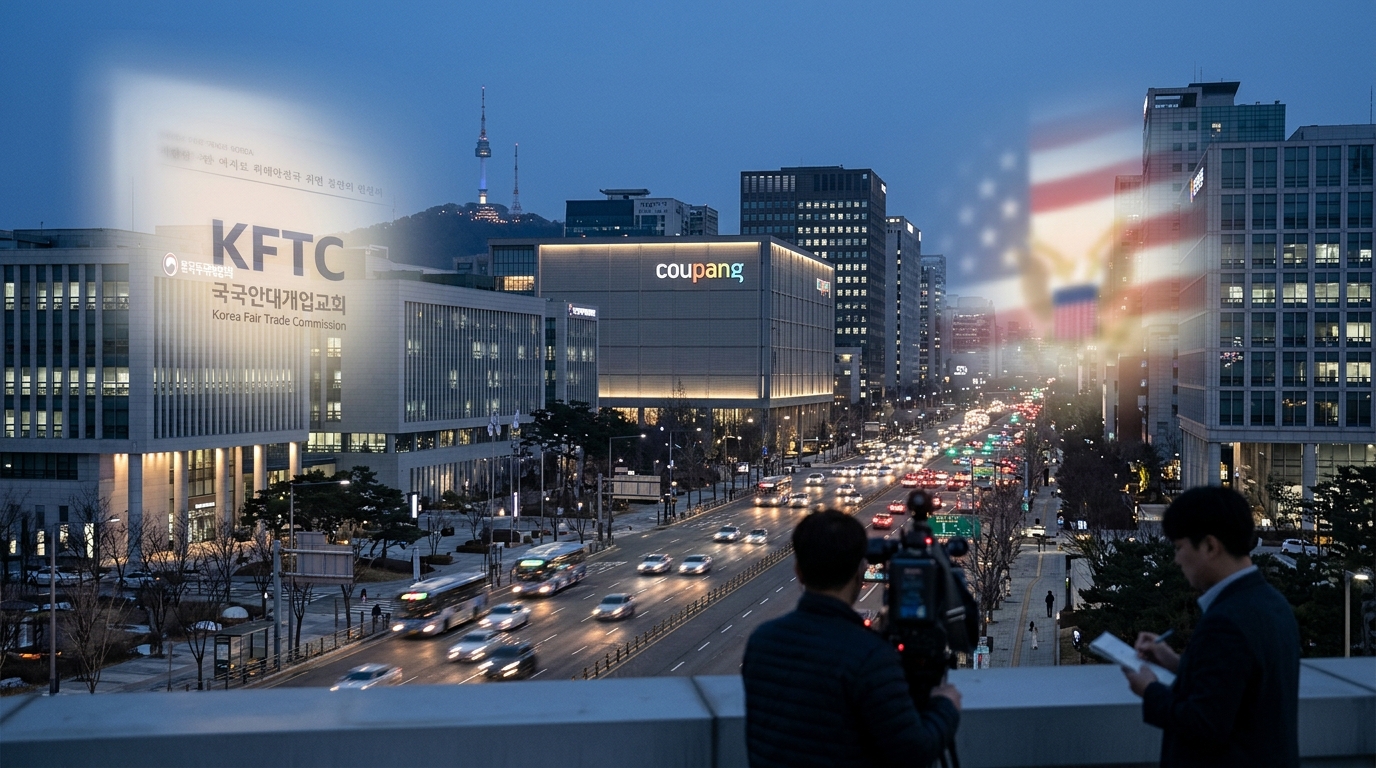
Coupang Caught Between Seoul’s Regulators and White House Heat
Three separate pressure points landed on South Korea within 24 hours, and Coupang sits at the center of all of them.
The Fine Stack
South Korean regulators have hit Coupang with roughly $770 million in fines, a total that includes a provisional 300.8 billion won penalty against its food-delivery service announced earlier this month. That food-delivery ruling came from the Korea Fair Trade Commission. On November 9, the KFTC imposed a 300.8 billion won fine, finding that Coupang Eats had required restaurants not to offer prices or discounts more favorable than on other delivery apps. The larger piece of the total dates to June, when the Korean Personal Information Protection Commission announced an administrative fine of approximately $278 million against Coupang Corp. relating to a November 2025 data incident. In the same June 10, 2026 action, the PIPC also announced a separate administrative fine of approximately $132 million that it said was unrelated to the November 2025 incident.
Washington Calls It a Broken Promise
A White House official said the administration opposes South Korean President Lee Jae Myung’s alleged discrimination against U.S. companies, and that the White House expects South Korea to honor its commitment to fair treatment for U.S. technology companies, including Coupang. The commitment at issue is specific. The promise appears in the two governments’ November 2025 joint fact sheet, which includes a pledge to ensure U.S. companies are not discriminated against and do not face unnecessary barriers related to digital services laws and policies.
South Korea’s embassy pushed back, stating that the country abides by the agreement with the Trump administration and is committed to a fair and nondiscriminatory business environment. Seoul also says the Korea Fair Trade Commission acted lawfully against anticompetitive conduct. Both sides are dug in.
The Tariff Layer
The diplomatic friction arrived alongside a separate trade action. In a tariff move tied to a Section 301 probe into structural excess capacity, the Trump administration proposed new duties on 14 major trading partners, and South Korea was listed for a rate of up to 15% in that package. Separate from that, the U.S. already imposed Section 301 forced-labor-related duties this year on a broad set of economies that included South Korea, with rates that could fall in the 10% to 12.5% range depending on the economy. Because those two tariff actions stem from different investigations, it is not clear that they combine into a single 15% all-in rate for South Korea. Even so, the direction of travel is clear: the tariff ceiling risk is rising, and South Korea is now explicitly on the list for potential Section 301 action tied to manufacturing overcapacity.
People familiar with the situation raised the possibility of retaliation from Congress or the White House, including additional tariffs on South Korea, if the Coupang dispute drags on. That possibility gives the fines a geopolitical dimension that goes well beyond the balance sheet.
What Traders Watch
- CPNG appeals: The PIPC’s regulatory findings and penalties are subject to judicial review, and Coupang has said it plans to pursue judicial relief in the Seoul Administrative Court. The food-delivery ruling adds a second front.
- Tariff escalation trigger: With USTR also weighing a possible Section 301 investigation into South Korea’s digital policies, Washington could target the country with new tariffs specifically aimed at platform regulation. That is the scenario that rattles the broader bilateral relationship.
- BOK backdrop: The Bank of Korea raised its base rate by 25 basis points to 3.25% on November 26, 2026. It is the third hike since July, and the BOK also lifted its 2026 growth forecast to 3.9%. A tightening central bank alongside a deteriorating trade relationship is an uncomfortable combination for Korean risk assets.
Coupang operates primarily in South Korea but is incorporated in Delaware, headquartered in Seattle, and listed on the New York Stock Exchange. That structure means it carries full U.S. equity risk while absorbing Korean regulatory exposure. The market priced the June privacy decision as soon as the data-incident penalty hit. What it has not priced is a White House that now treats those fines as a diplomatic grievance, against a backdrop where South Korea is on the list for potential Section 301 overcapacity tariffs of up to 15%, and where Washington is also weighing a separate Section 301 probe into Korean digital policies.
The broader Korean equity market adds another layer of risk for CPNG holders. The KOSPI has been swinging hard enough to trigger circuit breakers twice in six days, signalling a market running on voltage rather than conviction.