By Leika Kihara
TOKYO, March 2 (Reuters) – Japan faces risks of low growth and high inflation if a prolonged Middle East conflict keeps oil prices elevated and hits the import-reliant economy, analysts say, complicating the central bank’s efforts to push up still-low interest rates.
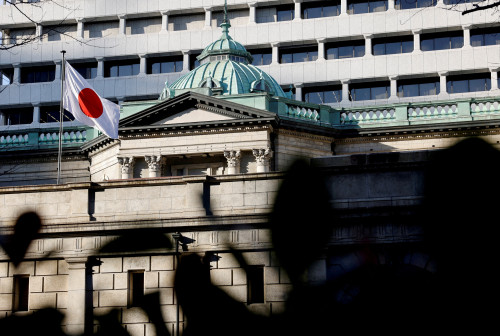
Bank of Japan Deputy Governor Ryozo Himino said on Monday the central bank will keep raising interest rates, but offered no clear signs on how soon the next hike could come.
“Even if market volatility is high or when there’s uncertainty, we need to decide what’s necessary,” Himino told a news briefing, playing down the view market turbulence alone would be enough reason to delay a rate hike.
Oil prices surged as much as 13% on Monday as Iran and Israel stepped up attacks in the Middle East, disrupting shipments from the key producing region in a blow to Japan that imports over 90% of its crude oil from the Middle East.
The yen weakened 0.6% to 156.95 per dollar, edging closer to the psychologically important 160 line in a move that may add inflationary pressure by pushing up import costs.
Prime Minister Sanae Takaichi told reporters on Saturday that she has instructed her cabinet to produce estimates on the potential economic impact from the weekend strikes on Iran.
Given Japan’s reliance on oil imports, the degree of damage to its economy will depend on whether the conflict leads to a prolonged disruption in shipments from the Middle East.
Japanese shipping firms said on Sunday they were halting operations around the Strait of Hormuz after U.S. and Israel launched military strikes on Iran.
While Japan has three months’ worth of oil reserves, a spike in crude prices or a blockade of the Strait could hurt already soft consumption by pushing up prices for a range of goods and services.
“We hope to take necessary steps flexibly to minimise the impact on people’s livelihoods and economic activity,” Takaichi told parliament, when asked about the government’s response.
BOJ OUTLOOK IN FLUX
The mix of soft demand and rising inflation could put the Bank of Japan (BOJ) in a holding pattern, potentially delaying its next rate hike that markets had bet could come as soon as April before the weekend crisis, analysts say.
Morgan Stanley MUFG Securities estimates a 10% increase in oil prices to shave around 0.1% point off Japan’s real gross domestic product (GDP).
“A sharp rise in oil prices would pose short-term stagflationary risks, while underlying inflation is likely to decelerate over the longer term,” said Takeshi Yamaguchi, chief Japan economist at Morgan Stanley MUFG Securities.
“The BOJ is likely to adopt a more cautious stance, further reducing the probability of a near-term rate hike,” he said.
Nomura Research Institute expects the conflict to push down Japan’s real GDP by 0.18% point and push up inflation by 0.31% if the military conflict leads to a prolonged disruption to operations around the Strait.
“Given escalating downside risks to the economy, the BOJ might need to be more cautious about additional rate hikes,” said Takahide Kiuchi, a former BOJ board member who is currently an economist at Nomura Research Institute.
Some analysts, however, still see the chance of a rate hike in April, as the conflict-induced spike in oil prices would come after nearly four years of inflation exceeding the BOJ’s price target due to stubbornly high food costs and steady wage gains.
“With inflation expectations already at around 2% and the economy at near-full employment, rising raw material costs could push more firms into passing on prices. That, in turn, could push household and corporate inflation expectations above 2%,” said Ryutaro Kono, chief Japan economist at BNP Paribas.
“Given such economic and price backdrop, I don’t think the BOJ will choose to put off a rate hike easily,” he said.
The BOJ next meets for a policy meeting on March 18-19, which will be followed by another one on April 27-28.
Japan’s economy grew an annualised 0.2% in the final quarter of last year with rising living costs weighing on consumption.
Analysts expect growth to accelerate as moderating food inflation and fuel subsidies ease the pain on households, turning real wages to positive territory.
(Reporting by Leika Kihara; Editing by Sam Holmes)