By Alun John
LONDON, March 20 (Reuters) – Nearly all major developed market central banks kept rates unchanged this week, but emphasised their readiness to act to curb inflation should the energy shock caused by the U.S.-Israeli strikes on Iran drive a broader surge in prices.
Since the war began, traders have slashed bets on monetary easing this year for the Federal Reserve and priced rate increases elsewhere, including by the European Central Bank and Bank of England.
The Reserve Bank of Australia, already in hiking mode, raised rates again this week.
Here’s where the 10 developed market central banks stand, ranked from their highest policy rate to lowest:
1/ AUSTRALIA
The Reserve Bank of Australia raised rates for a second straight month to 4.1% on Tuesday, warning of a “material” risk to inflation from the war.
Core inflation hit a 16-month high of 3.4% in January and is rising. Markets see at least two, probably three, more hikes this year, which would take rates above their late 2023 high. <0#AUDIRPR>
2/ NORWAY
The Norges Bank meets next week. Sticky inflation meant it was one of the most cautious developed market central banks, cutting rates just twice last year from their late 2023 high of 4.5%.
Markets see the next move as a hike, and one is fully priced by August.
3/ BRITAIN
The Bank of England held rates steady at 3.75% on Thursday, but traders viewed the post-meeting statement as hawkish, and now see a 25-basis-point rate hike by April as a toss up, and maybe three hikes by year-end.
The BoE said it was alert to the risk of higher inflation expectations getting embedded in the economy, and while it nodded to the risks of an economic slowdown it said higher inflation was the bigger risk.
4/ UNITED STATES
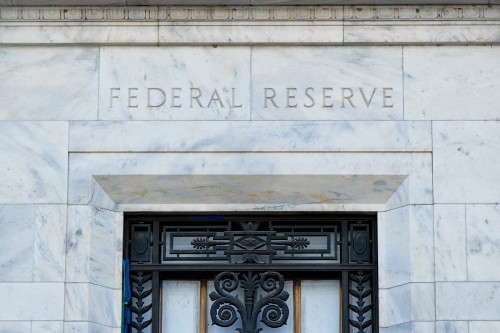
The Federal Reserve held rates steady on Wednesday in the 3.50%-3.75% range, but chair Jerome Powell’s hawkish tone caused traders to push back rate cut expectations into 2027.
The Fed last cut rates in December. Before the war, markets had priced two 25 bp rate cuts this year – now they see next to no chance of a move.
While the world’s most significant central bank stuck to its prior projections for one cut in 2026, it forecast higher inflation this year than it had previously.
Powell described significant challenges in bringing inflation down, from persistent tariff-driven price hikes to Iran war-driven energy price jumps. He said the Fed may not be able to “look through” the latter as a transitory shock.
5/ NEW ZEALAND
The Reserve Bank of New Zealand meets in early April. It cut rates more aggressively than most peers in 2024 and 2025 to 2.25%. Still, markets think the next move will be a hike, and three are priced by year-end.
6/ CANADA
The Bank of Canada on Wednesday kept its rates unchanged at 2.25% as expected, but Governor Tiff Macklem warned it was ready to raise borrowing costs if higher energy prices risked turning into persistent inflation.
The BoC has kept its key rate steady since October. Markets price at least one 25 bps rate hike by year-end, but do not see it as likely until the third quarter.
7/ EURO ZONE
The European Central Bank left rates unchanged as expected on Thursday but it may need to start discussing rate hikes in April and tighten soon after, sources told Reuters.
Banks have changed their ECB forecasts and markets now anticipate more than two 25 bps hikes in the ECB’s 2% deposit rate this year, as they think policymakers accused of acting too late on the 2021/2022 inflation surge will be quicker to pull the trigger this time.
8/ SWEDEN
Sweden’s central bank held its key rate at 1.75% on Thursday, and like peers flagged that uncertainty was high. Markets also price in rate hikes this year.
9/ JAPAN
The BOJ is no longer the sole central bank in hiking mode, though it is moving cautiously and, on Thursday, kept rates unchanged at a 30-year high of 0.75%.
Governor Kazuo Ueda did, however, say the BOJ board was somewhat more focused on upside risks to inflation than downside risks to growth from the conflict, keeping alive market expectations for a near-term rate hike.
Those remarks caused the Japanese yen to appreciate.
10/ SWITZERLAND
The Swiss National Bank left its policy rate at 0%, the lowest among major central banks, on Thursday and signalled its readiness to intervene to curb a recent surge in the safe-haven Swiss franc. The currency is trading at around an 11-year high against the euro.
Swiss inflation was at just 0.1% in March, and franc appreciation threatens to push it below the central bank’s 0-2% target range.
(Reporting by Alun John; editing by Dhara Ranasinghe, Alex Richardson and Shri Navaratnam)