

July 1, 2026
Micron’s Record Quarter. Now What?
Frst a message from Media Pub
There’s a powerful anomaly that controls the S&P’s daily range.
This anomaly has been studied extensively by researchers at Columbia Law, Syracuse University, and the Federal Reserve.
And according to the research, you’re more likely to win a trade than lose it if you align your trade within this daily range.
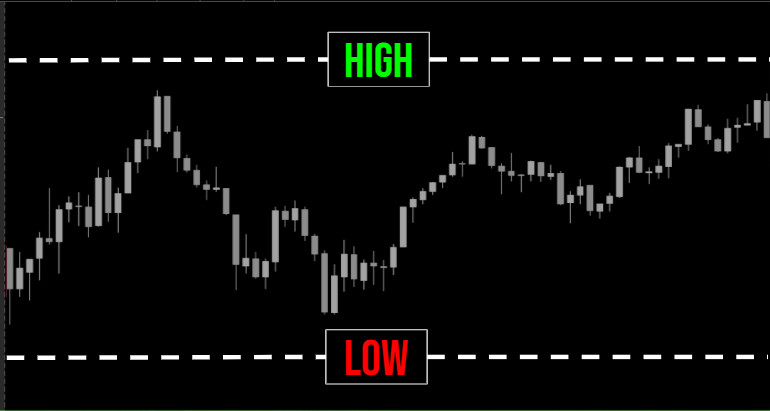
Now, here’s the thing…
I’ve been placing daily trades in line with this range for more than a year, and it’s delivered 498 wins with 89% accuracy.
I don’t know about you, but that’s a pretty decent setup.
The good thing is that I’m about to ramp things up in 2026.
And although I can’t make reckless guarantees on the market…
It shouldn’t take me long to clue you in on this daily setup.
I’ve laid out all the details right here.
FEATURED
Micron’s Record Quarter. Now What?
Memory was never supposed to be the hottest trade in tech. And yet here we are.
Micron Technology (NASDAQ: MU) just reported fiscal Q3 2026 earnings that didn’t just beat expectations. They blew through them in a way that forced analysts to rethink their entire valuation frameworks overnight. The stock crossed the $1 trillion market cap threshold back in May, and it’s now sitting closer to $1.3 trillion. Price targets have been revised so aggressively that some firms essentially doubled their numbers in a single note.
Where Analysts Stand Now
- Cantor Fitzgerald: Overweight, $2,000 target (raised from $1,500)
- Susquehanna: Positive, $2,000 target (raised from $1,750)
- J.P. Morgan: Overweight, $1,540 target (raised from $550)
- UBS: Buy, $1,625 target (raised from $535)
- KeyBanc: Overweight, $1,600 target (raised from $600)
- Wedbush: Outperform, $1,400 target (raised from $1,300)
- Bank of America: Buy, $1,550 target (raised from $1,500)
- Goldman Sachs: Neutral, $1,100 target (raised from $900) — the lone cautious voice, but even they moved higher
A 64% Dividend from Gold?
One little-known fund tied to gold is quietly delivering 64% Yields – paid monthly. And almost no one is talking about it.
Click here to discover the secret gold income fund before the next payout.
The Numbers
This is where it gets interesting. Micron posted Q3 revenue of $41.46 billion against analyst estimates of roughly $35.7 billion — a gap that rarely shows up at a company this size. Adjusted EPS came in at $25.11, versus a consensus closer to $20.49. Shares jumped about 14.6% in after-hours trading following the report. It was the company’s fifth consecutive quarterly revenue record, and the largest sequential revenue increase in company history.
- Cloud Memory Business Unit revenue: $13.77 billion, with an 83% gross margin and 78% operating margin
- Total data center revenue: exceeded $25 billion for the quarter
- Q4 revenue guidance: approximately $50 billion (plus or minus $1 billion), versus prior analyst consensus of roughly $43.6 billion
- Q4 EPS guidance: $31 per share (plus or minus $1)
- Net income for the quarter: $28.24 billion, up from $13.79 billion the prior quarter
- Cash and marketable investments (plus restricted cash): $30.2 billion on the balance sheet
- Strategic customer agreements signed: 16 deals, with roughly $22 billion in total customer deposits and financial commitments
For context: a year ago, this company was doing roughly $9.3 billion in quarterly revenue. That number just quintupled.
Why the Stock Is Moving
The AI infrastructure buildout is pulling demand for memory chips at a pace that supply simply cannot match. Micron’s high-bandwidth memory products are essential to the AI accelerators built by Nvidia and others, and the company says it has signed strategic customer agreements locking in supply for multiple years — with Anthropic recently announced as a key partner. When a meaningful portion of your supply is governed by multi-year, take-or-pay agreements with price bands, the old memory cycle story starts to look different. HBM3E and HBM4 products are reportedly fully booked through 2027, with demand extending into 2028.
Slight tangent, but it matters: Micron selected Bechtel as the construction partner for its major new New York fab project in June. That facility is still years from meaningful production output, which means the supply-demand imbalance in advanced memory likely stays tight through at least 2027. Management said as much on the call.
Macro Context
Hyperscaler capital spending — the outlays by Google, Microsoft, Amazon, and Meta on AI infrastructure — is expected to surge again in 2026, and that spending creates a powerful demand floor for every component in the AI stack. Memory sits at the center of it.
The bear case here isn’t about current demand. Everyone agrees demand is real. The argument is about the memory cycle — this industry has historically seen sharp reversals when supply catches up, and Micron’s valuation now embeds a lot of future growth. Goldman Sachs, sitting at a $1,100 target while most of Wall Street is far higher, isn’t saying the business is bad. They’re saying the stock has already priced in a lot of the good news, and that memory remains cyclical regardless of how strong the current environment looks.
July 9th: the deadline that reprices this stock
Three fuses are already lit.
10/14/25: Microsoft killed Windows 10. Over a billion PCs forced to upgrade to ghost-chip hardware.
1/9/26: Defense Secretary Hegseth signed the off-grid AI mandate.
7/9/26: Every defense contractor must demonstrate ghost-chip capability. That’s when the hardware orders become irrevocable.
Every single order pays a royalty to the same company.
The last time an architecture monopoly emerged at this scale, early investors turned $2,000 into $279,160.
See all three “Ghost-Chip Trinity” stocks before July 9th >>
Three Scenarios Worth Thinking Through
Optimistic: Long-term customer agreements hold pricing elevated through 2027 and beyond. The HBM4 ramp with Nvidia’s Vera Rubin platform gives Micron premium positioning. Fiscal 2027 EPS estimates above $100 per share could push the stock toward $2,000 or higher. The aggregate remaining performance obligations across all signed strategic agreements are now approximately $100 billion — a number that reframes how you think about revenue visibility.
Middle ground: Demand stays strong, but Street expectations have already moved sharply higher. The stock consolidates near current levels while the business continues executing at a record pace. Next earnings catalyst arrives September 29, 2026.
Cautious: Memory cycles don’t care how long AI has been running. If macro conditions soften, hyperscaler spending slows, or Samsung and SK Hynix flood supply faster than expected, the margin compression could be severe. Goldman’s Neutral stance isn’t absurd if earnings fall back toward 2024 levels — and memory has done that before.
Technical Levels
MU set an all-time intraday high of $1,255 on June 25, 2026, the day after earnings. The stock closed June 30 at roughly $1,154, sitting well above both its 50-day and 200-day moving averages. The post-earnings gap higher created a visible support floor near the $1,100 area. A sustained break below that level on meaningful volume would be worth watching closely as a potential signal of institutional distribution.
What to Watch Next
- Next earnings report: September 29, 2026 (confirmed)
- Progress on HBM4 customer certifications for Nvidia’s Vera Rubin platform
- Whether additional strategic customer agreements get announced beyond the current 16
- SK Hynix and Samsung capacity timelines — any signal of earlier-than-expected supply additions changes the math
- Analyst revisions following the Q4 guide, which is already tracking well above prior consensus
“Billionaire’s Backdoor” Strategy Reveals New AI Winners
The richest tech billionaires – Bezos, Gates, Musk, and more – are quietly shifting their money into a new kind of asset. It’s not gold or crypto. It’s not AI software or the massive Mag 7 trade. Instead, it’s a next-phase AI play that’s closed to most investors. However, we’ve worked out a “backdoor” strategy you could still use to get in, for as little as $50 a share.
What Micron just reported isn’t a cyclical bounce. It’s a fundamental shift in what memory is worth in an AI-driven world. The business is clearly performing. The harder question — how much of the next two years of earnings growth is already embedded in the share price — is the one that actually determines what happens from here. That debate is unresolved. And that’s probably the most honest thing anyone can say about it right now.
For informational purposes only.