

September 7, 2026
Bonus Content: OPEC+ Froze October Oil Output at 31.01M Barrels. Q4 Is Wide Open.
Don’t be like other traders wasting their mornings trying to predict the market.
Plotting the exact top, the perfect bottom, or the next big rally.
I come bearing an entirely different approach.
Instead of guessing direction, I find certain key levels market makers seem to be defending and build trades around them.
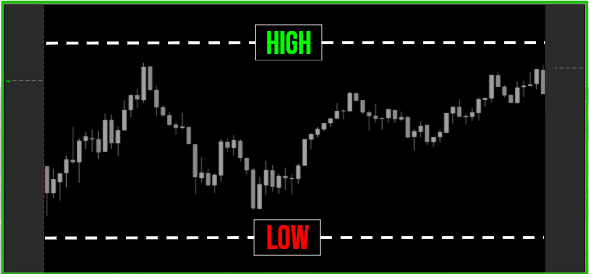
It’s a straightforward strategy that has now produced more than 600 winning trades in 2 years…
With an 89% historical accuracy rate.
We’ve seen some decent winners, like a $164 gain in 90 minutes.
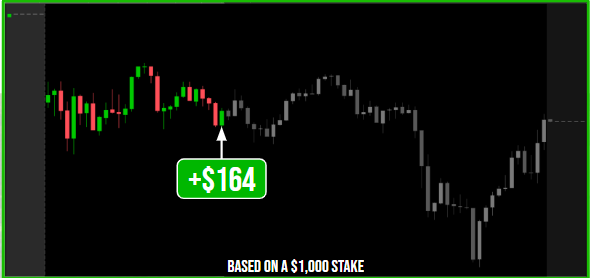
Or $250 in about an hour.
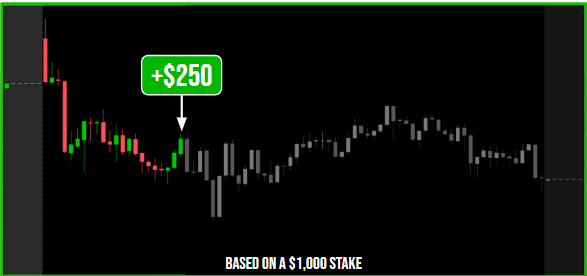
Of course, there have been smaller wins and losing trades too. Nothing is guaranteed.
But we’ll be going after the next opportunity at 9:35 AM tomorrow.
I’ve put together a quick breakdown showing you exactly how this strategy works and the very next cash window I’m looking out for.
See the full briefing right away.
Chris Pulver
OPEC+ Froze October Oil Output at 31.01M Barrels. Q4 Is Wide Open.

Market Snapshot
Brent rose to around $97 a barrel on September 7. That move has a direct cause: crude climbed toward $97 on Monday as the U.S. and Iran exchanged strikes in the Middle East, with the U.S. targeting three Iranian oil tankers over the weekend in retaliation for ballistic missile attacks on U.S. Navy warships. OPEC+’s Sunday decision landed into that exact environment.
What OPEC+ Actually Decided
Seven OPEC+ countries, Saudi Arabia, Russia, Iraq, Kuwait, Kazakhstan, Algeria, and Oman, agreed to keep required oil production levels for October unchanged from September, a decision taken during a virtual meeting on Sunday where the group reviewed global oil market conditions.
The group kept its combined required production for October at 31.01 million barrels per day. That ends six consecutive monthly increases. Last month, the OPEC+ countries had agreed to increase oil production by 188,000 barrels per day for September. That September boost completed a phased rollback of a 1.65 million-barrel-per-day supply cut first agreed in 2023, with the final piece of the unwinding landing this month.
Actual production by OPEC+ members has remained significantly below official targets. The unchanged October quotas therefore represent a pause in the recent process of increasing supply rather than a new production cut, with the pause coming amid major disruptions to oil exports through the Strait of Hormuz.
What the Statement Did Not Say
The communiqué covered October and stopped there. November and December got no mention. Delegates had told Bloomberg the group currently expects to hold production quotas steady for the remainder of 2026 following the September increase, though those plans could change depending on market conditions. That conditional language matters. OPEC+ gave itself a one-month window, not a quarter-long commitment.
The seven countries will meet again on October 4 to review market conditions. That is the date traders need in the calendar. Any shift in Hormuz risk, demand data, or internal compliance pressure between now and then could reopen the Q4 conversation.
The 2027 Baseline Fight
The more consequential issue sitting just offstage is the 2027 quota structure. The alliance approved a new mechanism to reassess the maximum sustainable production capacities of all its producers, which will be used as a baseline for the 2027 production quotas, with Saudi Arabia calling the approach more transparent and fair.
Reuters reported that the capacity review is being conducted by Dallas-based petroleum consultancy DeGolyer and MacNaughton. The review is expected to be completed by the end of this month and will be considered by oil ministers when the full alliance meets in late November, with the focus now shifting from monthly production adjustments to the more consequential debate over 2027, which is likely to be more difficult and politically sensitive.
Stocks in Focus
Energy equities have already run hard into this event. Chevron (CVX) and Exxon Mobil (XOM) are both higher year-to-date. During the most recent U.S. session, CVX reached an intraday high of $210.94. The OPEC+ pause removes incremental supply pressure at the margin and supports the current backwardation in the forward curve, which shows the November 2026 Brent contract near $96 and January 2027 around $89, backwardation that steep signals physical tightness and favors energy equity longs heading into Q4.
The U.S. energy sector has outperformed in 2026, driven primarily by geopolitical-related supply fears, elevated oil prices, and rising demand from AI infrastructure buildout. XLE, XOM, and CVX all retain exposure to a Brent price that remains well above the levels embedded in most Q3 consensus models.
The Cheat Sheet
- Top Market Theme: OPEC+ froze October output at 31.01M bpd, ending six straight monthly hikes, but left Q4 entirely unaddressed as Hormuz disruptions keep actual supply below quota anyway.
- Stock to Watch: CVX, trading near session highs, Piper Sandler coverage initiated with an Overweight and a $207 price target, and directly leveraged to any further Brent strength.
- Sector to Watch: Energy (XLE), the pause removes a near-term overhang without adding supply, a net positive for the sector at current crude levels.
- Biggest Risk: OPEC+ said nothing about November. The October 4 meeting could reverse the pause if Hormuz tensions ease or internal overproducers push for quota relief.
- Biggest Opportunity: The 2027 baseline audit concludes this month. Any country awarded a higher capacity baseline than the market expects, Iraq and UAE are the names to watch, could spark near-term positioning in related equities.
- One Thing to Remember: The pause is not a cut. With actual production already running below official targets due to Hormuz disruption, today’s decision changes the quota on paper more than the barrel count in the market.