
September 6, 2026
Bonus Content: Record Crack Spread Splits the Market in Two
There’s a Quiet Plan to Shrink Your Dollar – And It Has a Name
What if we told you there’s a plan in Washington to make your dollar worth less – and it’s already in motion?
Sounds crazy. But it’s real. And it has a name.
It’s being called the “Mar-a-Lago Accord.”
The idea is to weaken the dollar on purpose – to make American exports cheaper and bring factory jobs back home.
Here’s how: tariffs on imports, pressure on other countries to lift their currencies, and a dollar pushed lower by design. That’s the strategy. The trouble is what it costs you.
Because a weaker dollar means every dollar you’ve saved buys less.
Think your savings are safe? Think again.
This won’t hit like a crash. No headline, no warning. Your dollar just buys less… then less… until a lifetime of work quietly slips away – and you never see a single withdrawal.
That’s the part nobody’s warning you about. By the time most people feel it, it’s already too late.
But you don’t have to stand for it. Smart Americans are already moving to get their wealth out of the dollar’s path – before the slide picks up speed.
See the plan – and how to fight back – before it’s too late.
Inside, you’ll get the 3 secret strategies you can put in place starting today – so a weaker dollar doesn’t decide what your money is worth tomorrow.
Record Crack Spread Splits the Market in Two
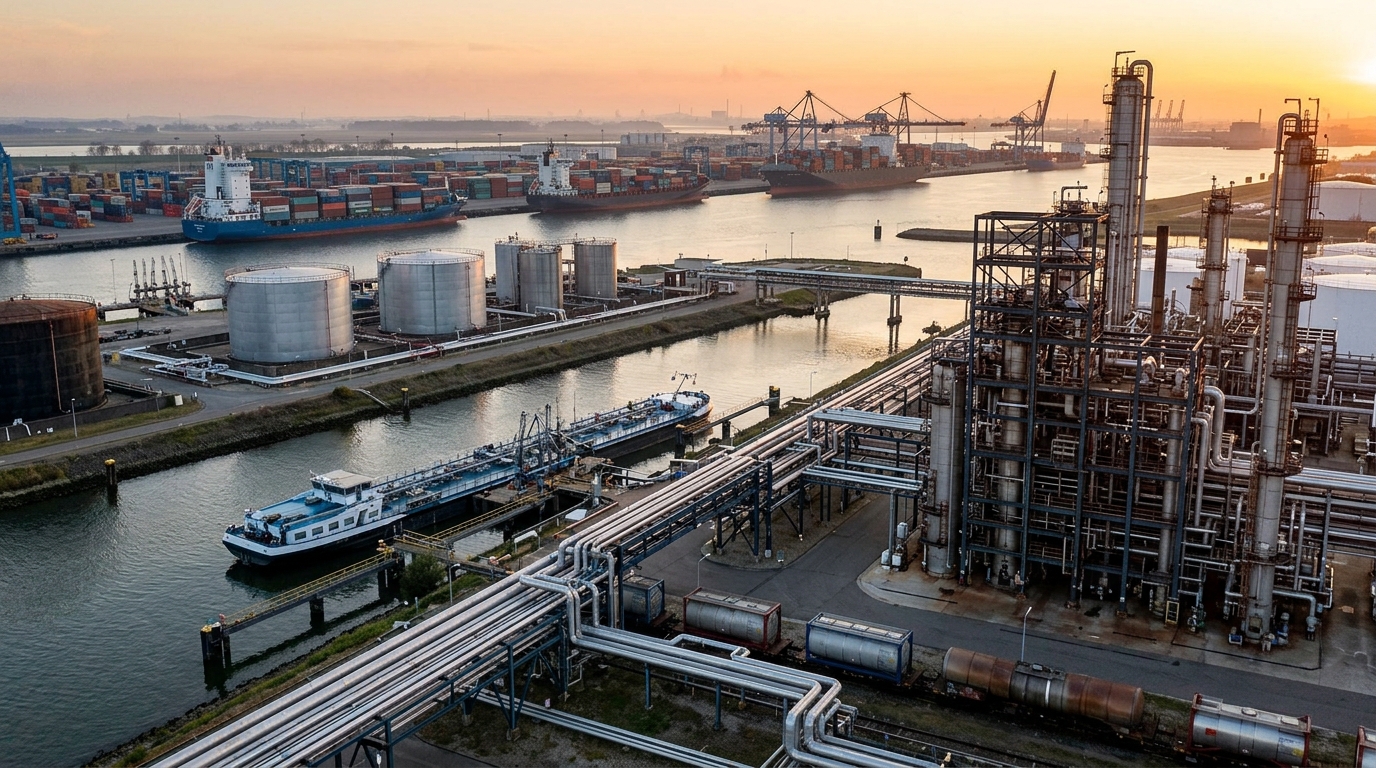
The U.S. diesel crack spread hit an all-time intraday record of $108.02 per barrel last week, and the national retail average followed close behind, reaching $5.85 per gallon on Friday, September 4 to eclipse the June 2022 high. Both numbers matter, but the crack spread is the more instructive one. It tells you this problem lives inside the refining system, not in the crude market.
Why crude is not the culprit. RBN Energy noted this week that the global crude market is not short in the traditional sense. What is short is refining capacity to convert that crude into finished diesel. Ukrainian strikes on Russian refineries have cut output and generated export policy volatility out of Moscow. In its monthly oil market reporting, the International Energy Agency has flagged sharp declines in refinery throughputs in Q2 2026 as disruptions tightened product availability. Strategic reserve releases can cap crude prices; they do nothing for a refinery that is not running.
The regional picture is acute. East Coast distillate stocks fell to 19.3 million barrels for the week ended August 28, a record low in EIA data going back to 1990. That same region accounts for a disproportionate share of national distillate demand and relies on Gulf Coast pipeline flows to stay supplied. At 19.3 million barrels, those flows are not keeping up. On the export side, U.S. distillate shipments hit 1.884 million barrels per day for the week ended July 31, up 22% from a year earlier, draining the Gulf Coast buffer before it can reach East Coast terminals.
Harvest and heating season arrive on schedule regardless of geopolitics. That seasonal demand calendar is the reason analysts expect the structural support under crack spreads to persist through Q3.
The Winning Side: Gulf Coast Refiners
Three companies sit at the center of this: Valero (VLO), Marathon Petroleum (MPC), and Phillips 66 (PSX). All three source crude primarily against WTI, meaning input cost inflation trails Brent-linked competitors while output prices track global diesel markets. That asymmetry amplifies margin capture when cracks widen.
The Q2 2026 results confirm the math. Marathon, Valero, and Phillips 66 combined for $12.6 billion in profit during the quarter. Phillips 66 reported adjusted EPS of $9.41, beating the $7.50 consensus by roughly 25%, as realized refining margins more than doubled sequentially to $24.08 per barrel from $10.11 in Q1. Valero, which runs approximately 3 million barrels per day in throughput capacity, posted Q2 adjusted EPS of $12.54 against a Street estimate near $10. With the crack spread now running well above its Q2 average, Q3 consensus estimates almost certainly undershoot where actual margins will land.
Marathon had gained nearly 110% year-to-date before the latest crack surge, with Valero up roughly 98% and Phillips 66 up about 75%. HF Sinclair (DINO) and the broader XLE offer exposure to the same thesis with less concentration risk in any single name.
Watch the Wednesday EIA distillate report. As long as East Coast stocks stay below 20 million barrels heading into September draws, the spread has structural support. The primary risk: a durable de-escalation that brings Russian refinery runs and exports back consistently would compress cracks sharply and quickly.
The Losing Side: Freight Operators
The other side of a $108 crack spread lands on carriers. Diesel is a primary cost input for truckers, and fuel surcharges recover it only with a lag. As of the week of August 31, Old Dominion’s LTL fuel surcharge stood at 46.32% of line-haul charges, against 27.82% at the same point a year prior. That surcharge partially offsets the fuel bill but does not close it in real time, which means Old Dominion (ODFL) and J.B. Hunt (JBHT) are absorbing the difference between record pump prices and what contracts allow them to recover inside a single quarter.
Railroads face a version of the same pressure. Union Pacific (UNP) runs a fuel-intensive network, and while rail is more efficient per ton-mile than trucking, efficiency reduces but does not eliminate cost exposure when diesel is at an all-time record. Watch freight volume data for any sign shippers are pulling back orders in response to surcharge shock. Volume deterioration on top of margin compression from the fuel line would compound the pressure considerably.
The Cheat Sheet
- Top Market Theme: The diesel shortage is a refining and distribution problem, not a crude problem, and the market is pricing that correctly.
- Stock to Watch: VLO, with Q3 estimates still likely lagging actual margin capture and the crack spread above Q2 averages.
- Sector to Watch: Downstream refining. Capital has rotated here all year and the Q3 catalyst remains intact.
- Biggest Risk: A sudden geopolitical resolution that restores Russian refinery throughput and export flows faster than the market expects.
- Biggest Opportunity: Long refining exposure through VLO and PSX, paired with a watchful fade on ODFL and JBHT if freight volumes show the first cracks from surcharge fatigue.
- One Thing to Remember: The EIA Wednesday report is your real-time scorecard. East Coast stocks below 20 million barrels keep this trade alive.