
When a company reports the largest quarterly order book in its history, raises free cash flow guidance by 70%, and still trades nearly a quarter below its peak, the gap between the business and the stock price deserves a hard look.
That is where GE Vernova sits right now.
The Business
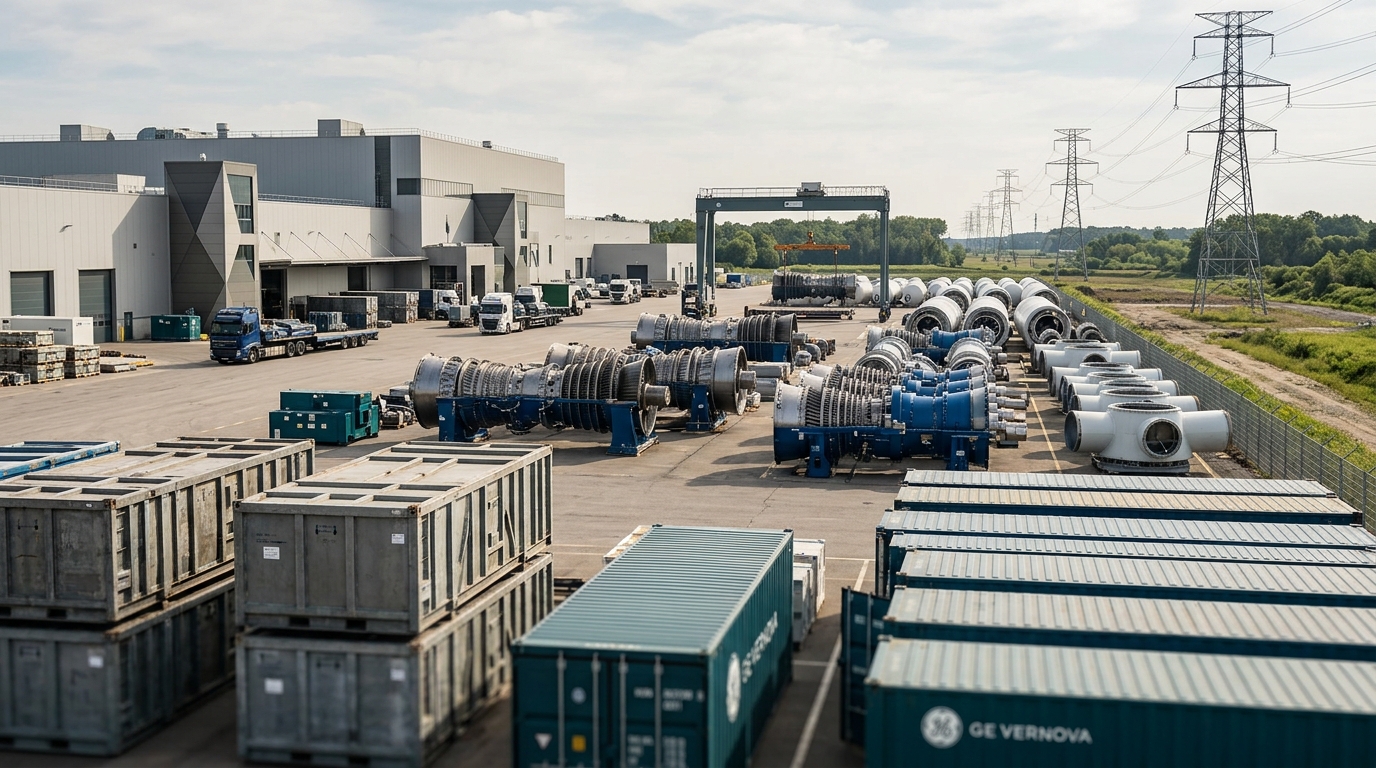
GE Vernova makes the machines that power the modern economy: gas turbines, grid transformers, switchgear, high-voltage transmission systems. The company designs, manufactures, delivers, and services technologies to create a sustainable electric power system, enabling electrification and decarbonization. That description covers a lot of ground, but the dominant force driving orders in 2026 is far more specific: AI data centers need enormous amounts of reliable electricity, and the grid equipment to deliver it, and GE Vernova supplies both.
GE Vernova’s gas turbines are showing up as on-site power in the data center buildout, including xAI’s Colossus 1 project. And Microsoft has been linked in public reporting to a Texas data center power project that involves GE Vernova turbines. That is not a peripheral benefit. It is the center of the order intake story.
Why Wall Street Is Paying Attention
GE Vernova reported Q2 2026 revenue of $11.1 billion, up 22% year over year and ahead of analyst forecasts. Orders surged to a record $24.2 billion, up 88% year on year, lifting the total backlog to $176 billion.
The Electrification segment saw revenue jump 65% to $6.60 billion, with the segment’s EBITDA margin reaching 18.4%, up 390 basis points year over year and a 700-basis-point improvement on an organic basis. And the free cash flow raise was dramatic: the company increased its 2026 free cash flow guidance to $11.5 billion to $12.5 billion, up from a prior range of $6.5 billion to $7.5 billion.
Gas turbine demand has become so strong that GE Vernova itself has described being mostly sold out through 2030, reinforcing the scarcity value of its technology and manufacturing footprint.
What’s Driving the Opportunity
The pullback from about $1,175 to roughly $943 has changed the risk-reward math considerably. MarketBeat data puts the consensus price target at $1,155.28, implying roughly 22% upside from around $943.
A CFO transition is adding to near-term noise. On August 27, 2026, GE Vernova announced the upcoming retirement of CFO Kenneth Parks, with Claire McDonough named as his successor. McDonough is expected to join in November 2026 and transition fully into the CFO role on January 1, 2027. Parks is expected to remain CFO through 2026, including the third- and fourth-quarter earnings calls and the publishing of the 2026 10-K, then transition to a strategic advisor role in the first quarter of 2027 before retiring in April 2027.
McDonough arrives from Rivian, where the company has said she helped steer its path as a public company, including Rivian’s $13.7 billion IPO in November 2021. The transition is orderly; Parks stays through both remaining earnings calls this year.
What Could Go Wrong
Wind is the persistent drag. On the Q2 2026 earnings call, management said Wind EBITDA losses were $275 million in the quarter and that it still expects EBITDA losses to be approximately $400 million in 2026. A segment losing $400 million annually while the rest of the business accelerates is a capital allocation question the company has not fully resolved.
Adjusted EPS of $2.47 missed the consensus estimate of about $3.17 in Q2, and the stock fell about 6% on the day. At a trailing P/E near 27, GEV is still not cheap by industrial sector standards. Supply chain constraints on heavy-duty turbine components could also limit how fast the company converts its backlog into revenue.
The Bottom Line
GE Vernova’s core thesis has not changed. AI infrastructure is pulling electricity demand forward by years, and GE Vernova makes the turbines, transformers, and switchgear that make that demand serviceable. Free cash flow reached $5.1 billion in Q2 alone, a level driven largely by working capital and strong profitability.
The stock sitting about 22% below its late-June 2026 high, with roughly 29 analysts on MarketBeat and a consensus target implying significant upside, is the most straightforward argument for why now matters more than just why ever.