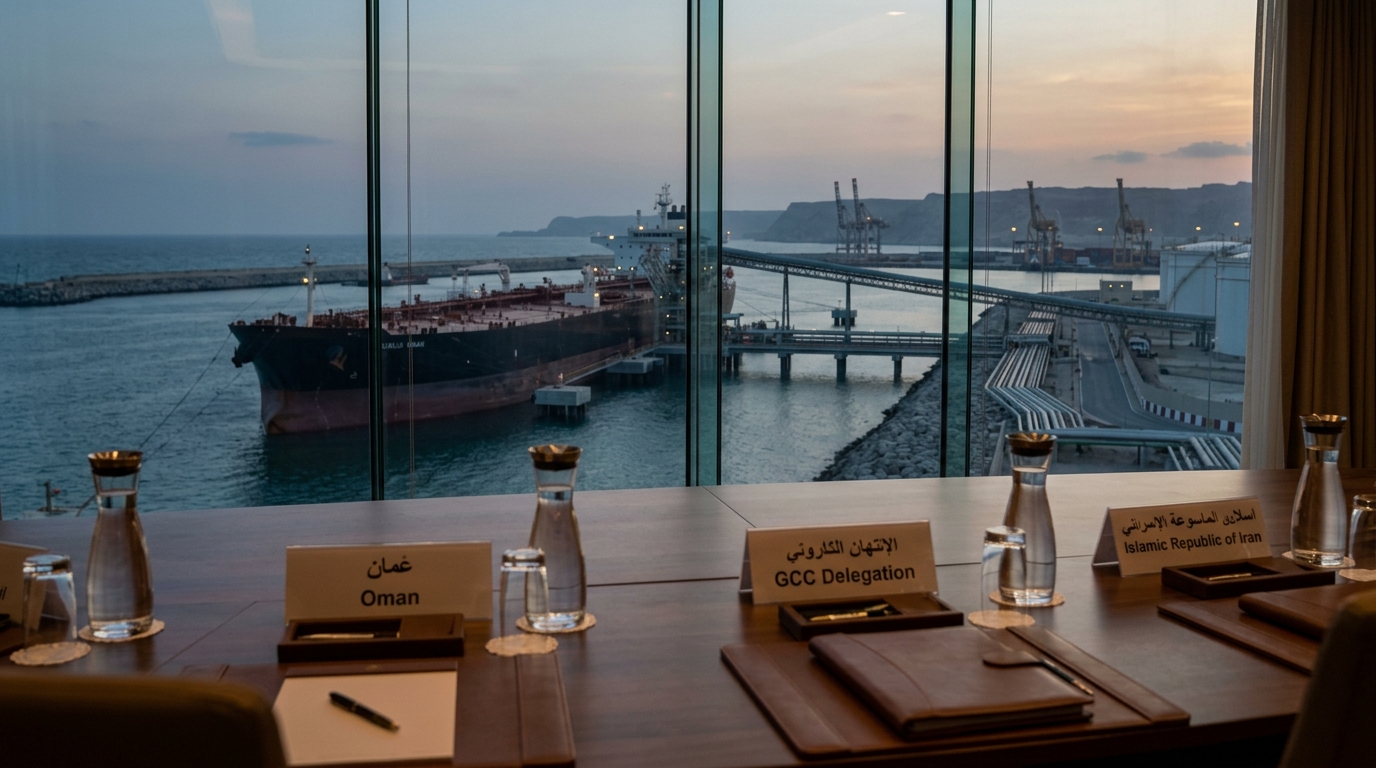
One meeting will set the tone for energy markets this week. A six-member bloc of Gulf states is considering sitting down with Iranian officials to discuss the future of the Strait of Hormuz, in what would be the first gathering with the Islamic Republic since war erupted more than six months ago. Oman is aiming to get foreign ministers from the Gulf Cooperation Council and Iran together on Monday in Salalah. That single headline was enough to pull Brent off its highs on Friday. Traders coming in Monday need to know whether the talks happened, what was said, and whether any language around Hormuz access changed.
Market Snapshot
Brent futures posted a weekly gain, ending the week above the critical $100 mark. Friday’s decline snapped five consecutive days of gains for Brent crude. Brent futures fell about 2.8% on Friday, settling near $104.6 a barrel. The pullback came almost the moment Iranian state media confirmed the Oman meeting. Brent had peaked near $110 a barrel intraday late in the week.
The IEA simultaneously dropped bearish demand data, but the market had already priced in the supply shock. The EIA has recently projected U.S. crude oil production averaging about 13.3 million barrels a day in 2027, which added a bearish counterweight at the margin.
The IEA Number That Matters
World oil demand is forecast to decline by 2.5 mb/d in 2026, 940 kb/d steeper than in last month’s report. The Paris-based agency described that as the biggest loss in annual average terms since the 2020 COVID pandemic shuttered vast swathes of the world economy.
The contraction is demand-side. Supply is the deeper problem. Total oil supply is set to fall by 5.7 mb/d to 100.7 mb/d this year, with the expected recovery in the Gulf now deferred until 2027. Global oil production fell by 1.6 mb/d month on month to 100.1 mb/d in August, as more than 10 mb/d of Gulf output remained shut in amid heightened security risks.
Observed global oil stocks fell by a further 95 million barrels in August. Cumulative draws since February now total 507 million barrels, averaging 2.8 mb/d. With supplies still constrained and commercial inventory buffers rapidly depleting, further demand reductions may be required in the coming months to close the gap. U.S. diesel prices crossed $6 a gallon for the first time on Friday, with the national average around $6.05 to $6.06.
What the Oman Meeting Actually Means
The diplomatic signal here is real but conditional. Iran’s foreign ministry has said a regional meeting will be held in Oman on Monday with participation from Iran and other Gulf coastal states to discuss regional issues and the results of Iran-Oman talks on safe routes for commercial vessels passing through the Strait of Hormuz. Foreign Ministry spokesman Esmail Baghaei said Iran remains committed to ensuring the security of navigation in the strait.
Oman and Iran have been negotiating around maritime traffic. Most GCC members have insisted on free passage through the waterway, though it is unclear if they might accept a temporary agreement that would lead to traffic picking up. Any outcome short of confirmed passage rights will likely leave Brent supported above $100.
Stocks in Focus
- XOM, CVX: Both supermajors benefit from elevated crude. The supply deficit that the IEA flags keeps their upstream revenue strong as long as Hormuz remains restricted. Watch for any diplomatic language Monday that signals a Hormuz reopening timeline.
- MPC, VLO: Diesel and gasoil account for nearly 30% of global oil demand, and the widening gap between crude and refined products has pushed refining margins higher in the Atlantic basin. Marathon Petroleum and Valero are the direct beneficiaries of that crack spread expansion. A Hormuz de-escalation that brings Gulf crude back online would tighten those margins quickly.
The Cheat Sheet
- Top Market Theme: A war-driven supply shock has pushed Brent through $100 for its first weekly close above that level since mid-May, and a Monday diplomatic meeting in Oman is the single event most likely to move oil before Tuesday’s open.
- Stock to Watch: VLO. Strong Atlantic basin refining margins and a $6 U.S. diesel average put Valero in the best position among energy equities if Hormuz talks stall.
- Sector to Watch: Energy. The IEA’s demand cut is war-driven demand destruction, not a structural bearish signal. Supply is far more constrained than demand.
- Biggest Risk: Talks in Salalah collapse or produce no language on shipping access, sending Brent back toward its late-week highs.
- Biggest Opportunity: Any confirmed Hormuz arrangement, even temporary, would hit MPC and VLO refining margins hard but could reprice crude-heavy upstream names like XOM and CVX on volume expectations.
- One Thing to Remember: The IEA’s latest report still describes a significant global oil deficit this year, up from last month’s estimate. Oman talks or not, that deficit does not resolve in a single meeting.