The investment committee question is not whether Amazon can afford $20 an hour. It almost certainly can. The question is whether this move, timed the way it is, tells you something about how wage costs are going to land across the retail and logistics sector heading into peak season.
The Federal Reserve on Wednesday, September 16, 2026 approved its first interest rate hike in more than three years, voting 12-0 to raise its benchmark rate by 25 basis points. The stated reason: inflation remains elevated, and the move aims to support a more timely return to the 2% target. Hours earlier, Amazon announced it was moving in precisely the opposite direction on one of the inputs the Fed watches most carefully. The company is raising minimum starting pay for U.S. full-time core operations employees to $20 per hour and investing more than $1.5 billion in the increases.
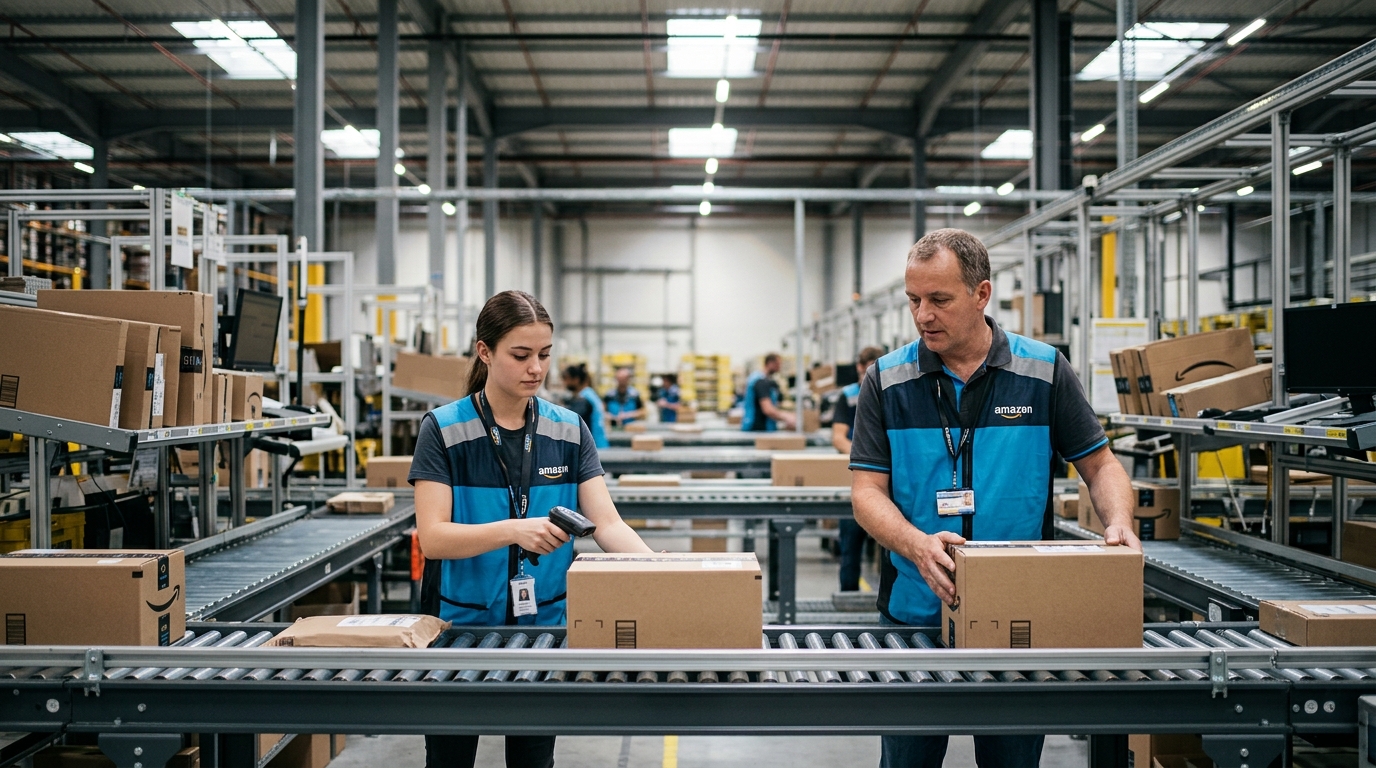
With the $1-per-hour increase across the board for packing and shipping workers, average pay for these employees will reach nearly $24 per hour, and average total compensation will exceed $32 an hour including benefits. The pay increase is effective September 27, 2026. That gives Amazon three weeks to absorb the cost before peak hiring begins in earnest.
The Bull Case: Automation Eats the Bill
The bear argument on Amazon’s labor cost misses the longer arc of what the company is actually building. Amazon has said it expects automation to reduce labor intensity materially over time, and outside analysts have argued the robotics push could unlock large long-term cost savings, but specific dollar figures on a 2025 to 2027 savings window and a 2032 annual savings figure are not something Amazon has formally guided to in a way investors can underwrite quarter to quarter. Against that runway, a $1.5 billion wage commitment is still plausibly a recruiting investment designed to lock in warehouse labor before competitors can match it.
There is also a competitive floor argument. Walmart’s U.S. hourly store workers start at $14 an hour and Target’s minimum is $15. Amazon, now at $20, is not being dragged up by the market. It is pulling away from it, which historically gives it an advantage in retention during peak when absenteeism costs more than wages.
The Bear Case: Cost Hits Before Volume Does
The problem is the timing mismatch. Throughput benefits from automation typically arrive later than wage changes, which means the labor cost line in fulfillment is unlikely to inflect downward immediately in the fourth quarter of 2026. Amazon is paying $20 today for work that its robots will be doing tomorrow. That gap matters to margins in Q4, which is when analysts set their full-year estimates.
The Fed’s dot plot makes the backdrop worse. Updated projections showed that 16 of 18 officials see the possibility of at least one more rate hike later this year, with four penciling in two additional increases. U.S. headline inflation held at 3.4% year-on-year in August, while the national average price of diesel has risen past $6 a gallon in September, adding further pressure to the inflation outlook. For logistics-heavy companies like UPS and FedEx, that combination, higher fuel and now higher competing wages, squeezes both the cost side and the pricing conversation with shippers.
What Investors Are Missing
The overlooked implication is not what this costs Amazon. It is what it costs everyone else. Amazon setting a $20 floor pulls the entire labor market in fulfillment and delivery upward. FedEx and UPS have to hire in the same labor market, and their margins carry far less cushion than Amazon’s AWS-subsidized P&L.
Even as Amazon increases wages for its hourly workers, the company’s investments in automation appear to be simultaneously reducing the need for incremental warehouse hiring over time. That combination is a strategy Walmart and Target cannot replicate at the same pace. Costco’s starting wage for entry-level workers is already $20 per hour, and top-of-scale hourly pay has been disclosed around $31 to nearly $32 per hour in recent wage agreements. Costco built that position over years. The difference is that Amazon is automating its way out of the cost at the same time, compressing what used to be a multi-year margin squeeze into a transitional quarter.
Stocks to Watch
AMZN: The wage move is more recruiting strategy than margin risk. Over a multi-year horizon, the relevant debate is whether productivity and automation gains show up fast enough to keep fulfillment cost per unit moving the right way. Watch Q4 fulfillment cost per unit for confirmation that any automation offset is running on schedule.
UPS / FDX: The genuine pressure point. Both carriers face the same wage market without Amazon’s automation spending or AWS profits to absorb it. Peak-season demand surcharges from FedEx and UPS are already reshaping holiday logistics planning. Higher labor costs increase the likelihood those surcharges expand in 2027.
WMT / TGT: Recruiting risk is real. With Amazon’s floor now at $20 versus Walmart’s $14 start and Target’s $15, the gap is wide enough to shift worker preference during peak hiring. Neither retailer has Amazon’s automation pipeline to offset a matching move.
COST: The most interesting read-across. Costco already sits at $20 starting pay, with top-of-scale hourly pay around $31 to nearly $32 in disclosed agreements. Amazon’s move validates that labor model and raises the question of whether Costco needs to move again to maintain its employer-of-choice positioning among warehouse and retail workers.