September 24, 2026
Bonus Content: Nutrien and Mosaic Face a Threat That May Be Louder Than It Is Real
If you still haven’t downloaded my “Simple Options Trading For Beginners” book…
…please take a few seconds and download it right now before your new temporary download link expires.
I eventually plan to charge for this book, so do yourself a favor and download it now…
That way, no matter how much it is in the future, you’ll have a copy on your computer already.
Make sense?
FREE: Simple Options Trading For Beginners << Download Now
Good Trading,
Bill Poulos
P.S. Go here to save a copy of my “Simple Options Trading For Beginners” book to your computer before I start charging for it.
Nutrien and Mosaic Face a Threat That May Be Louder Than It Is Real
What happened: President Trump posted on Truth Social Monday, September 21, 2026 that the U.S. is negotiating a “massive deal” for potash from Belarus, at pricing “substantially less than we are currently paying to Canada.” The reaction in fertilizer stocks was immediate. CF Industries, Nutrien, Mosaic, and Intrepid Potash closed down 3.47%, 3.31%, 1.67%, and 1.55%, respectively, on Monday.
Why it matters to traders today: NTR and MOS are the names with the most direct exposure. Nutrien fell about 3.3% on Monday to roughly the mid-$74 range in U.S. trading, valuing the company at about $37 billion. Mosaic recovered somewhat, closing at $24.73 on Tuesday, September 22, up 2.74%, though potash-related risk remained central to the market discussion. Both names are heading into Wednesday’s session with sentiment still unsettled.
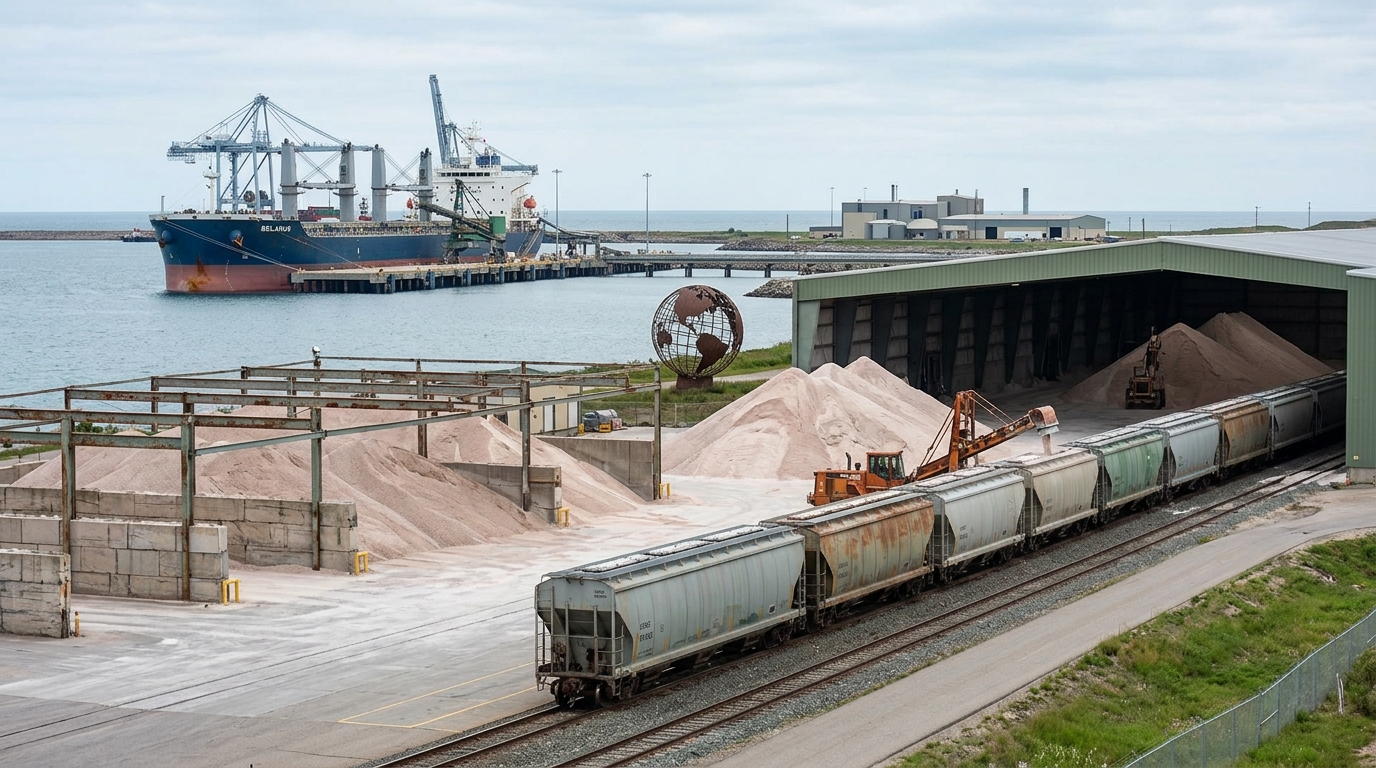
The catch: The feasibility of a large-scale Belarus supply pivot is deeply questionable. Multiple obstacles stand in the way, starting with Lukashenko himself, who said hours before Trump’s post that Belarus cannot supply large volumes to the U.S. because its supplies are already committed this year. The logistics picture is equally constrained. Belarusian potash’s usual delivery route through Lithuania remains shut after sanctions and the 2022 halt of transit to the port of Klaipeda. Belarus is also landlocked, and with the Klaipeda corridor closed, shipments generally have to travel longer distances via Russia to reach seaborne export routes.
Belarus produced around 6 million metric tons of potash in 2025, making it the world’s fourth-largest producer behind China, Russia, and Canada at about 15 million tons. Rerouting supply toward the U.S. would require Minsk to divert from existing contracts, and China is Belarus’s largest buyer, taking roughly 29% of Belarusian potash exports in recent data. Analysts are skeptical Lukashenko picks a trade fight with Beijing to accommodate Washington.
What the analysts say: RBC Dominion Securities mining analyst Andrew Wong said in a note that unless Belarusian potash displaces Canadian supply in significant quantities, any price impact on producers would be moderate. He added that nitrogen-related equities like CF Industries do not produce potash at all, and called the share-price declines overdone.
StoneX fertilizer vice president Josh Linville told Reuters that potash is not the U.S. market’s pressing need. “We have not struggled to find potash. We have more than enough to go around. It is phosphate and nitrogen that we need help with.”
The first cargo, in context: A 30,000 metric-ton cargo of Belarusian potash is expected to arrive at the port of New Orleans in October 2026, the first such shipment in four years. As of September 23, the vessel had not yet berthed. That volume is a rounding error against annual U.S. import demand and does nothing to prove the infrastructure exists for a “massive” deal.
What to watch: The real risk for NTR and MOS is not Belarus supplying the U.S. at scale, it is whether Trump escalates by putting tariffs on Canadian potash, which has so far been exempted. The White House said this summer’s new 50% tariffs on certain Canadian goods will not apply to energy or potash, among other carve-outs. Any signal that exemption is under review would be a harder hit to Nutrien than Monday’s post ever was. Watch for Canadian trade response language out of Ottawa and any follow-up from Trump on the tariff carve-out. CF Industries, which produces no potash, should trade separately from this headline on any further volatility.