September 30, 2026
Bonus Content: Copper Is Near Its Record. Chile May Close That Gap Today.

A Gold-Silver Story Built to Finance Itself
The weirdest part of this story is not gold. It is not silver either.
It is the fact that the market may still be looking at this like a normal junior explorer.
Normal junior explorers usually ask investors to wait. Wait for drilling. Wait for permits. Wait for financing. Wait for the long, expensive march toward possible production.
This one has a much more intriguing setup.
The company is working with above-ground material from a historic gold-silver property, with 2026 production timing and potential cash flow starting to come into view.
However, once a junior name starts moving toward cash flow, it no longer fits neatly in the “just another exploration stock” old chapter..
And this new chapter revolves around surface metals, production timing, and a self-funding exploration story in a gold and silver market that is already moving.
That is a much different conversation.
See why this under $1 gold-silver story may writing its new chapter >
Copper Is Near Its Record. Chile May Close That Gap Today.
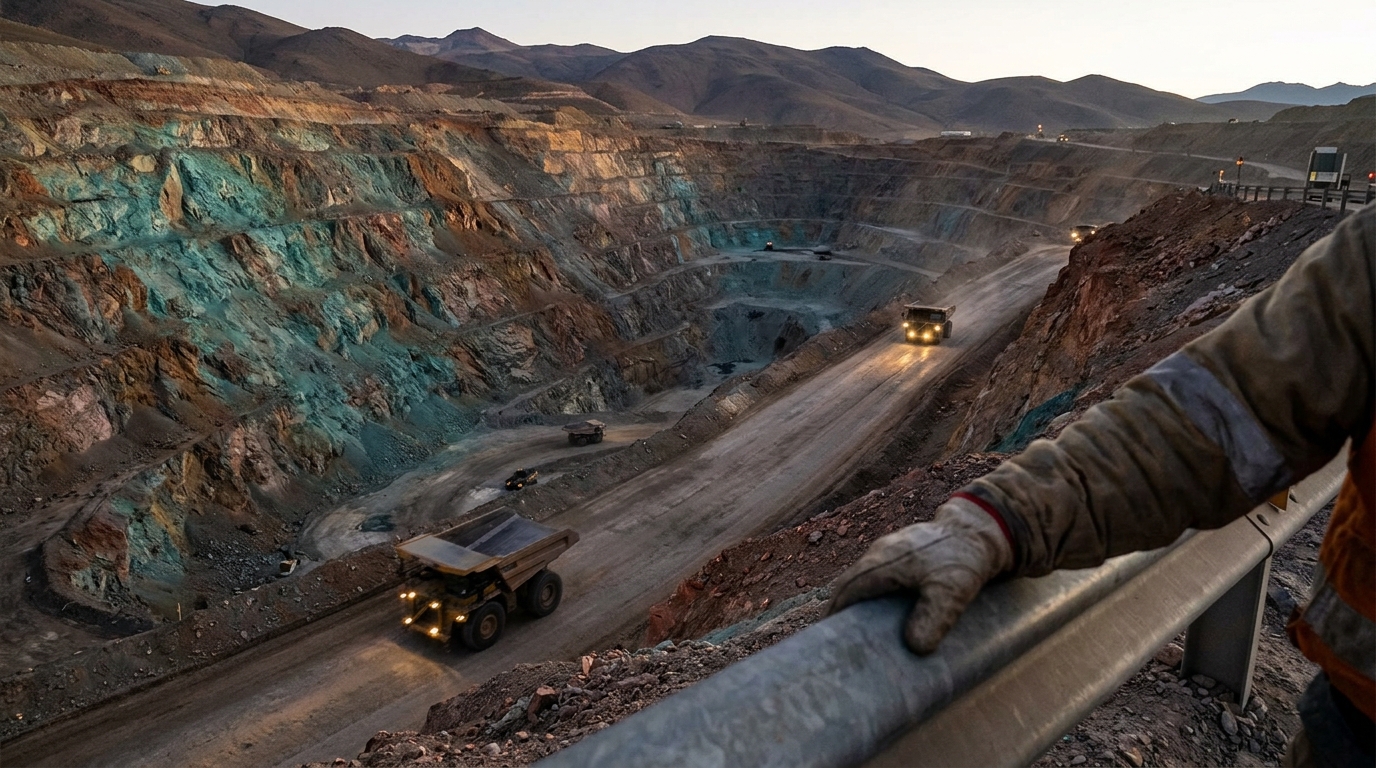
What traders need to know before the open: LME three-month copper closed Tuesday at about $14,700 a tonne, sitting roughly $160 below the record set earlier this month. COMEX copper hit an all-time high of $6.894 per pound on September 9, while the LME all-time high of $14,858.50 per metric ton was set the same day, according to Bloomberg. Two separate Chilean labor disputes are now layering fresh supply risk on top of a metal that is already heading into Q4 with a strong quarter behind it.
Market Snapshot
Copper is set for a third consecutive monthly advance, with prices up in September. Refined copper demand is running ahead of refined supply, implying a deficit on an annualised basis. China’s official September manufacturing PMI, released early Wednesday, rose to 50.1 from 49.8, in line with forecasts, adding a modest demand signal to a supply story that is getting complicated fast.
Stocks in Focus
BHP (BHP) / Escondida: Unionized supervisors at BHP’s Escondida copper mine in Chile have urged members to reject the company’s latest contract offer, which could set up a strike at the world’s largest copper mine. The union is composed of mine supervisors, professional technical personnel, and administrative staff, with about 1,020 active members. Ballots close today, September 30, the same day the contract expires. Both the supervisors’ union and the rank-and-file union rejected BHP’s request to pause collective bargaining, with Reuters reporting the unions said the company was trying to use the fatal accident as grounds to suspend talks, after a worker was killed on September 23. Rio Tinto holds a 30% stake in Escondida, while JECO is split between JECO Corporation (10%) and JECO 2 Ltd (2.5%).
ANTO / Centinela: Workers represented by two unions at Antofagasta Minerals’ Centinela mine in northern Chile voted overwhelmingly in favor of strike action, with 98.73% of union members backing a walkout, and all eligible members taking part. A strike has not yet begun; the company and unions must first enter a mandatory five-day government-led mediation process before workers can legally begin strike action. Minera Esperanza union president Milenko Díaz estimated that a strike could legally begin on October 13 if no agreement is reached. Given Centinela’s 2025 copper production of 240,400 metric tonnes, an extended work stoppage could create additional supply uncertainty.
The Mediation Clock
If Escondida members vote to reject the offer, a mandatory five-day government mediation follows before a legal strike can begin, with the period extendable by five more days by mutual agreement. That puts any potential Escondida walkout in the October 5-15 window. Centinela is on a similar path. Two major Chilean copper operations, each in mandatory mediation, converging on the same fortnight.
Sector Watch: Copper Miners
The supply pressure is concentrated in Chile, which accounts for the largest share of global copper mining. FCX stock has surged over the past year, while SCCO stock has rallied strongly. COPX, the global copper miners ETF, rose on Tuesday alongside the Centinela news. The relevant question for today is not whether a strike happens at Escondida, but whether the ballot result sharpens the front of the copper futures curve before U.S. equities open. Front-month contracts are most exposed to near-term disruption risk.
Risk Radar
- Escondida ballot outcome: Markets can map a narrow strike-risk window into early-to-mid October. When the risk is near-term, copper pricing often reacts most at the front of the futures market, because any disruption would hit supply now rather than years from now.
- Mediation failure at Centinela: Any production stoppage at Centinela would weaken Antofagasta’s ability to meet its second-half output targets, while its full-year copper production guidance has already been lowered to 625,000-655,000 tonnes.
- Dollar drag: A firmer dollar was a key drag on Tuesday, making dollar-priced metal dearer for other buyers.
The Cheat Sheet
- Top Market Theme: Chile’s two most watched copper operations are simultaneously in or entering strike procedures as the metal closes out its strongest quarter of 2026.
- Stock to Watch: BHP. The Escondida ballot closes today, and the result sets the mediation clock, which in turn sets the earliest date a legal strike can begin.
- Sector to Watch: Copper miners. COPX, FCX, and SCCO all move with the headline risk; ANTO carries the direct Centinela production exposure.
- Biggest Risk: Both disputes reach the legal-strike stage without settlement. Even without a full production halt, the threat alone has kept copper within range of its record. Actual stoppages at mines producing a combined 1.2 million-plus tonnes annually would be a different conversation entirely.
- One Thing to Remember: A no vote at Escondida does not start a strike, it starts a countdown. Traders who treat the ballot result as the final event will miss the actual decision points, which arrive in the second and third weeks of October.