When regulators force a divestiture, most investors focus on the seller’s loss. The smarter question is what the buyer gets. The answer, in the case of TK Elevator’s European operations, tells you something important about how enduring industrial franchises are actually built.
Japanese elevator makers including Mitsubishi Electric are among potential suitors studying bids for the European operations being sold by TK Elevator, with EQT-owned rival Fujitec also among possible bidders. A deal could fetch around €5 billion or more, according to reporting published Tuesday.
Kone is planning to launch the sale of most of TK Elevator’s European business to tackle antitrust concerns over its planned €29.4 billion purchase of the German company. Kone agreed on April 29, 2026 to buy TKE from a consortium led by Advent International and Cinven in a deal that would create the world’s largest lift maker. The sales process, which covers elevators, escalators, and related services, is expected to launch in the fall, with one source indicating it could start in November.
Competition authorities are scrutinizing the transaction closely because the global elevator industry is concentrated among four major manufacturers: Kone, TK Elevator, Otis Worldwide, and Switzerland’s Schindler. Schindler, which has criticized the deal, told Reuters on July 21, 2026 that it saw opportunities to potentially acquire assets as part of any remedy divestments. The bid field is shaping up as a genuine contest between European incumbents, Asian strategics, and buyout firms.
Why the Maintenance Book Is Worth More Than the Machines
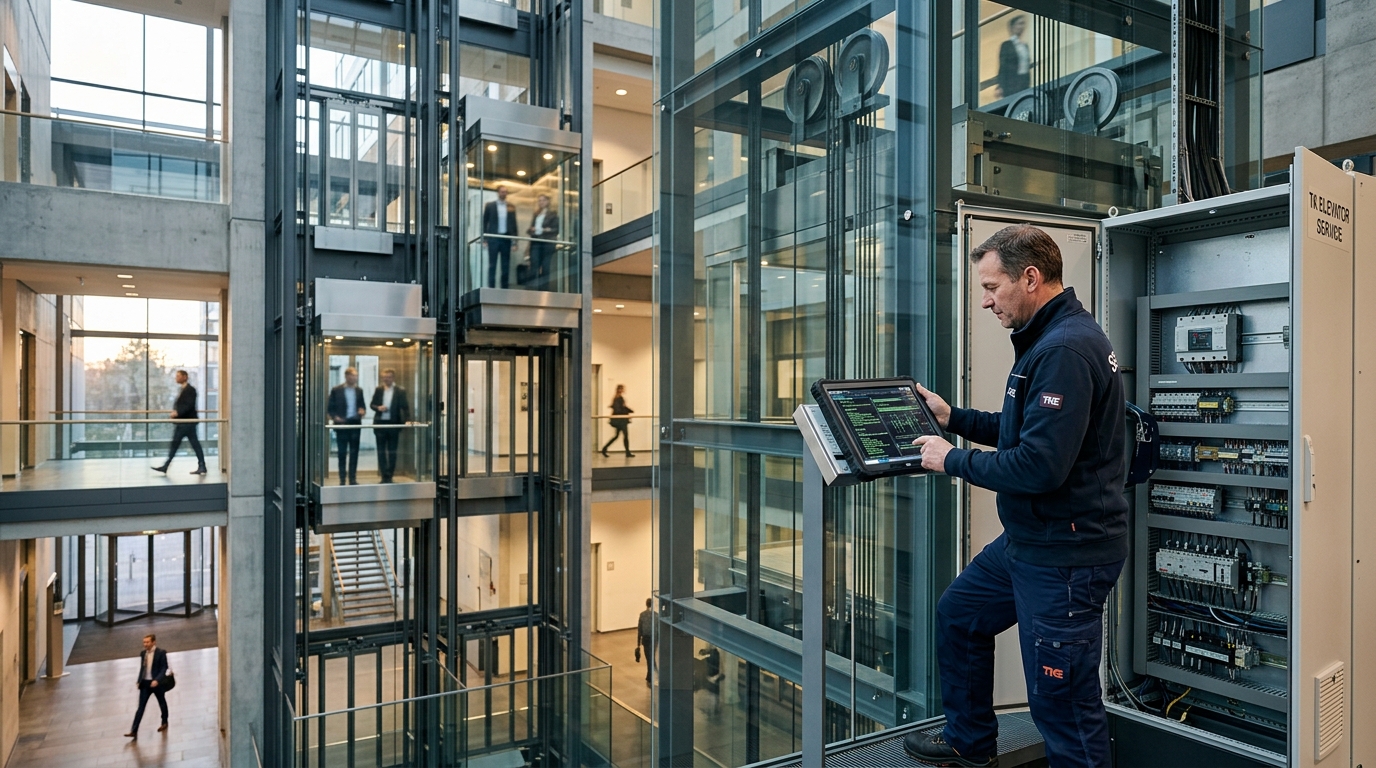
The instinct is to value an elevator business on what it manufactures. That misses the point entirely. Once a unit is installed, the original manufacturer or its authorized service company typically holds the service contract for decades, generating what Otis has described in its annual filings as high-margin, recurring service revenue, with companywide operating profit margins around the mid-20% range in recent years, materially higher than new equipment.
Recurring service contracts and modernization activities represent the largest and most stable revenue streams in the elevator sector. Each new elevator installation generates a multi-decade maintenance requirement, creating long-term recurring revenue for service providers. Buildings cannot simply switch providers mid-contract without significant disruption and cost. The stickiness is structural, not merely contractual.
TK Elevator made about 27% of its sales in Europe last year, or around €2.5 billion, according to Reuters. Strip out the lower-margin new equipment revenue and what remains is a portfolio of long-duration service contracts that any disciplined capital allocator would recognize immediately. The €5 billion price tag reflects that reality.
Mitsubishi Electric Is Not Here by Accident
Mitsubishi Electric’s interest is not opportunistic. It is the logical acceleration of a strategy already underway.
Mitsubishi Electric and its building-systems group have been expanding their maintenance and renewal businesses in Europe under the lead of Motum AB, a wholly owned subsidiary headquartered in Stockholm. In the mature European market, the demand for maintenance and renewal services is forecast to grow against the backdrop of aging elevators and escalators and heightened environmental awareness. Acquiring TK Elevator’s European maintenance book would compress years of organic buildup into a single transaction.
What Could Go Wrong
The risks are real. A €5 billion price requires confident underwriting of contract retention rates post-acquisition: technicians, customer relationships, and brand trust do not automatically transfer with legal ownership. Integration of a large European service operation into a Japanese industrial conglomerate is operationally complex. Buyout firms circling the same asset may be willing to pay more on levered returns, pushing the price to a level where strategic logic strains against financial discipline.
The two companies together generated about €7.2 billion in Europe, equivalent to roughly 35% of their combined revenue, according to Reuters. The European market is the geographic core of this industry’s profitability. Whoever ends up with TK Elevator’s European service contracts will hold a position that compounds quietly for decades.
That is what Mitsubishi Electric understands. The bid is not for a German elevator company. It is for a recurring revenue machine with long customer relationships baked in. The greatest investors have always known that the best businesses are the ones you barely need to manage once you own them. This one comes with its own maintenance schedule.