
October 5, 2026
Bonus Content: Secondary Cargo Airports Are the Next Logistics Land Grab
Editor’s Note: Elon’s next launch will be bigger than SpaceX, Tesla and xAI combined, says the man voted America’s #1 stock picker in 2020. Get the full story from my colleague while there’s still time.
Dear Reader,
I recently paid $5,000 to be in a room with Elon Musk in Los Angeles.
And what he said in that room, confirmed everything my 15+ years in the tech industry had been telling me.
Most people see the rockets, the cars, the headlines and think they understand Elon.
But what they don’t realize every single thing Elon does is years… sometimes even decades… in the making.
And it’s all connected in ways we’re only just starting to see.
But I believe what Elon is launching right now – a project 27 years in the making – could be his biggest move yet.
And make you more money than anything he’s ever touched.
If you buy just one stock in 2026, I urge you to make it the one I’m giving away for free here.
Best,
Luke Lango
Senior Investment Analyst, InvestorPlace
P.S. My readers have had the chance to see gains as high as, AMD +8,500%… Nvidia +5,000%… Tesla +3,500%… GameStop +2,700%… IonQ +1,400%… Shopify +1,400%… Netflix +1,200%… Palantir +1,200%… AppLovin +800%… Apple +890%… Meta +850%… and Rocket Lab +1,250%.
Secondary Cargo Airports Are the Next Logistics Land Grab
The land grab around major cargo airports is not new. What is new is where it is spreading.
At JFK, the math is already settled. Industrial rents in southeast Queens broke $30 per square foot by year-end 2025, according to Cushman & Wakefield, and submarket vacancy sits at 6.4%, well below New York City’s citywide rate of 8.8%. Tenants inked nearly 770,000 square feet of deals in JFK-adjacent zones in 2025, a 63% jump year-over-year. The airport’s $19 billion redevelopment, including a new 350,000-square-foot cargo terminal that opened in April 2025, is tightening an already locked market. Seagis Property Group, which owns 46 industrial buildings in Springfield Gardens directly north of the runways, is holding firm on premiums because, as its leasing team puts it, these are “irreplaceable” locations. No new developable land exists. That is not a negotiating position; it is a physical constraint.
The same supply ceiling is visible across every dense gateway. CBRE data shows warehouses within five miles of the 20 busiest U.S. cargo airports command rents 18.8% above their metro averages. At LAX, that gap widens to nearly 37%. Chicago O’Hare and Philadelphia both run at 24% or more. Transportation costs consume 45% to 70% of total supply chain spend, versus just 3% to 6% for occupancy. Paying the runway premium is arithmetic, not sentiment.
The tenant mix is also shifting. Third-party logistics firms account for roughly 43% of airport-submarket leasing. But pharmaceutical cold-chain operators are the fastest-growing cohort. Special cargo, primarily pharma and biologics, advances at more than 5% annually and commands rates 1.5 to 2.5 times standard general cargo. Cold-chain operators need to be minutes from the apron. That compresses the viable footprint further.
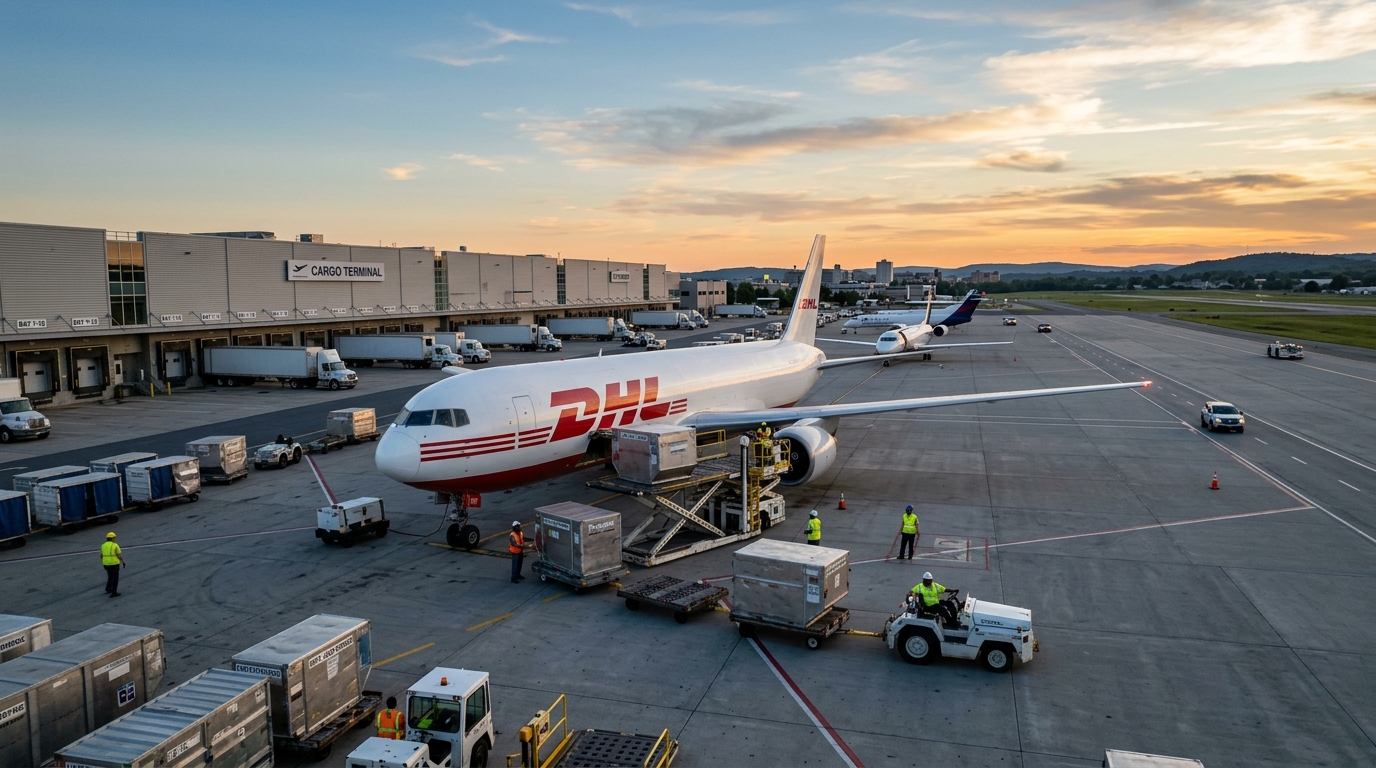
The scarcity at gateway airports is now producing a secondary wave. Realterm and the Susquehanna Area Regional Airport Authority announced in July 2026 a 105,000-square-foot first-line cargo facility at Harrisburg International, with eight airside drive-in doors positioned directly against the apron. Harrisburg processed about 55,700 tons of cargo in 2025. Milwaukee’s Air Cargo Center, a roughly $75 million public-private development, is on track to deliver about 337,000 square feet of import-export space in fall 2026 and aims to quintuple current freight volumes. Crow Holdings is financing it under a ground lease with the county.
The logic runs the same in both cases: primary hubs are physically full, so capital is following volume to secondary markets where apron-adjacent land still exists and rents have not been bid to the ceiling. Turner & Townsend research from this year finds logistics assets within three miles of an airport command roughly 61% higher rents than comparable facilities further out. At JFK and LAX, that premium is already priced in. At Harrisburg and Milwaukee, the clock started in 2026.
IATA puts recent global air cargo volumes at about 71.5 million tonnes, and says e-commerce represented about 15% of air cargo volumes in 2019. Developers who secure secondary airport land now are not speculating; they are buying a position the primary markets already proved out, at a lower entry cost and earlier in the cycle.