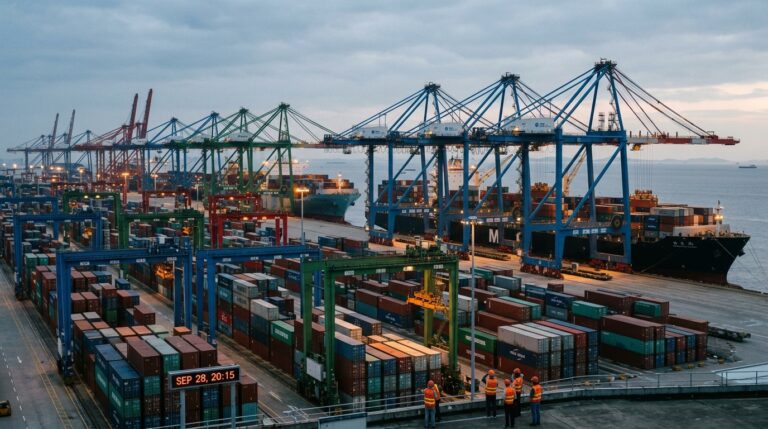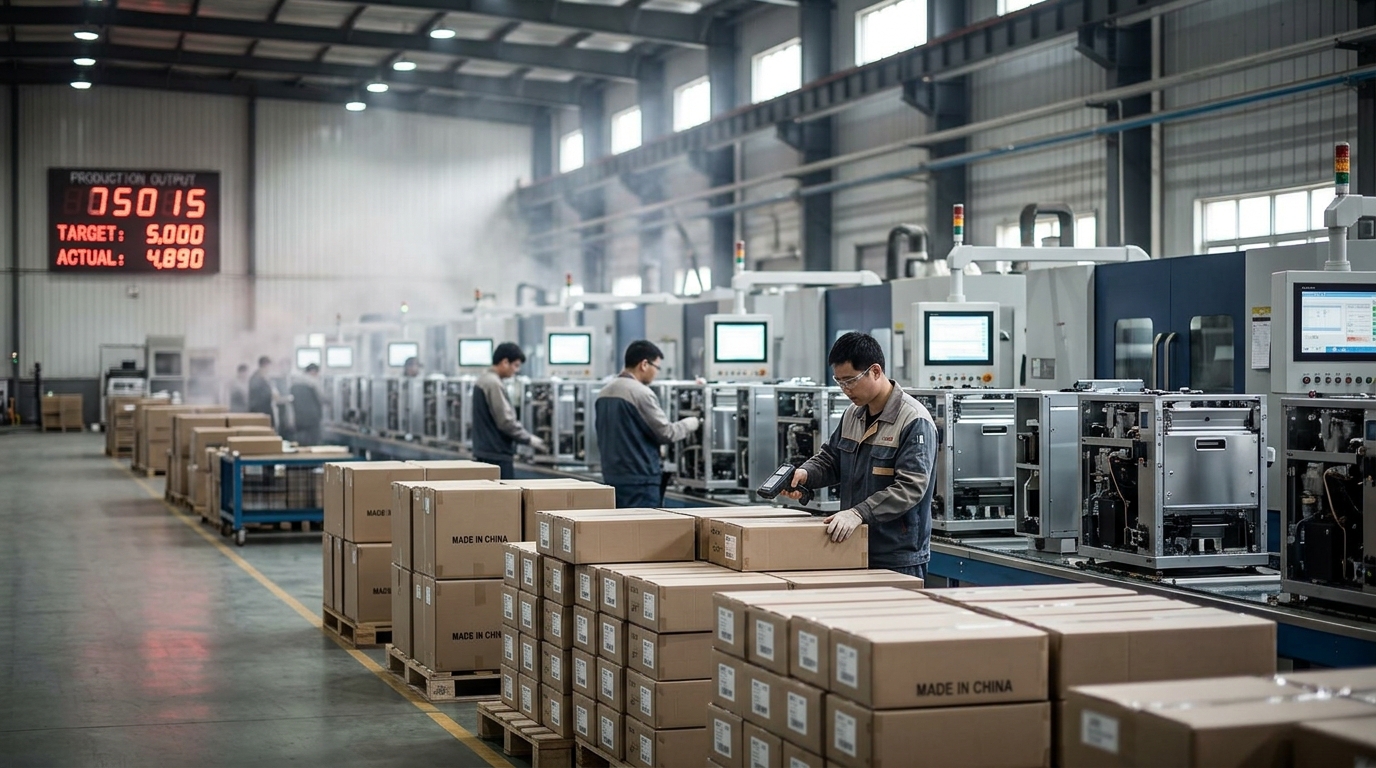
For three years, China shipped deflation to the world. Goods came off its factory floors at prices that anchored everything from European appliance shelves to U.S. retailer margins. That era deserves a closer look this morning, because September’s data from the National Bureau of Statistics suggests the dynamic has shifted in a way that has not yet registered in global inflation expectations.
China’s Producer Price Index jumped 5.0% year-on-year in September, following a 3.8% increase in August, and came in above the market consensus of 4.5%. The September reading was the highest since June 2022. On a monthly basis, PPI increased 1.2%.
The consumer side tells a starkly different story. China’s CPI rose 0.9% year-on-year in September, and came in just under consensus expectations of 1.0%. Month-on-month, consumer prices ticked up 0.2%, slowing from August’s 0.4% gain. Core inflation, which excludes volatile food and energy prices, was up 1.0% on the year, unchanged from August.
That 4.1-point spread between PPI and CPI is the number worth sitting with. A Capital Economics economist attributed much of the upward pressure to commodity supply disruptions caused by the Middle East conflict, with prices rising particularly sharply in fuel processing, chemicals and non-ferrous metals. Specifically, the NBS said prices in oil extraction, refined petroleum product manufacturing, and organic chemical raw material manufacturing rose 14.5%, 7.4%, and 5.4% respectively.
Analysts warn that a weak property sector and soft consumption make it hard for downstream manufacturers to pass on higher costs, and that factory prices could slip back towards deflation once supply-side support fades. A widening gap between strong PPI and modest CPI points to a squeeze on margins, not demand-led inflation. That distinction matters enormously for what happens next.
The global read is where this gets interesting. When China’s factory costs were falling, it suppressed goods prices everywhere its exports landed. The reversal runs the same logic in the opposite direction. A hot PPI adds to signs that China is passing higher goods prices on to the rest of the world after years of exporting disinflation. Western central banks that anchored part of their disinflationary confidence in cheap Chinese imports now face a quieter headwind from that same channel.
The yuan complicates the picture further. Bloomberg reported the yuan advanced to a four-year high against a basket of its trading partners’ currencies after the People’s Bank of China defended its exchange-rate management. The Bloomberg replica of the CFETS RMB Index rose to 103.9, its highest level since April 2022, bringing its year-to-date gain to over 5%. A stronger yuan cushions imported input costs for Chinese manufacturers but also raises the price of Chinese goods for foreign buyers, amplifying rather than dampening the inflationary export signal.
For the PBoC, the data presents a classic policy trap. Subdued CPI might justify monetary easing to boost demand. But accelerating PPI signals underlying cost pressures that could re-emerge at the consumer level if growth recovers, forcing the PBoC to reverse course.
The counterargument is real. If the Middle East supply disruption fades, PPI could retreat as quickly as it rose. What to watch: the next NBS inflation release for any moderation in monthly PPI momentum, crude oil levels as the primary transmission mechanism, and whether Chinese export prices, which have lagged the PPI surge, begin to climb in customs data. That last move is the one that turns a domestic cost squeeze into a global inflation problem.