October 18, 2026
Bonus Content: Ukraine’s $78 Billion 2027 Gap Is Now Europe’s Budget Problem
Dear Reader,
According to Josh Baylin, the analyst who told Congress the smartphone was coming – years before the iPhone existed… the richest man in the world just set the iPhone in his crosshairs.
He calls it “Starphone.”
And is convinced this new iPhone killer will destroy Apple’s grip on the $3 trillion smartphone and wireless industry – once and for all.
Josh has tracked down FCC rulings… two HUGE trademarks (filed on the same day)… multibillion-dollar spectrum deals… chip partnerships… and a long list of posts Elon himself has made on X.
On its own, you might brush it off as a coincidence…
But once you see Josh’s full explanation, it’ll be clear why they all point to this one conclusion.
That’s why he wants to show you EXACTLY how you can cash in on this incredible opportunity, at the earliest stage, with just a small amount of money…
Giving you the chance to potentially make 50 times your money when Elon’s iPhone killer hits shelves.
Regards,
Matt Weinschenck
Publisher, Stansberry Research
Ukraine’s $78 Billion 2027 Gap Is Now Europe’s Budget Problem
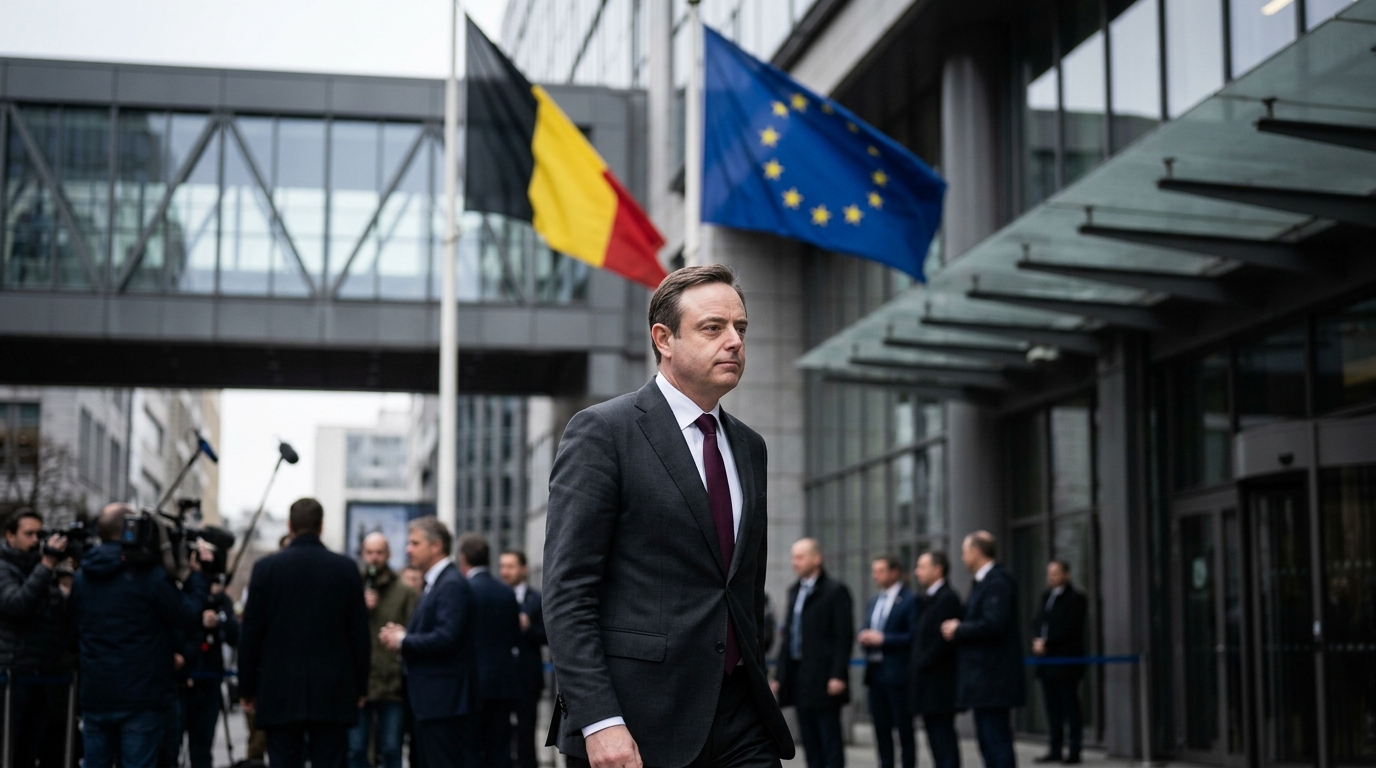
The EU summit that wrapped in Brussels on Friday broke up without resolving the one question that matters most for Ukraine’s finances in 2027. Belgian Prime Minister Bart De Wever held firm to his veto at the October 15-16 summit, blocking any agreement to deploy the roughly €185 billion in Russian central bank assets held at Euroclear toward Ukraine’s war effort. He left with his position exactly where it started.
Ukraine faces an unresolved $78 billion external financing gap for 2027: $45 billion for military operations and $32.6 billion to keep civilian government functions running, even as the European Commission has said Ukraine’s 2026 needs are fully covered.
De Wever’s core objection has not changed in a year. Belgium warns of lawsuits and of the financial burden of bearing the risk alone, while the European Central Bank has cautioned that outright confiscation could damage the euro’s standing as a reserve currency. Roughly €185 billion of the roughly €210 billion total sits in Belgium at Euroclear. That concentration is the whole problem: Belgium carries the legal exposure that other EU members want to share but have not yet formally guaranteed.
Behind the impasse lies a convergence of financial pressure that few European capitals have wanted to confront directly: a mounting Ukrainian funding crisis, a Kremlin legal offensive targeting the very institution Belgium is trying to protect, and a December deadline that is approaching faster than any viable solution.
What Happens to the Money
The summit’s failure shifts the burden squarely onto EU joint borrowing and national defence budgets. In December 2025, EU leaders agreed a €90 billion loan to Ukraine, financed through EU borrowing on capital markets, backed by the EU budget, and split into €30 billion of macro-financial support and €60 billion for Ukraine’s defence industrial base. That structure is the template for any 2027 solution, which means more EU bond issuance and more pressure on member-state balance sheets if the frozen asset route stays blocked.
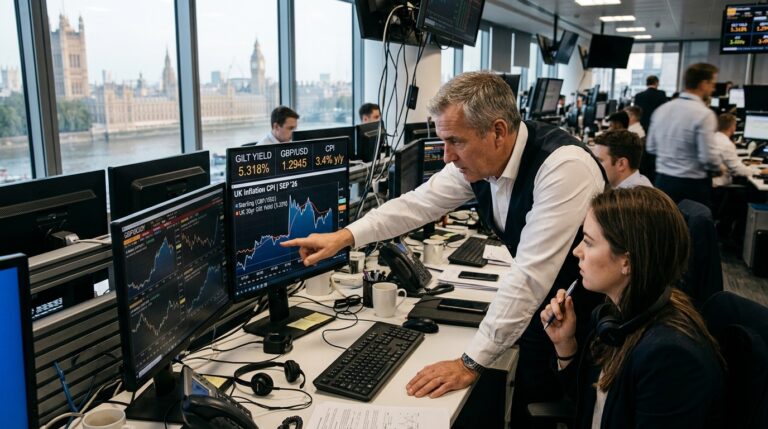
More EU bond issuance means more competition for the same pool of fixed-income demand. European sovereign and bank borrowers have already shown how quickly simultaneous issuance can saturate the market and move yields.
Watch EU bond supply and sovereign spreads on Monday. If markets start pricing in a heavier joint-borrowing burden, peripheral spreads widen first.
Stocks in Focus
European defence shares are already pricing in a world where Europe funds its own security without a diplomatic shortcut. Rheinmetall closed Friday at €1,090.20.
The move offers the German group a welcome breather after a run that left the stock down 30% since the start of the year. Rheinmetall also recently revised down its 2026 sales outlook after the German government scrapped a delayed frigate programme. Q3 results are due November 5. That date is the next hard catalyst: order intake will tell traders whether the rearmament pipeline is thickening fast enough to justify a re-rating.
The Cheat Sheet
- Top theme: Belgium’s veto converts Ukraine’s 2027 funding gap from a diplomatic problem into a European fiscal and market problem.
- Stock to watch: Rheinmetall (RHM). Friday’s move is worth monitoring for follow-through Monday; Q3 results on November 5 are the real test.
- Sector to watch: European defence broadly. Thales and Leonardo also respond to the same budget-pressure logic if EU joint borrowing accelerates.
- Biggest risk: EU bond supply shock if the December summit also fails to unlock the frozen assets, forcing a larger-than-expected issuance programme.
- One thing to remember: The summit’s failure does not kill Ukraine funding; it redirects it through channels that cost EU taxpayers more and create more bond market supply. Track spreads before equities.