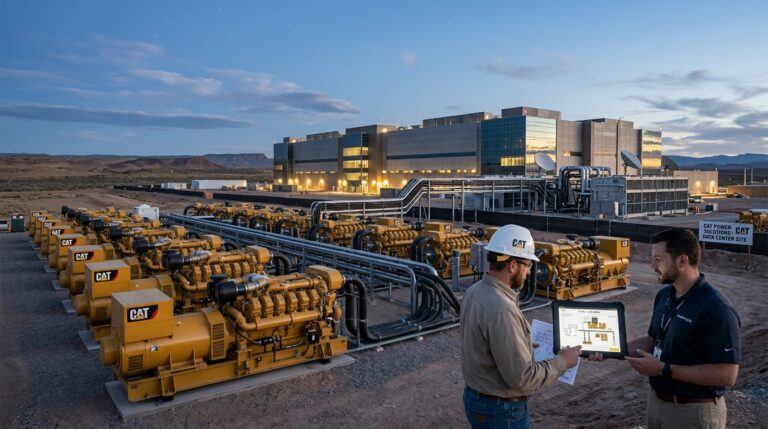
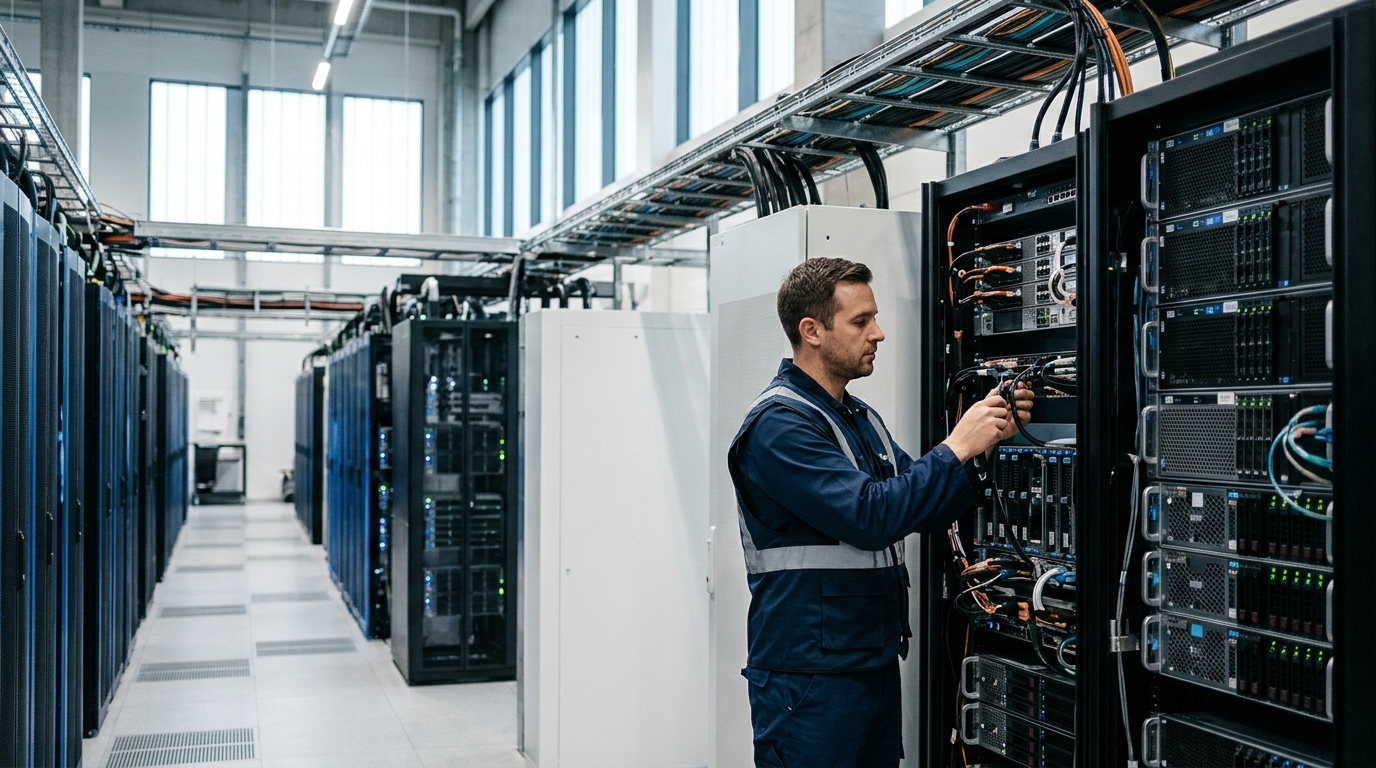
When a hyperscaler breaks ground on a new data center, the conversation moves quickly to chips, software, and power. Jabil rarely comes up. It should. The St. Petersburg-based contract manufacturer builds the servers, networking components, thermal systems, and power units that go inside those facilities, and it is doing it at a scale that most investors have not fully absorbed.
Fiscal 2026, which ended August 31, produced revenue of $36 billion, up 21% year over year. The quarter ended August 31 delivered $10.6 billion in revenue, beating the $9.69 billion consensus by roughly $910 million, nearly 10%. Core EPS of $4.40 came in 8.4% above estimates. GAAP diluted EPS rose 89% from a year earlier to $3.76. Intelligent Infrastructure revenues surged 56% in the quarter to $6.4 billion, powered by a ramp at a second hyperscaler in Mexico, record networking production in India, and better-than-expected power results.
AI-related revenue for the full fiscal year totaled $14.4 billion, up by about $5.4 billion from fiscal 2025. The fiscal 2027 outlook is bolder: Jabil guided total revenue to $44.5 billion, up 24%, with AI-related revenue projected to reach $22.1 billion, a 54% increase. Management expects six Intelligent Infrastructure customers to each generate more than $1 billion in revenues in fiscal 2027. Stifel reiterated a Buy and a $460 price target, projecting core EPS of $17.55 for fiscal 2027, a 34% jump. The company’s PEG ratio sits at 0.48, which is not a multiple that describes an overpriced stock.
The stock trades around $250 today, against a 52-week high near $429. At roughly $25.7 billion in market cap, Jabil’s price-to-sales ratio is approximately 0.71, a fraction of what pure-play AI infrastructure names command. Wall Street’s average target is around $425, implying roughly 70% upside from current levels. BofA, JPMorgan, Argus, Stifel, and UBS all carry Buy or equivalent ratings.
The risks worth taking seriously: AI infrastructure revenue is concentrating in a small number of large customer programs, which raises execution and retention risk. Adjusted free cash flow was $1.53 billion in fiscal 2026, healthy but not enormous relative to the capex cycle the business is funding. Outside infrastructure, healthcare and connected living revenue is growing at low single-digit rates, so the company increasingly depends on the AI portion of the portfolio to meet its full-year targets.
But Jabil is not speculative. It has four consecutive earnings beats. It generates real cash. Its AI revenue is backed by committed orders, not forecasted pipeline. The company’s CEO described fiscal 2027 as offering about $8.5 billion of incremental revenue, with significant demand supported by committed customer business in AI infrastructure. That is not aspiration. That is execution.
The market priced Jabil like a commodity manufacturer. The business has become something closer to critical infrastructure for every major hyperscaler building at scale today.