August 18, 2026
Warsh Says 2%. The 30-Year Says Prove It.
The Fed holds for a fifth straight meeting. The long end of the curve is running its own policy.
Investing Legend Hints the End May be Near for These 3 Iconic Stocks
Futurist Eric Fry says Amazon, Tesla and Nvidia are all on the verge of major disruption. To help protect anyone with money invested in them, he’s sharing three exciting stocks to replace them with. He gives away the names and tickers completely free in his brand-new “Sell This, Buy That” broadcast.
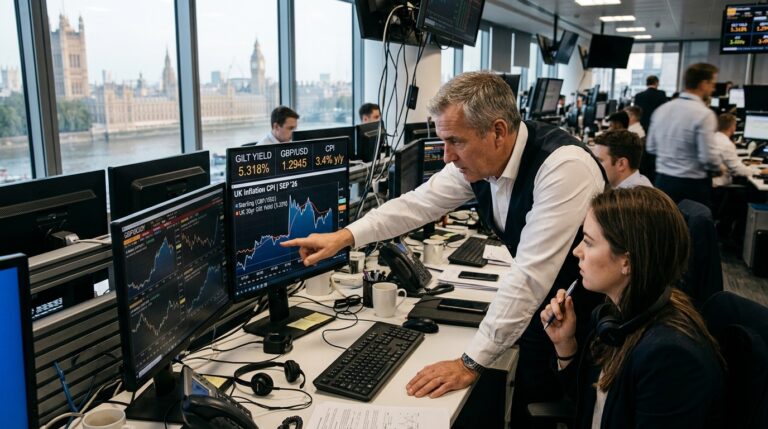
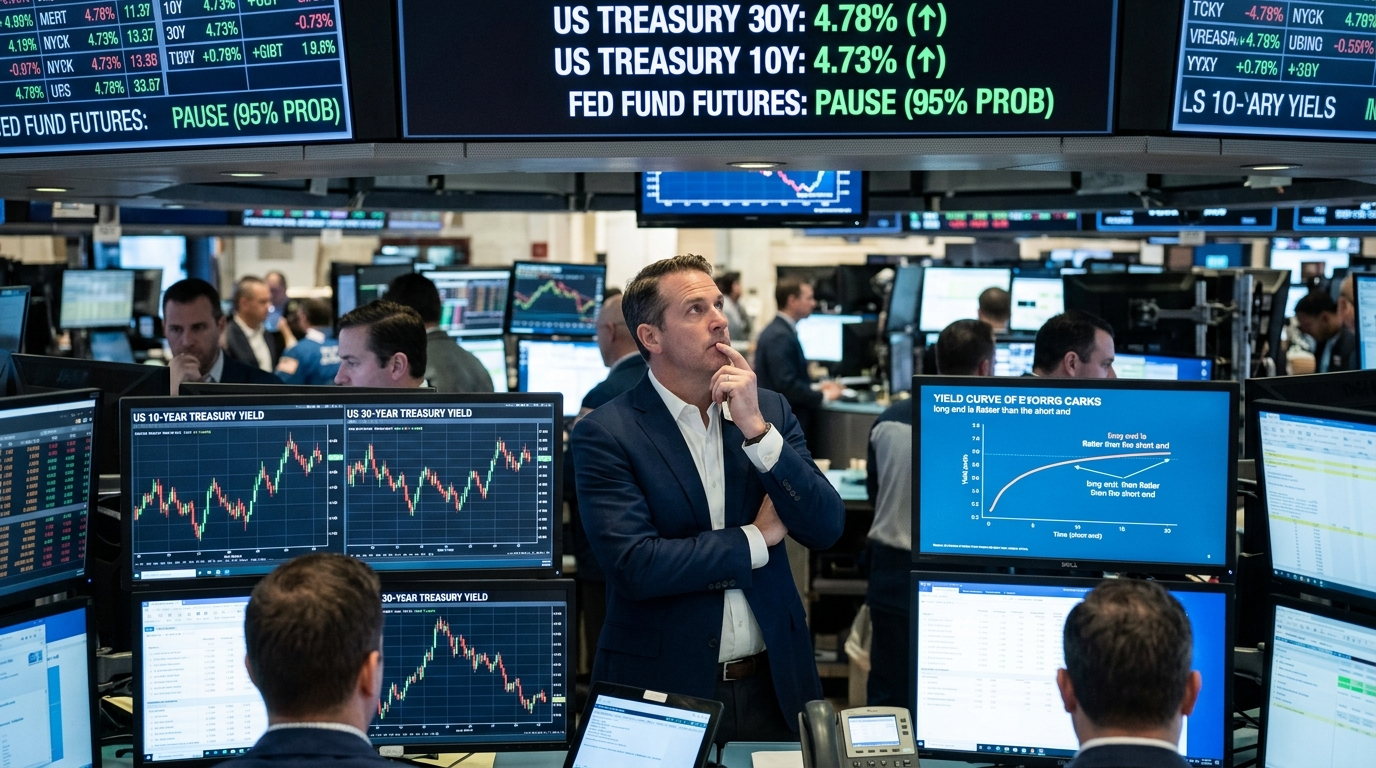
Start with the number that matters: the 30-year Treasury yield is at 5.31% this morning. That is a 19-year high. The 10-year is at 4.72%. And the implied probability of a September hike has fallen over the past three weeks.
Those two facts should not coexist. But they do. And that contradiction is the entire story of this market right now.
The conventional logic runs like this: if traders think the Fed is less likely to raise short-term rates, longer-term yields should follow. They are not following. The long end is selling off on its own terms, driven by term premium, fiscal concerns, and a bond market that has decided it cannot wait for the Fed to mean what it says. S&P 500 futures fell 0.41% overnight. Nasdaq 100 futures dropped over 1%. Brent crude hit $91 per barrel after President Trump rejected extending the 60-day ceasefire with Iran, threatening to strike Oman if it interferes with Strait of Hormuz operations. WTI settled near $84. Gold is around $4,453. VIX closed Monday at 15.19, up 6.6% on the session, and is climbing further in premarket. The dollar is firm. None of this is the backdrop that makes equities comfortable at current valuations.
The Tech IPO Set to Be 41X Bigger Than the Google, Microsoft, and Amazon IPOs Combined
Nvidia, Google, Amazon are all loading up on shares.
Here’s a secret backdoor in for regular investors. [Free Ticker]
What the Bond Market Is Actually Saying
The 30-year auction last week cleared at its highest yield since 2001, according to BMO. Five of the previous seven 20-year auctions had tailed. Demand for long-duration U.S. debt has not been robust, and the market is now pricing that in structurally, not just episodically.
Three forces are compounding at once.
- Term premium is rising. Investors want more compensation to lend to the U.S. government for 30 years. Part of that is uncertainty about the Fed’s path. Part is the debt load: net interest on the public debt reached $857 billion over the first nine months of this fiscal year, up 13% year-over-year. Total federal debt is near $40 trillion.
- Energy is re-accelerating inflation expectations. The Iran ceasefire expiration and Trump’s threats toward Oman pushed Brent crude to $91. University of Michigan year-ahead inflation expectations rose to 4.8% in August, up from 4.5% in July. That is not the direction that makes long-duration bonds attractive.
- Corporate bond supply is heavy. Big tech and AI-linked companies have been tapping debt markets at scale to fund infrastructure buildout, adding to supply at the same moment Treasury issuance is running hot.
Deutsche Bank put it plainly: markets are pricing a combination of resilient growth, record equities, and only limited additional tightening. That combination, they argue, may prove difficult to sustain. Strong growth and loose financial conditions keep demand elevated, which keeps inflation elevated, which forces the Fed’s hand more than investors currently expect.
Worth noting: JPMorgan’s Michael Feroli wrote that Warsh “once again failed to specify how he intended to achieve his stridently asserted inflation resolve” and that Warsh “cast doubt on whether PCE inflation will remain the Fed’s inflation target in the medium run.” Both observations raise genuine questions about whether the goalposts are fixed.
Stocks and Sectors
No single equity catalyst dominates today. The macro is the catalyst.
Rate-sensitive growth names with long-duration cash flows are the most exposed if the long end holds here or pushes higher into Jackson Hole. Utilities and REITs face direct yield competition from Treasuries at these levels. Financials are a more complicated call: regional banks have absorbed higher short rates, but the steepening between the 10-year and 30-year is complicating duration management across insurance and pension books. Cleveland Fed President Hammack has said she sees inflationary pressure originating from demand, not supply disruptions, and that business contacts in her district report price pressures widening rather than easing. If the hawks are right on that call, bank net interest margins eventually benefit. The duration risk in the interim is real, and it is not small.
Energy is the sector that keeps feeding the problem. The interim ceasefire memorandum between the U.S. and Iran has now expired. Negotiations to reopen the Strait of Hormuz are stalled. Elevated oil is not a short-term blip at this point; it is the input feeding the inflation re-acceleration that is driving the long-end selloff. That loop matters.
Elon Musk: Buy Alert
The world’s richest man just launched a new $480 trillion disruption, which could make you massive gains this summer. It has nothing to do with space, robots or AI. It’s much, much bigger.
What’s on the Calendar
- Tomorrow, August 20: FOMC July Minutes. The Fed voted 9-3 to hold on July 29, with Hammack, Kashkari, and Logan all dissenting in favor of a 25 basis point hike. That level of dissent is the most unified hawkish push since September 2016. The minutes will show how close the majority came to joining them, and whether Warsh is managing a committee that is drifting toward action or holding firm against it.
- August 26 morning: July core PCE. Expected to remain above 3%. This is the last major inflation reading before Warsh speaks. Nvidia also reports Tuesday evening, August 26, which means the market’s largest single earnings event and its most important Fed speech land 36 hours apart.
- August 27-29: Jackson Hole Symposium. This year’s theme is financial innovation in payments and policy. Warsh speaks on the morning of August 28, his first keynote as Fed chair. He has told reporters the speech will focus on big-picture structural questions, not near-term guidance. Former Dallas Fed President Robert Kaplan said publicly last week that Warsh needs to offer more policy detail when he gets to the podium. The Warsh track record since May argues against it. Curtailed forward guidance, shorter statements, deliberately evasive press conference answers. Expect the same, and position accordingly.
- September 16: FOMC Decision. Markets currently see a majority probability of another hold. That pricing could shift fast depending on what PCE shows and what Warsh says in Wyoming.
Technical Levels to Watch
- 30-year at 5.31%: Acting as the ceiling of the current range. A close above 5.35% opens the path toward 5.50%, last seen in the early 2000s.
- 10-year at 4.72%: The recent high near 4.75% was tested earlier this week. A break and sustained hold above that level would likely trigger another wave of equity selling across rate-sensitive names.
- 2-year Treasury: The 2-year is still trading above the federal funds rate. That tells you investors do not believe the current fed funds rate is high enough to contain inflation. That is the tell. Everything else is secondary.
Risk Radar
The credibility gap is the primary risk. A paradox of central banking is that often the best way to get lower long-term interest rates is to actually raise short-term rates. Demonstrate willingness to act, and the long end behaves itself. Warsh has said all the right words about getting inflation to 2%. The 30-year at 5.31% is the bond market’s verdict on what words are worth without follow-through.
There is also a political dimension worth naming. Reports that Warsh remains in close contact with the White House, combined with the renewed effort to remove Governor Lisa Cook, distort how every rate decision gets interpreted. A hike looks like proof the Fed can still say no. A hold looks like proof it cannot. Jackson Hole is an opportunity to address that perception directly. Whether Warsh takes it is a different question.
Geopolitical risk is not abstract right now. It is $91 Brent crude and rising inflation expectations.
The Cheat Sheet
Top theme: The bond market is not waiting for the Fed. The 30-year at a 19-year high while September hike odds fall is the clearest signal since 2022 that the market is doing its own tightening.
Stock to watch: Rate-sensitive financials with long-duration liability exposure. Insurers and pension-liability managers take a direct hit at 5.31% on the long end. Watch for forced repositioning.
Sector to watch: Financials. The hawks on the FOMC are describing demand-driven inflation, not supply-side. If they are right, bank margins eventually benefit. The path to get there is bumpy.
Biggest risk: Another round of vague, big-picture framing from Warsh at Jackson Hole with no policy signal. If that happens, the long end moves higher again. The market has already priced in evasion to some degree. Another full round of it may not be fully priced.
Biggest opportunity: Three FOMC presidents dissented in favor of hikes in July, the most unified hawkish dissent since September 2016. The minutes tomorrow could show the majority is closer to moving than current market pricing suggests. Short duration heading into that release is the asymmetric position.
One thing to watch: The 2-year yield trading above the fed funds rate. That gap is the market telling you it thinks rates need to go higher. Whether the Fed agrees is what the next four weeks are going to sort out.