
September 10, 2026
Bonus Content: Airbnb’s Real Growth Story Isn’t More Bookings
Dear Reader,
Elon Musk has spent years quietly developing a new machine.
It’s not a rocket… robot… or car…
Most investors have never heard of it.
But the United States Patent Office has already revealed how it works.
The evidence is buried inside Patent No. US 11,291,508 B2.
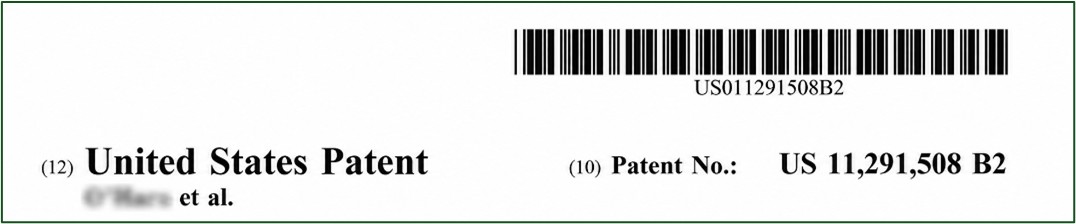
Click here to examine the discovery and the stocks connected to it.
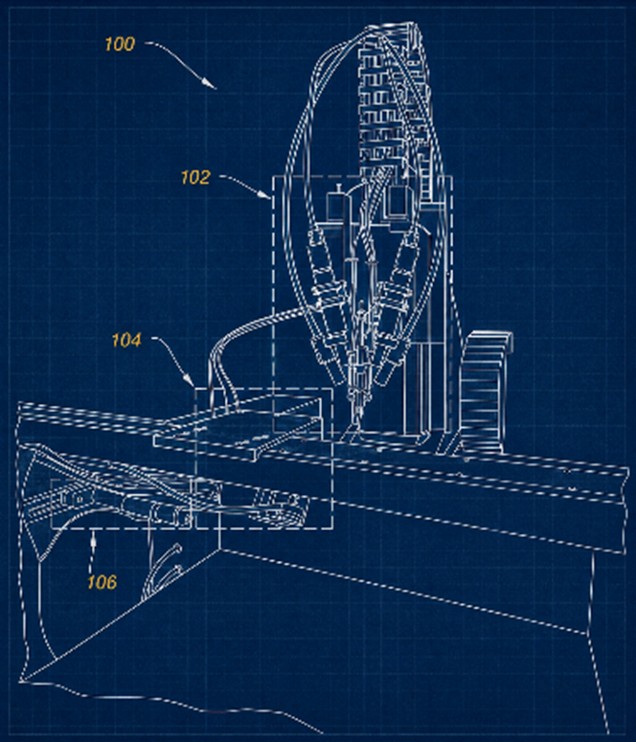
Let me be clear…
This is something completely new.
If it works, it could open an enormous new market for artificial intelligence and launch what Wall Street veteran Matt McCall calls the sixth “Musk Stampede.”
Click here to see what Elon’s patented machine could make possible
Matt has spent more than 25 years identifying major technology trends before they became obvious.
Over that time, he has uncovered more than 50 stocks that later climbed 1,000% or more at their peak.
Now he believes one small public company could benefit as Elon brings this patented technology into the mainstream.
It’s already attracted an eight-figure investment from Nvidia.
And a major gathering beginning November 14th could bring fresh attention to the entire field.
Click here to learn how to get the name and ticker symbol before November 14th.
Good investing,
Matt McCall
Former Fox Business analyst, Editor of McCall Innovations Report
P.S. The patent is already public. The companies surrounding it are still almost entirely unwatched.
Airbnb’s Real Growth Story Isn’t More Bookings

Most of the coverage after Airbnb’s August earnings focused on the headline: guidance raised again, stock up double digits in after-hours trading. That framing undersells what is actually happening inside the business.
Airbnb reported second-quarter revenue of $3.6 billion, up 17% year-over-year, with net income surging 27% to $816 million. Solid numbers. But the more durable signal is where the growth is coming from and how cheaply the company is now producing it.
AI is driving operational savings, particularly in customer support, where nearly 45% of issues that begin with Airbnb’s AI assistant are resolved without a human agent, and customer support costs per booking declined about 16% year over year. That is not a rounding error. Cutting support costs by 16% per booking while simultaneously accelerating volume growth is exactly the kind of operating leverage that makes margin expansion sticky rather than cyclical.
Airbnb reduced the time from concept to delivery by as much as 60% and increased the number of features and improvements shipped this year by nearly 80% compared to the same period last year. Faster shipping means faster revenue from new products, and Airbnb has several of them loading into the pipeline at once.
Hotel supply is scaling quickly, growing three times faster than homes, with 35% of hotel guests returning to book homes. That retention loop matters. Every hotel guest converted into a repeat homes customer expands lifetime value without a proportional rise in acquisition cost.
CEO Brian Chesky said sponsored listings for hosts alone could eventually generate about $1 billion, alongside other monetization opportunities such as travel insurance and seller services. None of that revenue is in current estimates. It represents a call option on platform depth that the market has not fully priced.
For Q3, Airbnb projects revenue between $4.69 billion and $4.77 billion, above the $4.61 billion analysts expected, and anticipates that nights and seats booked will continue to expand at a low-double-digit pace.
The company now expects its adjusted EBITDA margin for the full year to reach at least 35.5%. That is the second consecutive upward revision to both revenue growth and margin guidance in 2026, a combination that rarely happens by accident.
The risk BTIG flagged after the results is worth holding: analysts at BTIG said Airbnb delivered a beat and raise pointing to accelerating second-half room nights, but added they continue to see valuation as relatively full. With 39 analysts averaging a 12-month price target of about $158 with a high estimate of $185, the upside case requires the AI and hotel expansion to compound faster than current models assume.
The booking volume recovery is real. The question traders should be asking is whether the market is paying for travel demand or for a structurally more profitable platform. Right now, it may not have decided.
What to Watch
- Q3 earnings: Whether the 35.5% EBITDA margin floor holds as hotel and services investment ramps.
- Hotel attach rate: If the 35% homes-return rate among hotel guests holds at scale, the unit economics shift meaningfully.
- Sponsored listings launch: Any timeline toward the potential $1 billion advertising revenue layer would be a catalyst the current price does not reflect.