September 14, 2026
Bonus Content: Nucor’s Biggest Mill Hasn’t Shipped a Ton Yet. Earnings Are Coming.
Dear Reader,
Thirteen bullets ripped through an Indianapolis Councilman’s front door while his family slept.
All because the week prior, he publicly backed the rezoning of a data center.
And events like this may even start happening in your hometown.
That’s because, all across America, there’s been violence, protest, lawsuits, cancelled projects, and campaigns to impose statewide moratoria to stop AI’s impact on cities and small towns across the nation.
In fact, at midnight on November 4…
I believe it’s all going to come to a head.
And if you’re not prepared…
It could have devastating effects on your wealth and investments.
My research shows that one single money move could prove the difference between seeing your wealth grow exponentially…
Or losing more than half of it or more, in the next six months.
Regards,
Whitney Tilson
Editor, Stansberry’s Investment Advisory
Former Hedge Fund Manager
Co-Founder, Teach for America
Harvard MBA
P.S. To help you prepare, inside this presentation I’m giving away one stock recommendation for free that I believe you should consider buying before election day…
Nucor’s Biggest Mill Hasn’t Shipped a Ton Yet. Earnings Are Coming.
Nucor just posted its best two-quarter earnings run in years, and the mill responsible for its next leg of growth hasn’t shipped a single commercial ton.
The Charlotte steelmaker reported second-quarter net earnings of $1.16 billion, or $5.04 per diluted share, a 93% jump from a year ago. Revenue hit $10.40 billion, up 23% year over year. Steel mill shipments reached 7.1 million tons, a second consecutive quarterly record. Management guided Q3 consolidated earnings higher still, driven by expanding metal margins and rising volumes across the steel mills and steel products segments.
Traders focused on those backward-looking numbers are missing the more important question: what happens when the $4 billion greenfield sheet mill in Apple Grove, West Virginia finally produces at scale?
The Mill That Changes the Math
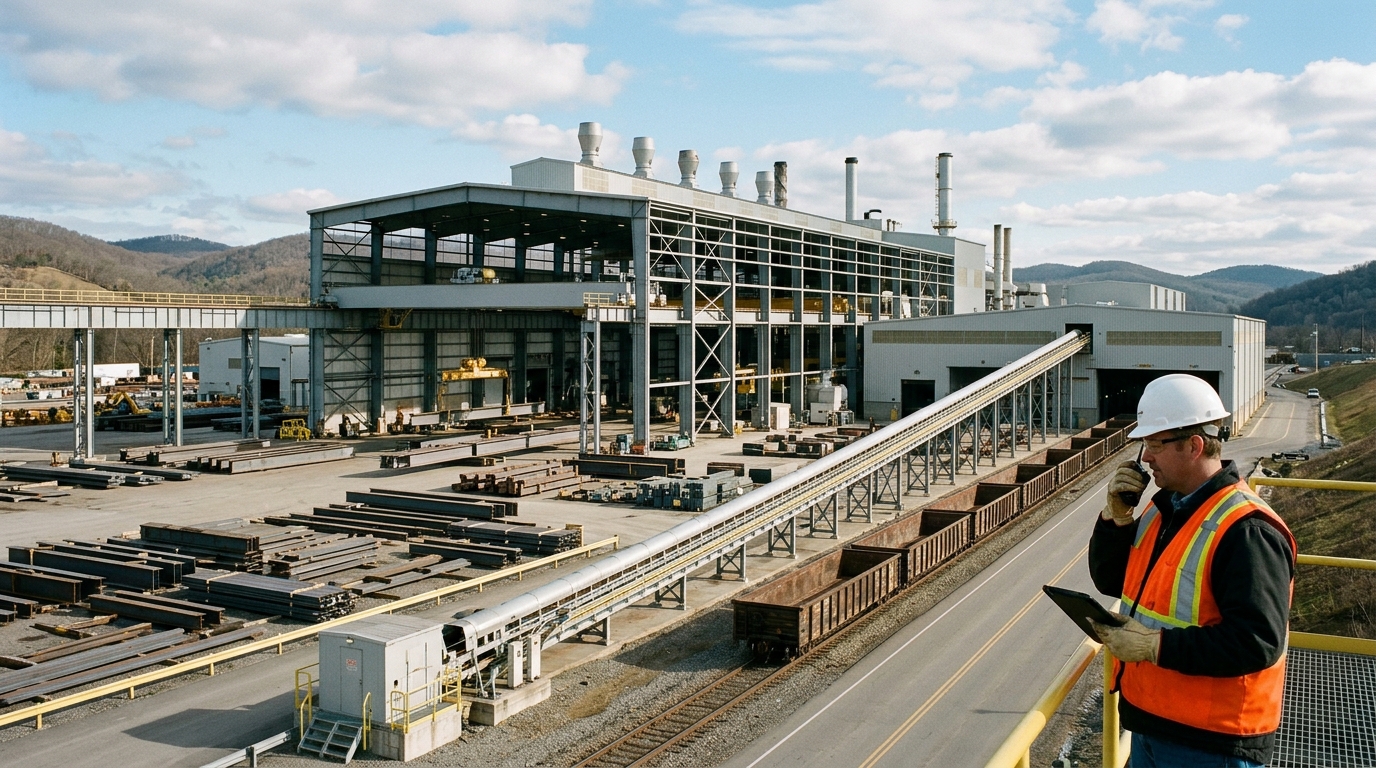
The West Virginia facility, Nucor’s single largest investment ever, ran its first coil through the pickle line in June. The melt shop and hot mill are commissioning through year-end. Commercial shipments are not expected until early 2027, with a ramp to roughly 50% utilization during 2027. At full capacity, the mill adds 3 million tons per year of sheet capacity, aimed squarely at data center, automotive, and energy customers in the Midwest and Northeast.
Pre-operating and startup costs for the facility totaled about $120 million in Q2 alone, dragging on current results. Those costs stay elevated through 2027 as production climbs. The moment that drag flips into revenue contribution is the inflection point the stock hasn’t yet priced in. EVP of sheet products Noah Hanners cited energy, advanced manufacturing, and data centers as demand anchors he expects to sustain multi-year sheet strength.
The Import Wall Is Holding
Section 232 tariffs at 50% have reshaped the competitive landscape. Import market share for finished steel fell to about 16% in the first half of 2026, down from about 18% for full year 2025. Hot-rolled coil futures near $1,200 per ton reflect that tightness. Fastmarkets data shows fall and winter mill outages pulling more than 1 million tons of hot-rolled coil off the domestic market between September and December, keeping lead times at 8 to 12 weeks.
Nucor’s average selling price in Q2 was $1,145 per ton, up $71 from Q1. Fixed-price contracts for 2027 are lining up around $1,100 to $1,175 per ton per CRU data from Steel Summit 2026, far above the roughly $800 baseline on 2026 contracts. That pricing reset is locked in before the West Virginia mill ships one commercial coil.
What Traders Watch
JPMorgan raised its price target on NUE to $308 from $294 on September 9, keeping an Overweight rating. The consensus across 17 analysts is Buy, with a mean target near $283. NUE has returned roughly 72% over the past twelve months versus roughly 19% for the S&P 500.
The risks are real. Scrap costs rose 5% in Q2, and the steel products segment already showed margin compression when input costs outpaced pricing. A reversal in Canadian steel trade policy or a construction slowdown could compress the tariff premium before West Virginia volume offsets it.
Backlogs grew 18% quarter over quarter in Q2 and have continued building. That is the leading indicator to watch heading into Q3 results, due in late October. As long as backlogs stay full and lead times stay long, Nucor’s case that its best earnings are still ahead holds.