FedEx crossed a milestone that took two years and a significant amount of organizational pain to reach. Structural cost reduction enabled the company to exceed its $1 billion transformation-related savings target for the fiscal year. The market’s reaction on June 23 told a more complicated story: shares closed at $316.83 before falling further to about $297.70 after hours, as investors focused on transition-year guidance and cost pressures stemming from the recently completed FedEx Freight spin-off.
That tension between genuine operational progress and near-term headwinds is the crux of the FDX trade right now.
What Actually Changed
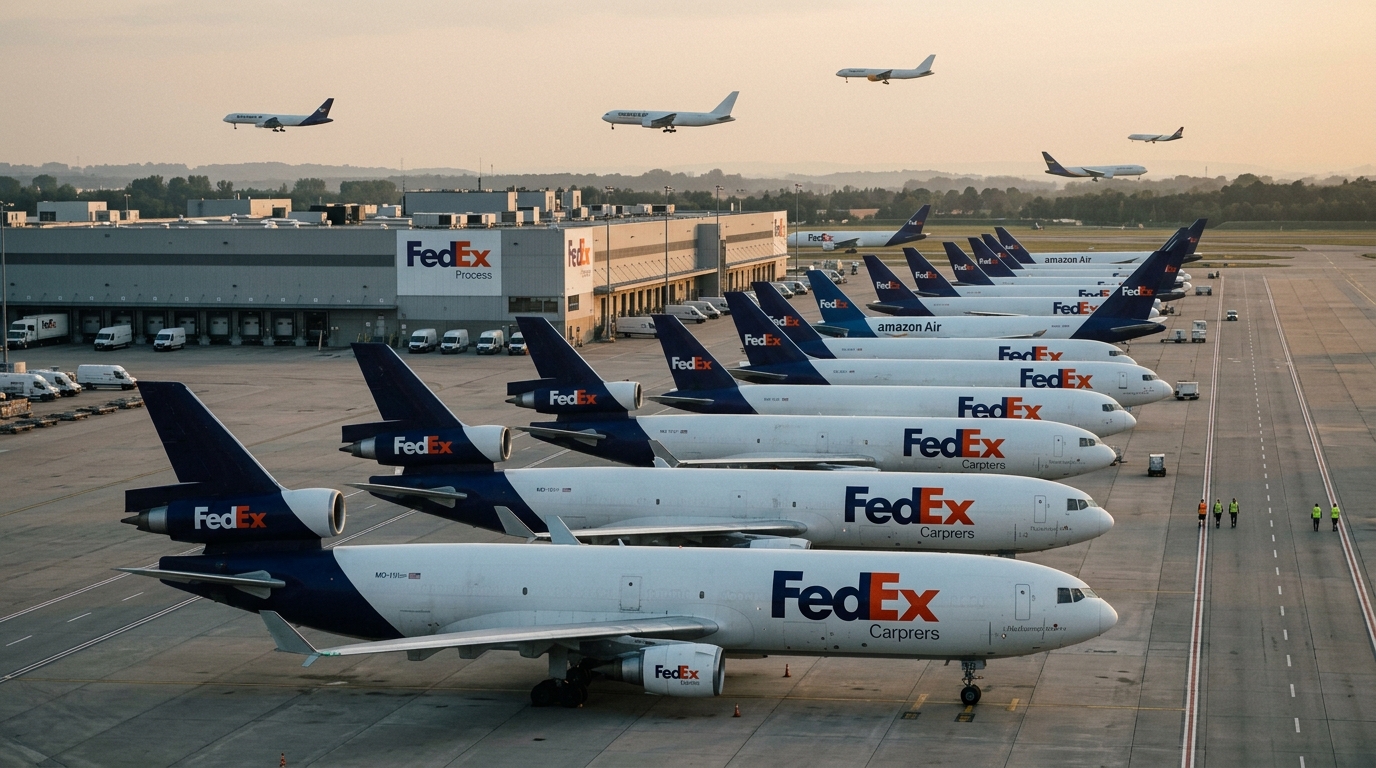
The transformation runs on two parallel tracks. On the air side, Q4 results included a non-cash impairment charge of $23 million tied to the permanent retirement of 10 additional jet aircraft, including five MD-11s. Over four years, FedEx removed a net 34 jets from its fleet, an 8% reduction versus fiscal 2022. The Tricolor strategy, which aligns aircraft type and deployment to service level and demand, de-emphasizes the old hub-and-spoke model and is designed to match capacity to demand rather than run surplus lift for legacy commitments.
On the ground, Network 2.0 reached approximately 25% of eligible volume flowing through optimized facilities as of the 2026 investor day update, with the company targeting roughly 65% flowing through optimized facilities by the 2026 peak season. The company expects to close a little over 475 stations, roughly 30% of its footprint, by the end of 2027. Optimized markets have already shown about a 10% reduction in pickup-and-delivery costs. The concept is straightforward: the physical integration of Express and Ground into a single pickup-and-delivery system means one van handles all parcels in a neighborhood instead of two.
Where the Risk Sits
Market concerns centered on stranded costs from the Freight separation and a new pilot contract creating near-term headwinds. The pilot contract was ratified on June 9, 2026 and takes effect June 29, 2026, adding wage pressure at the precise moment FedEx is absorbing transition costs from spinning off its Freight division. Those stranded costs are real: costs that were previously allocated to FedEx Freight through intercompany charges now sit with FedEx’s continuing operations until they are worked down through transition services agreements and other cost actions.
The network integration should improve delivery consistency and potentially lower costs over time. But during the transition, service disruptions in newly consolidated markets are a real possibility, worth monitoring for shippers with high volume in affected areas.
What the Next Phase Looks Like
Management introduced a calendar 2026 outlook calling for about 11% revenue growth and adjusted EPS of $16.90 to $18.10. Chief customer officer Brie Carere described the quarter as proof that FedEx’s commercial strategy centers on revenue quality, with healthcare, automotive, aerospace, and data center demand driving much of the growth.
The numbers that matter most over the next two quarters are not the headline revenue figures. Watch operating margin in the Federal Express segment specifically, facility closure pace against the 475-station target, and any guidance revision tied to pilot-contract costs. The next phase of savings aims for a total of $2 billion by the end of calendar year 2027. Getting there requires volume to fill the consolidated network without the safety valve of the old station count. That is a different kind of execution risk than cutting headcount in Europe.
The savings are real. The question FDX shareholders are pricing right now is whether a tighter network bends under pressure or performs exactly as designed.