The lab phase is over. Commercial silicon-anode materials are now being produced at EV scale, and the first real question for traders is no longer whether the chemistry works in a lab. It is whether the companies building it can get the cost low enough to matter beyond the luxury segment.
What Is Actually Shipping
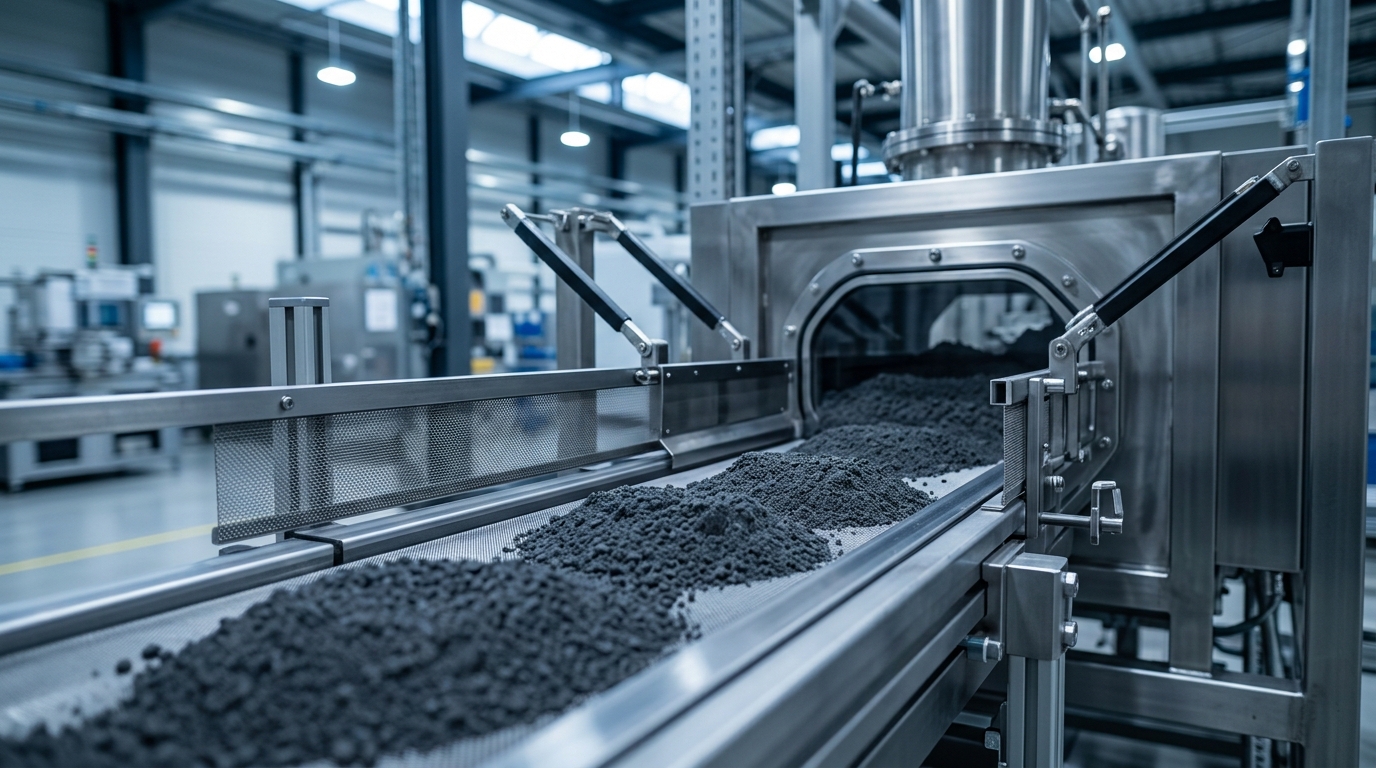
Group14 Technologies announced in March 2026 that its South Korean battery-material plant had started EV-scale production of its SCC55 silicon-carbon material, with capacity designed to reach roughly 2,000 metric tons per year, equivalent to about 10 GWh of energy storage annually as production ramps. A second U.S. facility is expanding in Moses Lake, Washington, with production targeted to begin in 2027.
Sila Nanotechnologies moved faster on the customer side, positioning its Moses Lake plant to move from commissioning into production in the second half of 2025, with Mercedes-Benz as a major partner. Vehicles equipped with silicon-rich anodes can deliver meaningful range gains versus conventional graphite-only designs, but the near-term adoption path still skews premium.
StoreDot is chasing a more aggressive charging target. The company has developed prototype cells it says can add 100 miles of range in four minutes, showing a 10% improvement in energy density over its previous generation, and projecting 340 Wh/kg in an EV form factor. StoreDot has also said it is scaling from a 3 Ah cell to a 140 Ah version, targeting mass production readiness in 2026.
The Real Trade: Supply Chain, Not Just Chemistry
Performance alone does not explain why Washington got involved. China still dominates battery anode material processing, which creates both a political problem and a commercial one.
Sila received a conditional loan commitment of up to $1.4 billion from the U.S. Department of War, through its Office of Strategic Capital, to support expansion of silicon-carbon anode manufacturing in Moses Lake and a lithium-ion battery cell manufacturing facility. In July 2026, the company also announced $300 million in private funding led by Atreides Management and Sutter Hill Ventures. Combined, those two tranches make Sila one of the better-capitalized advanced materials startups in the U.S., with a credible path to the scale needed to compete on price.
On incentives, the Inflation Reduction Act ties key EV credits to where battery components and critical minerals come from. For vehicles placed in service in calendar year 2028, Treasury guidance sets the applicable battery components percentage at 90%. That deadline is a hard pull on automakers. Silicon produced in Washington or South Korea can help diversify supply chains; Chinese-linked anode supply does not. A shift toward silicon is partly an industrial hedge, not only a performance play.
The Cost Problem Is Not Solved
The premium is significant. The Mercedes G580 EQ costs well into the six-figure range in euros. Silicon-enhanced anodes are widely expected to carry an initial cost premium versus conventional graphite, which is why the early beachhead is premium models and high-performance applications rather than mid-range or compact EVs.
SCC55 is still expected to cost more per kilogram than low-cost Chinese synthetic graphite. While luxury automakers like Porsche can be willing to pay for performance, Group14 must scale radically to bring cost down enough for mass-market vehicles. The market reflects that gap. One widely circulated forecast pegs the silicon anode battery market at roughly $145 million in 2026, rising to about $1.7 billion by 2033, implying low-40% annual growth.
The cost gap between silicon and graphite does not exist in isolation. Softening lithium prices are already compressing margins across the broader battery-materials complex, dragging ALB, SQM, and LAC together.
What Traders Should Watch
- Group14’s Moses Lake ramp: The BAM-2 facility timeline is the nearest-term volume signal for whether SCC55 moves toward price parity with graphite ahead of 2028 IRA thresholds.
- Sila’s Department of War loan conditions: The $1.4 billion commitment is conditional. Any update on financing terms or customer qualification timelines moves the outlook materially.
- Automaker qualification windows: Silicon-enhanced graphite and silicon-carbon anodes are likely to appear in premium EVs first, with broader adoption following later in the 2026 to 2030 period. The brands that qualify silicon suppliers earliest capture more optionality around IRA-linked sourcing rules.
- Upstream silicon demand: Demand for silicon metal is projected by some industry forecasts to grow from about 3.27 million tons in 2024 to roughly 4.25 million tons in 2029, a compound annual growth rate near 5%. That demand curve rewards producers outside China’s refining network.
The Cheat Sheet
Top Market Theme: Silicon anodes are a production reality, but the premium over graphite keeps them locked in the luxury tier until manufacturing scale catches the ambition.
Stock to Watch: Amprius Technologies, which is shipping silicon-nanowire cells to aerospace and defense customers, sits at the intersection of the two fastest-growing end markets for high-density silicon batteries.
Sector to Watch: Advanced battery materials, where IRA compliance deadlines are converting political pressure into hard procurement contracts.
Biggest Risk: Cost reduction timelines slip, leaving silicon anodes a niche product through 2028 while Chinese graphite retains its hold on mass-market cell supply.
Biggest Opportunity: U.S.-based silicon anode producers are a credible alternative to China-linked anode supply that can better align with IRA requirements. Any automaker that locks in long-term supply agreements now can widen its compliance options before 2028 compresses the window.