Uber does not build autonomous vehicles. That turns out to be its biggest advantage.
While rivals spent a decade burning capital on in-house self-driving programs, Uber sold its autonomous division to Aurora in 2021 and pivoted to something more durable: owning the demand network that every AV developer needs to reach paying passengers. The result is a partnership web that now spans more than 30 companies, with billions committed across equity investments and vehicle and fleet-operations partnerships.
The cost logic behind that spending is straightforward but easy to underestimate. Extended duty cycles and higher vehicle utilization are expected to drive down the cost per autonomous mile over time, potentially making robotaxis competitive with personal car ownership in dense urban markets. Getting there requires specialized hardware rated for the job. Battery, drivetrain, and suspension components in purpose-built robotaxi platforms are engineered for continuous commercial operation, far beyond the mileage most consumer vehicles see in a year. More miles on the same fixed asset is how per-mile economics collapse in Uber’s favor.
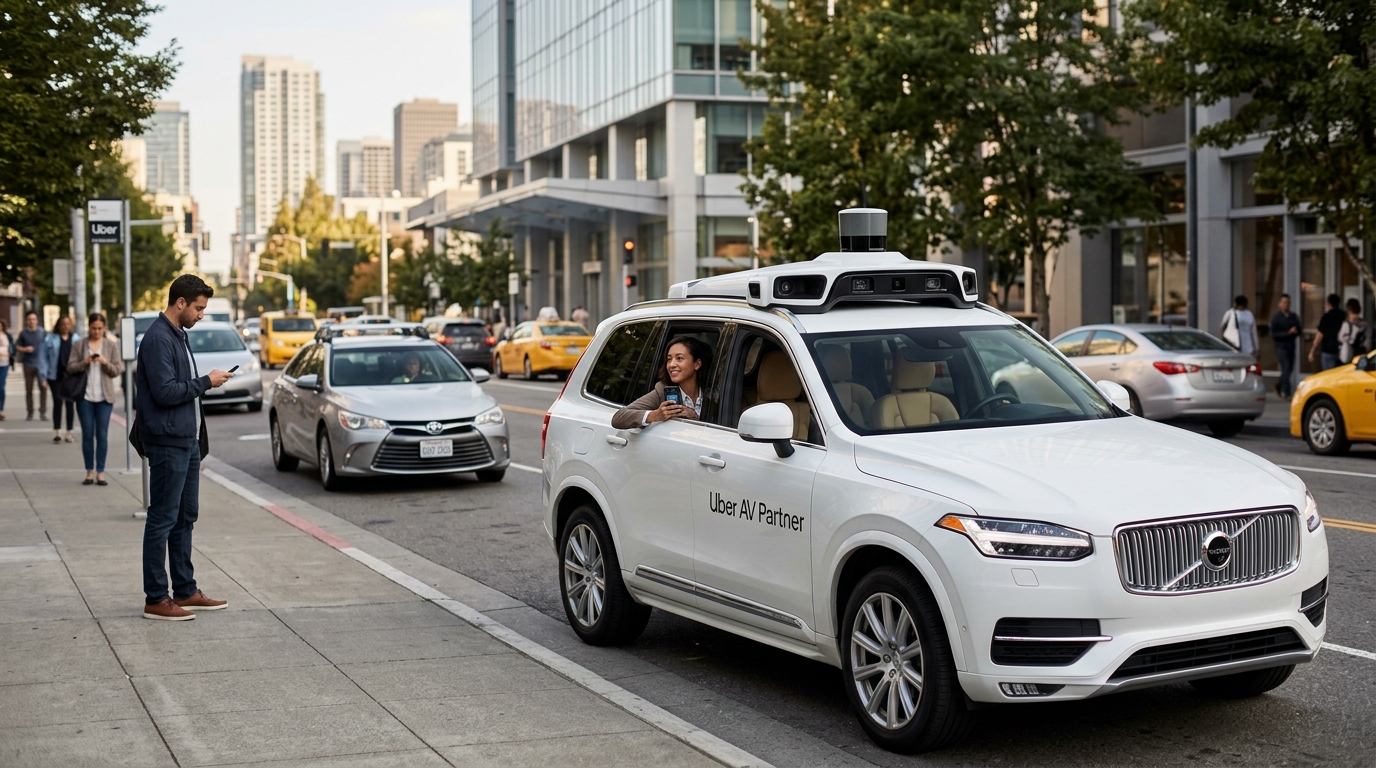
The fleet build-out is already underway across multiple vehicle types. Uber struck a deal with Lucid for at least 20,000 Gravity SUVs equipped with Nuro technology, alongside a $300 million investment in Lucid. Uber also announced a partnership with Rivian to deploy 10,000 autonomous R2 robotaxis in a first phase, with an option to expand by up to 40,000 more, and said it could invest up to $1.25 billion in Rivian through 2031 tied to autonomy milestones.
Delivery is getting the same treatment. Uber says Uber Eats has scaled sidewalk-robot deliveries through partners including Avride, Cartken, Coco, and Serve. Uber has also highlighted autonomous trucking efforts on Uber Freight, including partnerships with Aurora, Volvo Autonomous Solutions, and Waabi.
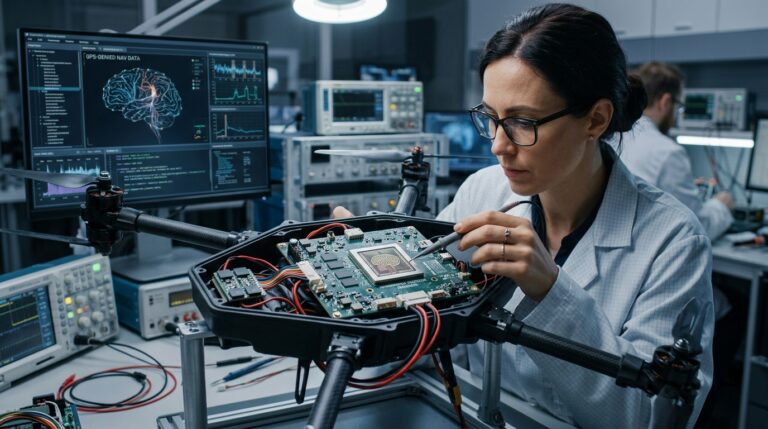
The infrastructure layer is where most analysts stop looking, and where the real cost advantage accumulates. Uber’s Autonomous Solutions platform is designed to provide end-to-end commercialization capabilities, reducing cost per mile while increasing speed to market, and includes product development and support capabilities designed to make autonomous trips more economical for operators. Uber has also said it will spend more than $100 million to build fast-charging hubs at AV depots in the U.S. Specialized fleet operators handle the rest: Avomo manages vehicle cleaning, maintenance, inspections, charging, and depot operations for some of Uber’s robotaxi partnerships.
The risk is real. Waymo robotaxis are no longer available on Uber in Phoenix as of late June 2026, a reminder that AV partners with enough scale may eventually bypass the platform entirely.
For investors, the distinction matters. Uber is not a technology company trying to solve autonomy. It is the distribution layer that autonomous technology companies still cannot afford to build themselves. As long as that remains true, every dollar spent on per-mile cost reduction accrues to Uber’s margins first.