
Dear Fellow Investor,
Mark this date:
On September 30th, 2026…
The biggest scam in the history of gold markets will be exposed…
It’s the math that keeps bankers up at night…
The gold chart that has Wall Street shaking in its loafers…
That’s the day the public will see that their gold ETFs are nothing but paper…
The rush from ETFs to real assets will be unlike anything we’ve seen in 300 years.
One stock on the receiving end of this epic transfer, is set to explode 1,000% as ETF holders could get wiped out.
This isn’t a hunch – it’s math.
See all the evidence for yourself right here and take your position before it’s too late.
“The Buck Stops Here,”
Dylan Jovine, CEO & Founder
Behind the Markets
China Vanke Gets Another Lifeline. Banks Hide the Bill.
This morning’s most consequential global development has nothing to do with U.S. data. It came out of Beijing overnight, and it lands at a particularly loaded moment.
Market Snapshot
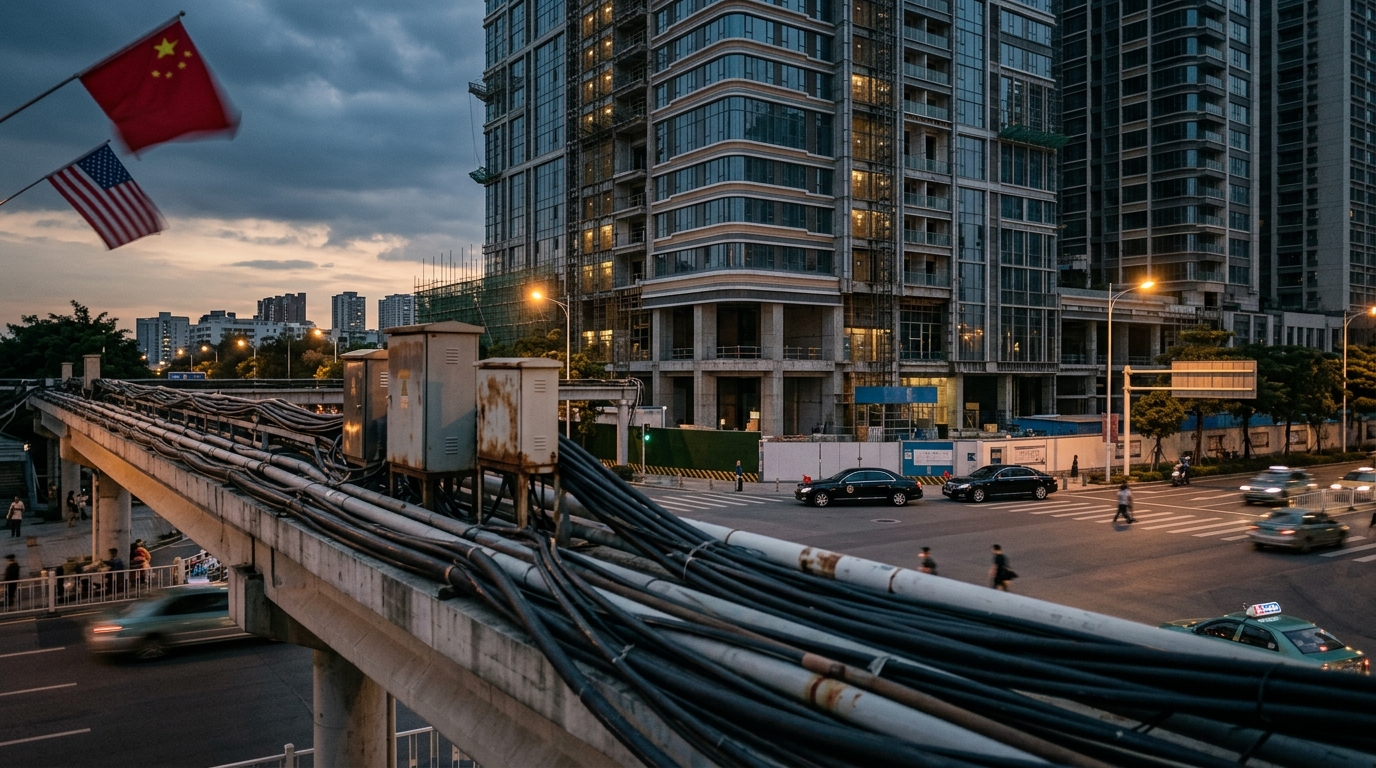
Chinese financial regulators have asked some banks not to classify overdue loans to China Vanke (2202.HK) as non-performing and to extend repayment deadlines, delivering one of Beijing’s strongest interventions yet to prevent a default, Reuters reported Tuesday. Regulators also asked some lenders to hold off on collecting interest payments owed by Vanke. The directive hit wires just as Xi Jinping begins a state visit to the United States running September 23 to 25. It is Xi’s first visit to Washington since September 2015.
The timing is not incidental. Beijing does not want a Vanke default dominating headlines while its president sits across from Trump at the White House. That political calendar is shaping financial policy in real time, and traders need to price that in.
Stocks in Focus
China Vanke (2202.HK): Vanke shares surged Wednesday on the news, with Shenzhen-listed shares jumping 3.7% to 3.95 yuan and Hong Kong shares rising 4.6%.
The backstory matters for understanding why today’s move is more than a one-day pop. In January, Vanke reached an agreement with domestic lenders to defer interest payments on its bank loans until September 2026, a deal coordinated by a Shenzhen municipal government state-asset body that let the distressed developer shift from quarterly to annual interest payments, Reuters reported at the time. That September window has now arrived. Rather than force a reckoning, regulators gave lenders informal “window guidance” to avoid tagging overdue Vanke debt as non-performing, extend repayment terms, and in some cases pause interest collection.
How long the loans would go unclassified as non-performing was left open, hinging on the property market and further discussions with Vanke. That open-ended horizon is the problem for investors who want clarity on Chinese bank balance sheets.
Vanke reported a record loss of 88.56 billion yuan in 2025 amid weak sales, which eroded its cash position. The company held RMB 264 billion in bank loans as of end-June 2025, with about 62% secured by collateral, accounting for 72.5% of total debt.
Chinese banks, FXI, KWEB: Keeping Vanke’s loans off the non-performing list changes what shows up in bank results: a non-performing tag forces banks to book higher loan-loss provisions, which drags on profits and weakens capital ratios. Delaying the label keeps near-term NPL ratios steadier at large, mostly state-owned lenders, even as the underlying property stress persists. The flip side is that losses, if they materialize, get recognized later, so markets may have to work harder to judge bank balance-sheet health from headline numbers alone. Watch FXI and KWEB at the open for early signals on how U.S.-listed investors are reading this.
Sector and Risk Watch
Financial authorities want to prevent a “risk event” at a developer so closely tied to a state shareholder, given the damage it could do to market confidence, people familiar with the guidance told Reuters. China’s property sector, once a key growth driver, sank into a downturn after a government campaign to curb developers’ heavy borrowing led to a liquidity crunch, and more than five years into the slump, home prices are still falling and property investment keeps declining.
Iron ore traders should also pay attention. A managed Vanke slowdown rather than a hard default removes some of the most acute near-term demand destruction risk from China’s construction pipeline, but it does not resolve it. Any flicker of optimism in Hong Kong property names this morning could fade quickly if the Xi-Trump summit produces trade friction rather than relief.
The Cheat Sheet
- Top Market Theme: Beijing is managing Vanke’s debt crisis as a political asset, not just a financial one, keeping lenders in line while Xi meets Trump.
- Stock to Watch: China Vanke (2202.HK). The share price reaction is the easy read. The harder question is what fresh guidance extension terms will look like once Xi returns home.
- Sector to Watch: Chinese financials. State-owned banks absorbed the window guidance; their loan-quality disclosures are now less reliable as a sentiment signal.
- Biggest Risk: The Xi-Trump summit generates unexpected friction on tariffs or Taiwan, reversing any risk-on bid in China-exposed assets before the session closes.
- Biggest Opportunity: If the summit produces a joint statement with trade concessions, FXI and KWEB could see outsized moves. The Vanke stabilization removes one tail risk precisely as geopolitical optimism peaks.
- One Thing to Remember: Regulators left the non-performing classification window open-ended, tied to property market conditions. That is not a resolution. It is a delay, and the clock is still running.