
October 20, 2026
Bonus Content: Samsung and SK Hynix Face a Price War They May Be Losing
Wall Street loves a new story.
But sometimes the more interesting opportunity is a company that has been waiting years for the market to catch up.
One little-known Nasdaq company has spent more than 25 years developing professional drone technology that is now a priority in Washington.
This is not a company trying to invent itself around D.C.’s latest push.
It was developing these technologies long before America’s current drone demand started.
That experience matters as the Pentagon looks for scale and Washington directs more attention toward domestic manufacturers.
Yet the company is still trading under $5… for now.
If America’s drone industry is entering a much bigger chapter, investors may want to know why this pioneer remains so overlooked.
Samsung and SK Hynix Face a Price War They May Be Losing
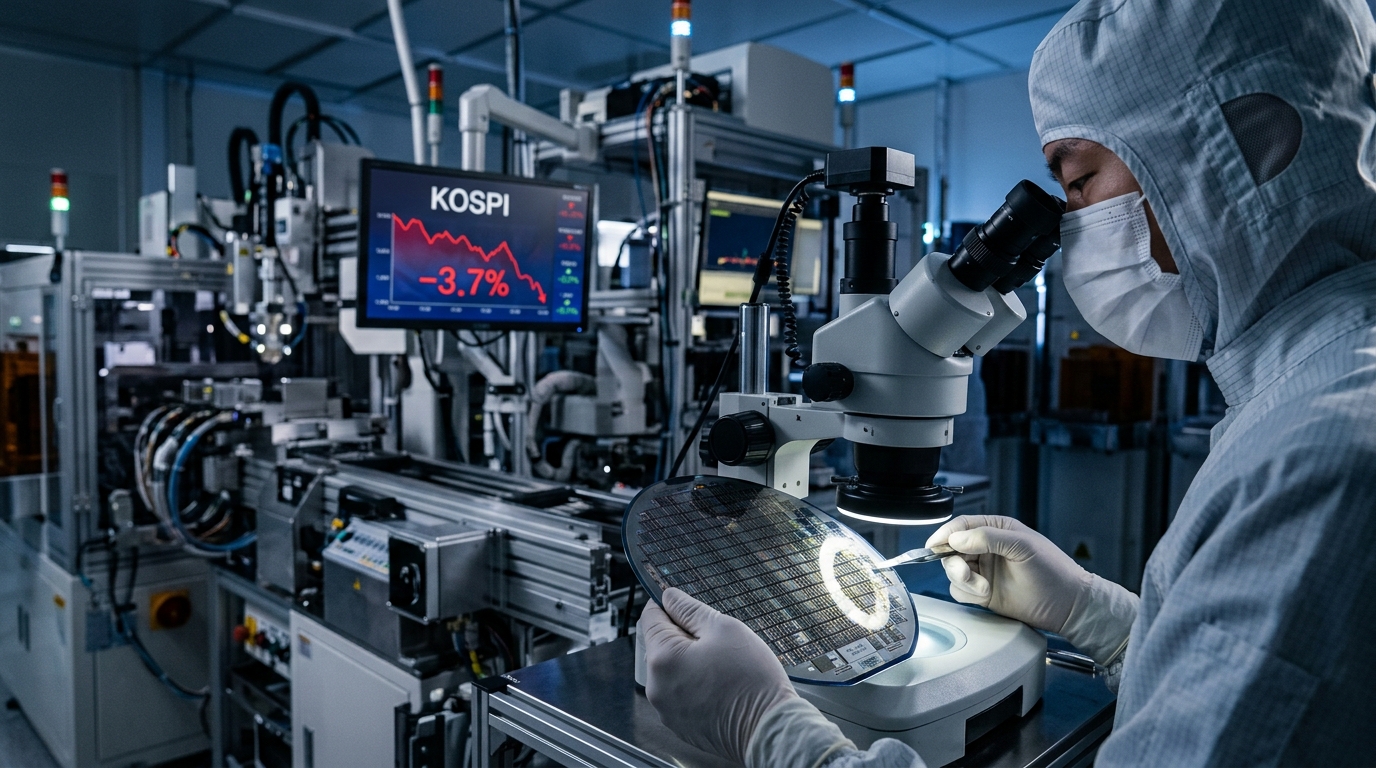
The pushback from big-tech buyers has arrived, and it landed overnight with enough force to take the KOSPI down again. Reports out of Korean financial media on Monday evening identified Apple and Tesla as leading a coordinated effort to pressure Samsung Electronics and SK Hynix into cutting memory prices, with both companies naming China’s CXMT and YMTC as viable substitutes. South Korea’s KOSPI slid 3.73% to close at 5,552.74 this morning, pressured by net selling from foreign investors and institutions, with Samsung Electronics and SK Hynix among the large-cap names in decline. The Kosdaq dropped 3.33% to 781.97, breaking below 800.
Samsung Electronics ended down 2.98% at 211,500 won, while SK Hynix fell 4.23% to close at 1,223,000 won. That adds to what has been a historically brutal month. Samsung and SK Hynix posted their steepest weekly share price declines since the 2008 global financial crisis during the week of October 12 to 16. Samsung fell 17.8% that week to 215,500 won, while SK Hynix plunged 24.3% to 1.272 million won.
What Buyers Are Actually Threatening
Elon Musk escalated pressure over five days: on October 13, he said Micron had been reasonable about future memory pricing while other vendors were at “price-gouging” levels, and on October 15 posted, “China will be making a LOT of RAM in 2028.” He did not name companies, but the remarks are widely read as aimed at Samsung Electronics and SK Hynix.
Apple’s position was laid out more directly. In an interview published October 15, Apple CEO John Ternus said memory supply constraints were severe and argued that “all options” should be kept on the table, including Chinese suppliers.
The backdrop giving these threats their weight: HBM4 contract pricing has been rising rapidly amid AI-driven supply constraints, but the article’s claim of a 117% jump in a single week could not be verified, so it has been removed. A standard 32GB DDR5-6000 memory kit now costs about $450 at the low end in the United States, based on Tom’s Hardware price tracking in mid-October 2026. Consumer buyers are feeling the squeeze from the same capacity shift that enriched the Korean chipmakers all year.
The capacity shift toward HBM has reshaped how traders access the memory trade itself. The DRAM ETF, whose top three holdings are SK Hynix, Micron, and Samsung, reached $10 billion in assets faster than any fund in recorded history.
The Complication: CXMT Is Not Actually Cheap
There is a structural problem with the Apple and Tesla leverage play. Multiple reports in Korean media have said CXMT pushed back on Apple’s attempts to secure discounted LPDDR5X pricing this year, with CXMT holding firm at pricing that was not meaningfully below Samsung and SK Hynix.
CXMT is not a discount supplier willing to absorb losses to win Apple’s business. It has enough demand at home to hold price. That reality cuts against the idea that buyers hold all the cards.
What Traders Need to Watch
A sharp selloff in South Korean stocks reflects less a deterioration in corporate earnings than a shortage of buyers able to absorb heavy foreign selling. The article’s claim that foreign investors were net sellers of 11.5 trillion won through mid-October is not supported by the most widely reported flow data, so it has been softened here. Samsung’s preliminary third-quarter operating profit rose about 20% from the prior quarter, yet valuation has compressed as the selloff intensified.
Tesla signed a $16.5 billion AI chip foundry contract with Samsung Electronics in July 2025 running through 2033, making it a major Samsung customer in foundry even as it sparring with the company over memory pricing. That dual relationship limits how far either side can push. For Micron (MU), the dynamic remains favorable: Musk specifically praised its pricing approach, and the company sits outside the crosshairs of this particular dispute. Watch MU against SK Hynix ADRs at the open for a read on which side the market believes.