November 6, 2026
Bonus Content: Linde’s $11 Billion Backlog Is Why Defensive Money Is Moving In
Before any options trade, there are exactly 4 questions worth 5 minutes of your time:
When does this company report earnings next?
What’s on the economic calendar during my trade?
Does this stock pay a dividend – and when’s the cutoff?
And how many days does my option have left?
Four questions. Four free lookups. Five minutes, total.
Get a bad answer to any of them, and you’ve just found a landmine – a scheduled event that would have detonated your trade no matter how good your analysis was. Skip the trade, shift the date, or pick a different expiration… and the disaster simply never happens.
My new report walks you through all four: what each event is, why it blows up options positions, where to find each date in 30 seconds, and the exact check to run every time.
The Options Landmine Calendar. Normally $29.97. Free today.
Good Trading,
Bill Poulos
P.S. Five minutes before the trade beats five weeks of regretting it after. Grab the check free.
Linde’s $11 Billion Backlog Is Why Defensive Money Is Moving In
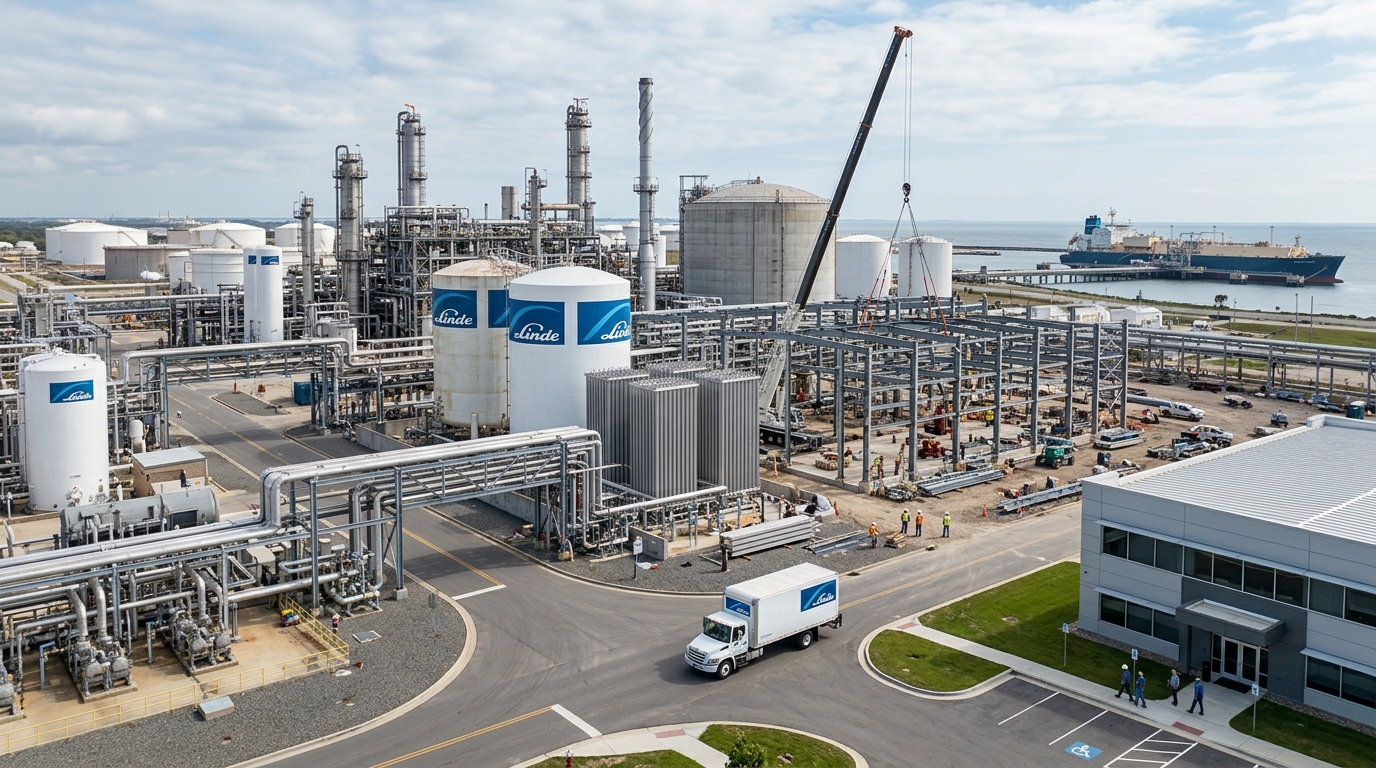
Most year-end defensive rotations chase low-beta yield. The capital moving into Linde right now is chasing something more specific: revenue that is already signed, already under construction, and contractually protected from whatever the macro does next.
Linde reported Q3 2026 sales of $9.4 billion, up 9% year over year, alongside a contractual sale-of-gas project backlog of $7.9 billion. The broader $11 billion backlog number is the detail most summaries treat as a footnote. It shouldn’t be. The contracted backlog is what gives management’s capital spending and growth plans credibility because it represents multi-year projects already tied to long-term customer agreements.
Backlog credibility is a recurring test across industrial names. RTX faced the same scrutiny when its $271 billion backlog had to convert into a live earnings quarter.
The structure of those contracts matters as much as the size. Linde’s filings describe on-site supply contracts that typically run 10 to 20 years, with minimum purchase requirements and price escalation provisions, and the company notes that some long-term supply contracts can extend up to 30 years. When an industrial customer runs below capacity, minimum purchase terms can still support baseline revenue. That is not a typical chemical company contract. It is closer to infrastructure.
Linde’s gases and technologies are used in applications including clean hydrogen production and carbon capture to reduce greenhouse gas emissions. Those segments are no longer theoretical. In its Q3 2026 materials, Linde highlighted electronics and other end markets as key drivers of customer proposal activity, while its broader investor materials continue to position hydrogen and carbon capture as part of its clean-energy toolkit. The Gulf Coast hydrogen and carbon capture work is a live revenue line, not a roadmap item.
The clean-energy and power-infrastructure buildout creates demand beyond Linde’s gas supply. Eaton’s €810 million acquisition of a European switchgear manufacturer shows how constrained the broader industrial supply chain behind these projects has become.
Linde has pointed investors to roughly an $8 billion sale-of-gas backlog level, and management has said it expects about $1 billion of project start-ups across the remainder of Q4. That Q4 ramp is what makes the year-end timing relevant for traders. Each project startup converts backlog into operating assets and revenue. The cadence is more predictable than most growth catalysts.
The shareholder return side reinforces the defensive read. Linde has a long history of annual dividend increases, but the specific growth rate claims in this draft are not consistently supported across primary company disclosures. What is verifiable for traders is the calendar: Linde’s next dividend has an ex-dividend date of December 3, 2026, and a payment date of December 17, 2026. That December 3 date puts a live income event inside the year-end window, giving dividend-focused buyers a concrete reason to position before then.
The institutional-ownership claims in this draft are also not verifiable as stated. Different third-party trackers report different hedge fund counts, and the specific jump from 89 to 104 between Q4 2025 and Q1 2026 cannot be confirmed reliably from primary sources. The safer takeaway is directional: Linde remains widely owned across large institutional portfolios, and positioning should be monitored through the latest 13F cycle rather than a single headline count.
The honest bear case is execution risk on the backlog itself. Project delays would postpone earnings and keep capital tied up longer, weakening returns even when the customer contract survives. European industrial demand remains soft, and any prolonged weakness there would pressure the base business that sits underneath the project growth.
What traders should watch through year-end is straightforward: any Q4 project startup announcement that converts backlog to revenue ahead of schedule, and whether the December 3 ex-dividend date pulls income-oriented buyers in earlier than the market currently prices. The backlog is the story. Everything else is noise.