
For a while now, I’ve been showing regular traders like you how to take advantage of a specific 60-minute window…
One that lets us go after 50% returns every morning – whether the market opens higher… or lower.
Here’s what I mean…
If you had spotted this 60-minute opportunity yesterday morning… all you would’ve had to do was place a quick trade before 10 am…
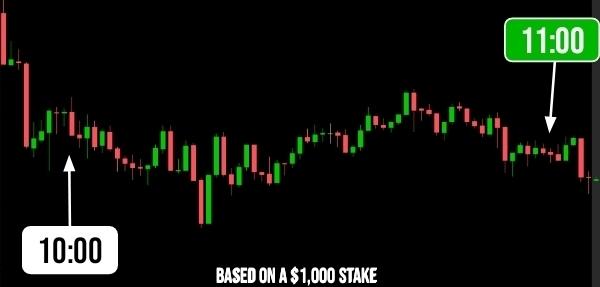
Went ahead with your morning plans and when you return a couple of minutes later, there’s a good chance you’d find $500 in extra income sitting in your account (on a 1k stake)
It wouldn’t have mattered what happened with the overall market… this 60-minute window would have been all you needed to target cash.
Today? Same story.
Place a quick trade, grab your coffee… and let the setup do the heavy lifting.
And just 60 minutes later… come back to what could be a nice $500 in extra income sitting in the brokerage account.
I designed the setup to be that straightforward.
Granted, there will be trades that won’t work out
But if you want in?
KKR’s Q3 Report Will Price AI Credit for the First Time

When KKR reports before the open Monday, the number that matters most is not the earnings-per-share figure. It is what the firm’s private credit book says AI infrastructure is actually worth right now.
The context: KKR is scheduled to release Q3 2026 results before the market opens Monday, November 9, with consensus at $1.58 of earnings per share. The firm has beaten estimates in each of the past four quarters, including a roughly 14% upside surprise in Q2 2026. A beat is expected. What is not known is how KKR has marked its AI-linked credit exposure.
Why this week is different: ING is reportedly seeking buyers for a portfolio of 12 data-center loans worth around $500 million, joining a broader push by banks to distribute credit risk tied to the AI infrastructure build-out. Bids are due November 19, with a minimum size of $10 million. Whatever prices those bids imply will be an open-market read on where buyers are willing to take data-center construction risk after the election-driven shakeout in AI-related stocks.
The ING auction is not the only place where AI credit pricing is being stress-tested in public. Banks have already drawn a hard line between lease-backed data-center debt and GPU collateral with no operating history behind it.
That shakeout matters because it changed sentiment fast. Reuters and the AP reported that data-center and AI-linked stocks slid after Democrats’ midterm sweep, as investors weighed the risk of tighter scrutiny and potential slowdowns in new projects. Data-center operators including Applied Digital and IREN sold off sharply in the post-election move, and Cipher Digital also saw heavy pressure.
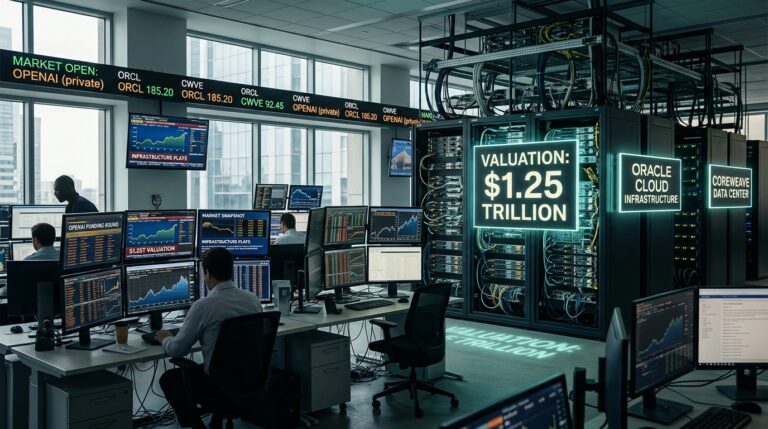
The Oracle-linked debt sitting in bank syndication desks frames the other half of the problem. JPMorgan and Mitsubishi UFJ arranged approximately $38 billion in construction financing for two data-center campuses linked to Oracle’s expansion plans, and spreading that debt across the market took months. More than two dozen banks and other investors joined to share the risk, and some lenders were still looking to offload less than $1 billion of their positions. Banks moving that paper need a price signal. KKR’s marks, delivered Monday, provide the clearest one available.
KKR’s own exposure is substantial. Bloomberg reported that KKR structured or syndicated more than $80 billion of private investment-grade transactions during the first half of 2026, more than twice the amount it originated throughout all of 2025. The firm’s own credit strategists warned investors earlier this autumn that interconnectedness between all companies raising AI-infrastructure money deserves careful attention. Monday’s filing will show whether that caution is reflected in the book’s marks or only in its research notes.
Peers to watch: Blackstone, Apollo, and Blue Owl all carry meaningful data-center exposure and all report in the weeks ahead. Blue Owl, for instance, is involved in Project Jupiter in New Mexico, where Oracle issued a force majeure notice. KKR’s valuations will give each of those firms a benchmark that analysts will immediately apply to their own books.
The pressure on alternatives managers does not exist in isolation from what hyperscalers are doing on the liability side. Amazon’s secured borrowing facility puts infrastructure lenders ahead of equity holders in the capital stack, a structure that reshapes how private credit managers price exposure to the same build-out.
What to Watch Monday
- EPS vs. $1.58: Direction of the surprise matters less than management commentary on credit quality.
- Fee-related earnings: KKR’s credit platform is a major contributor across private credit and asset-based finance. Any slowdown in deployment or realized income signals broader caution on AI lending.
- Marks disclosure: Any language on data-center loan valuations or write-downs will move the whole alternatives complex.
- Conference call at 10:00 AM ET: Expect direct questions on ING’s auction pricing, Stargate exposure, and whether KKR is a buyer or seller of distressed AI paper.
Private credit has not had a clean public price test on data-center construction debt until now. Monday morning changes that, and the sector’s reaction will follow KKR out of the gate.