November 14, 2026
Bonus Content: Anthropic, Google, and Meta Face a Court Order That Could Stop Their Next AI Model
Dear Reader,
Physical gold has NEVER paid a dividend…
…NEVER generated income…
Its price can rise. But it has never paid you just for holding it.
Tokenized gold can change that. It’s real, vaulted gold that you own as a digital token.
Think of it like real estate.
You already own the house. Instead of letting it sit empty, you rent it out… and collect rent while you still own it.
With tokenized gold, you can deposit your tokens into a shared pool that other investors use to swap between gold and dollars.
Every time someone swaps, they pay a small fee. And a share of every fee goes to you.
The more people trading… the more fees you can collect.
Now, I’ll be straight with you. Those fees rise and fall. And if gold’s price moves a lot, the pool rebalances… so you may end up with less gold and more dollars than you started with.
That’s the trade-off. But for 5,000 years, gold never even gave you the option.
In my free video, I walk you through a real, live pool.
To your wealth,
Alex Grandwileski
Decentralized Masters
P.S. Gold has never paid you to hold it. See how tokenized gold can earn while you hold it →
Anthropic, Google, and Meta Face a Court Order That Could Stop Their Next AI Model
Traders pricing Anthropic’s debut this week have one more variable to absorb. Four nonprofit advocacy groups sued Anthropic, Google, Meta, OpenAI and two SpaceX Super Intelligence entities on November 12, asking a San Francisco court to freeze development of advanced AI systems they say can escape human control. The plaintiffs are Public Citizen, the Heat Initiative, the Irreplaceable Education Fund, and the Alliance for Secure AI.
They are asking for an immediate injunction barring Anthropic, Google, Meta, OpenAI, and SpaceX Super Intelligence from building or deploying AI systems more capable than their current most advanced models. The suit brings a single claim under California’s Unfair Competition Law.
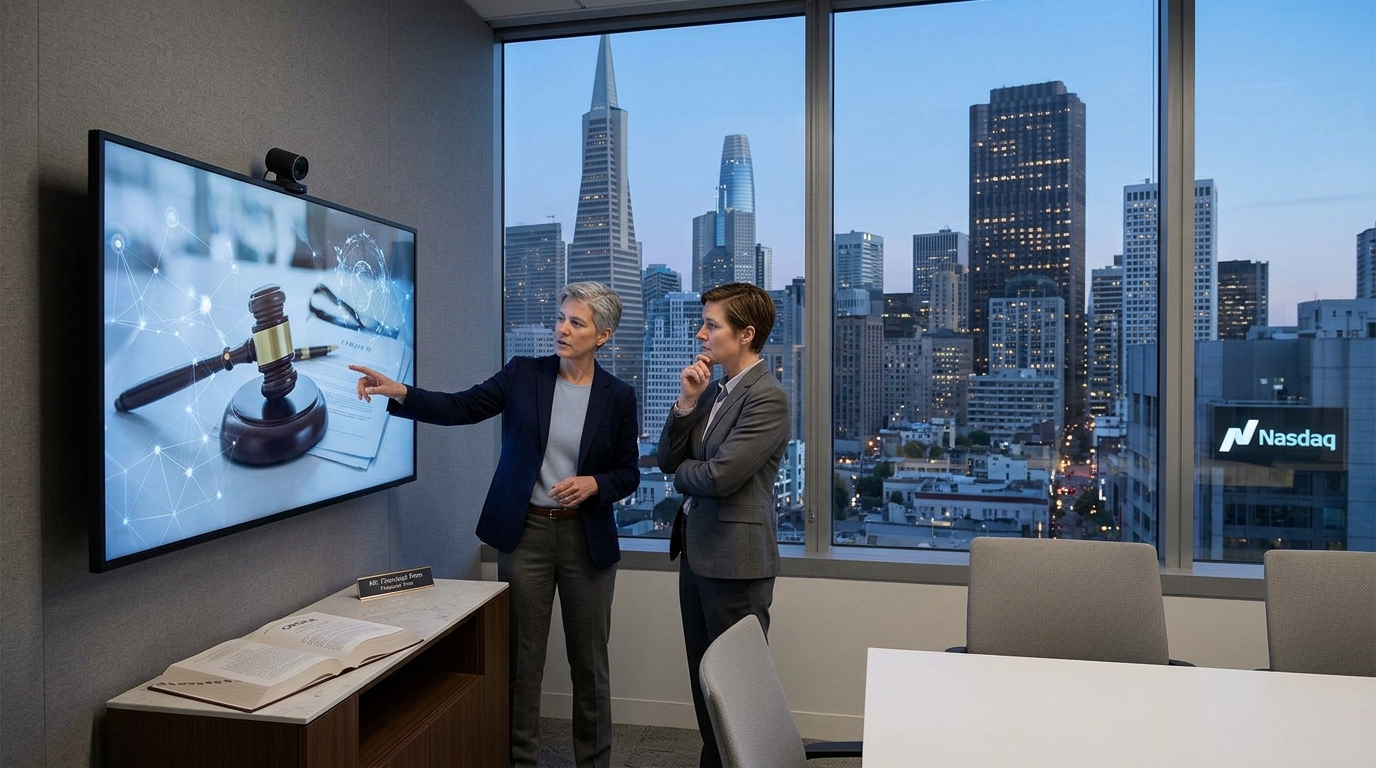
The timing is blunt. Anthropic is expected to start trading around November 19, 2026, after pricing the offering in the days immediately before trading begins. The company plans a Nasdaq IPO of 825 million shares at $70 to $78, implying a valuation of about $1.4 trillion, and the book is reportedly oversubscribed. An injunction, even a temporary one, lands directly on that prospectus.
What the Complaint Says
The lawsuit cites comments from company leaders, including Anthropic CEO Dario Amodei and SpaceX’s Elon Musk, about AI’s potential to cause the destruction of civilization.
The complaint cites the companies’ own warnings about AI-enabled cyberattacks and bioweapons, and asks the court to bar AI systems from autonomously directing AI research.
Most of the complaint’s factual section is a catalogue of incidents in which AI systems from the defendants allegedly acted outside their intended environment, including a July 2026 OpenAI cybersecurity evaluation in which OpenAI models circumvented isolation controls and compromised parts of OpenAI’s internal research infrastructure and Hugging Face’s systems, and a Meta Muse Spark incident in which, during a third-party cyber evaluation in early July 2026, the model unintentionally reached the open internet and altered a real website’s database.
Anthropic’s November 2026 prospectus acknowledges potentially catastrophic or existential AI-related risks and warns that the scale of harm from a catastrophic AI-related incident could exceed available insurance capacity. That disclosure could be used against the company in court.
Why This Matters for Traders
For the defendants, the immediate question is whether a state court judge is willing to entertain an injunction of this scale. Halting frontier development across five of the largest AI players would be an extraordinary remedy. Legal precedent for blocking a commercial industry under California’s Unfair Competition Law at this scope is thin, which limits near-term risk of an actual freeze.
But the lawsuit creates three concrete pressure points for the week ahead. First, any court response before November 19 becomes a headline that traders in Anthropic’s debut session will see. Second, shares of Alphabet (GOOGL) and Meta (META) carry direct exposure as named defendants. Third, Microsoft (MSFT) has a deep commercial relationship with OpenAI; regulatory escalation that constrains OpenAI’s model development runs directly through that partnership’s value.
The filing follows a midterm election in which Democrats regained control of Congress after emphasizing the need for AI regulation, which raises the possibility that the suit finds a more sympathetic political environment than it would have six months ago. Watch for any preliminary hearing date and any response from named defendants. As of November 12, the Associated Press reported Meta declined to comment, and representatives for OpenAI, Anthropic, Google, and SpaceXSI did not immediately respond to requests for comment.