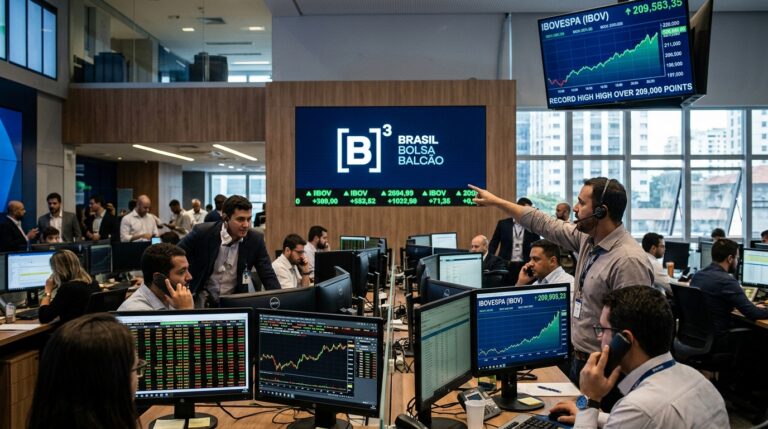
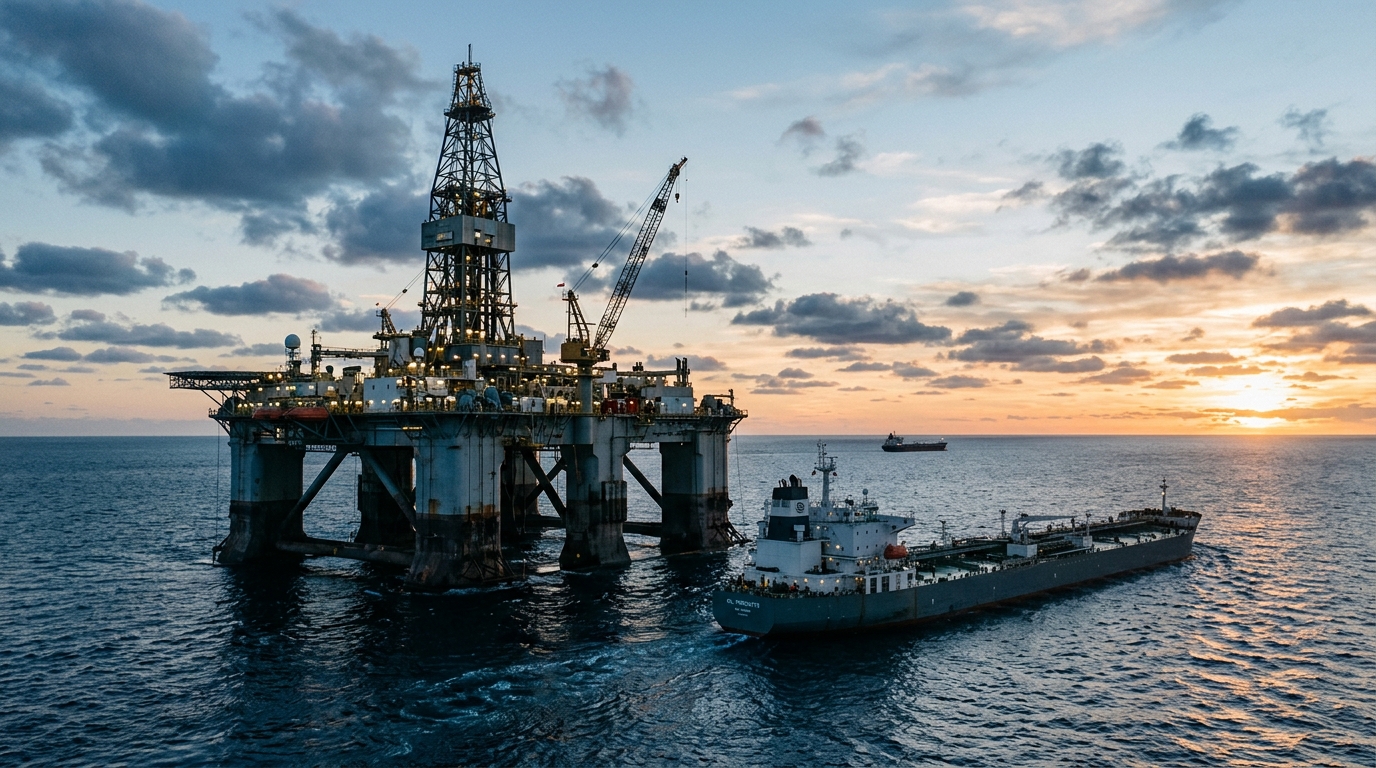
Here is a number that reframes the entire oil story entering August: Brent crude gained 24% in July, and WTI rose 21%, the strongest monthly performance for either benchmark since the war with Iran began in late February. That gain did not happen because of a new supply shock. It happened because the temporary ceasefire that briefly dragged Brent back toward $72 a barrel in late June collapsed, and the market spent the rest of the month pricing just how structurally fragile the Strait of Hormuz remains.
That has real consequences. The question worth sitting with today is not whether oil rallied. It is whether the companies cashing those checks are being valued for a world where this conflict resolves, or a world where it does not.
Why This Story Matters Now
ExxonMobil reported $14.53 billion in profit for the second quarter, more than doubling its year-earlier earnings. Broken down, that works out to roughly $160 million per day. Chevron nearly quadrupled its profit to $12.07 billion. Shell has not reported full second-quarter results yet, but in its pre-results update it guided to an adjusted earnings loss at its Corporate segment; the company’s second-quarter profit therefore cannot be verified from published results as of August 1.
Based on Exxon and Chevron alone, the two companies averaged roughly $293 million in profit per day for the past three months. The broader point still holds: Big Oil’s spring windfalls were enormous, and the market is being forced to decide how durable the new oil regime really is.
That is not a rounding error. It is an argument.
The Investment Thesis
The thesis here is not simply “buy oil stocks because oil is up.” It is narrower and more interesting than that. The integrated majors, Exxon and Chevron in particular, are benefiting from a triple-stacked windfall that is harder to unwind than most investors appreciate. They are gaining from much higher crude oil prices, very strong refining margins, and stronger product markets, all of which are elevated because shipping through the Strait of Hormuz has been heavily disrupted. That is upstream, midstream, and downstream firing simultaneously. The last time that happened was Russia’s invasion of Ukraine in 2022, and it lasted longer than most forecasters expected.
The market, though, is already trying to look past it.
The Business Behind the Numbers
The conflict did not simply lift crude prices. It rewired global energy flows. The war with Iran, which began in late February, sharply curtailed traffic through the Strait of Hormuz, a vital chokepoint that previously served as a delivery route for about a fifth of the world’s oil and natural gas. The war is estimated by the EIA to have forced Middle East producers to reduce crude oil production by more than 11 million barrels per day in May compared with pre-conflict levels. The vacuum that created was not filled by the Gulf. It was filled by the Americas.
U.S. oil production is near record highs, but not 22 million barrels per day. The EIA has said U.S. crude oil production averaged a record 13.6 million barrels per day in 2025 and forecast it around 13.7 million barrels per day in 2026. Outside the Middle East, the U.S., Brazil, Canada, and others have increased supply, and companies with big non-Gulf barrels were positioned to capture volume at prices set by a Gulf that could not move crude as freely.
The refining advantage compounded the upstream gain. With fewer safe routes, transport costs rise, and refining spreads can widen for those who process crude outside the bottleneck zone.
What Is Changing
July’s price surge did not come from nowhere. The conflict intensified this month as a temporary pause in fighting between Washington and Tehran collapsed, Yemen’s Houthis became more involved, and concerns over the security of crude flows returned to the center of the market. Separately, declining inventories and Ukrainian strikes on Russian oil facilities added to concerns over global supply.
But the bigger structural shift is what happens when and if the strait reopens. The global oil sector could return to surplus by the final quarter of 2026 as easing hostilities in the Middle East allow lost supplies to hit the market, according to the IEA. The EIA projects global oil demand rising by about 2.5 million barrels per day in 2027 to 105.3 million barrels per day, while the IEA has projected global oil supply rebounding by about 8 million barrels per day in 2027 to around 110.3 million barrels per day. That is a potential overhang of historic proportions sitting on the other side of a peace deal.
The majors appear to know this. Rather than assuming war-driven prices last forever, management teams have emphasized balance sheet strength and durability. That capital discipline tells you something about where management thinks the cycle is headed.
The Risks
The bear case for owning the integrated majors from here is specific. The oil market has been highly sensitive to daily shipping conditions through Hormuz. If negotiators in Oman or Geneva make unexpected progress, Brent could give back a significant portion of July’s gain within days.
As TD Securities senior commodity strategist Ryan McKay has argued, even a deal that reopens the Strait may still leave Iran with functioning control of the waterway, keeping flows constrained and risk elevated. That cuts both ways: it can support prices, but it also means a sudden diplomatic breakthrough can deflate the geopolitical premium quickly.
There is a political risk layer as well. The windfall profits are raising eyebrows and ire among some European lawmakers and Democrats in the U.S. Congress, who have pushed for windfall taxes on these companies. That risk is currently more noise than policy, but it bears watching as pump prices remain elevated for American drivers.
What Investors Should Watch Next
Three data points matter more than any earnings figure over the next four to six weeks. First, tanker counts through the Strait of Hormuz. Daily vessel counts from Kpler and similar trackers have become the real-time price signal. Second, the Oman mediation track. Any progress there, or any collapse, moves prices before analysts can model it. Third, the IEA’s August oil market report, which will be the first to incorporate July’s shipping disruption data and updated inventory trends.
Bottom Line
The integrated majors just delivered one of their most profitable quarters since the Russia-Ukraine shock of 2022, and the underlying math is not complicated: a critical global chokepoint heavily disrupted, Americas production filling part of the gap at war-premium prices, and refining margins elevated across key hubs. Exxon and Chevron earned it. The harder question is whether they can sustain anywhere close to it. Management is already signaling caution, prioritizing durability over acting as if this cycle will last forever. Investors who buy the majors here are, essentially, betting that Hormuz stays impaired longer than diplomats expect. That has been the winning bet for months running. It will not be forever. The position makes sense as long as shipping data shows Hormuz remains impaired, and stops making sense the day a credible agreement surfaces. Watch the tanker counts, not the headlines.