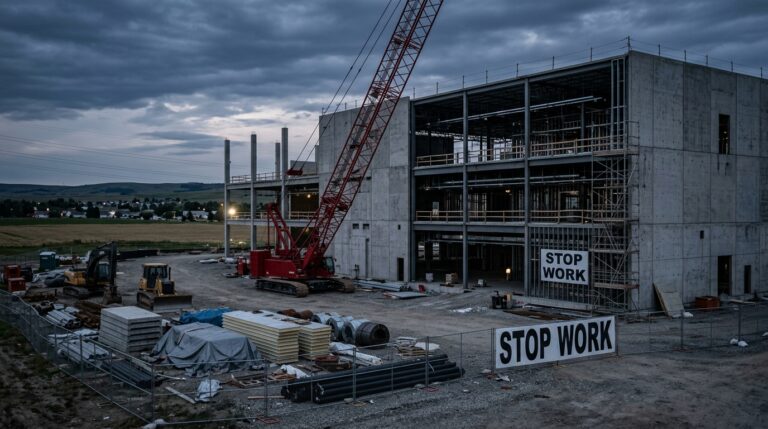
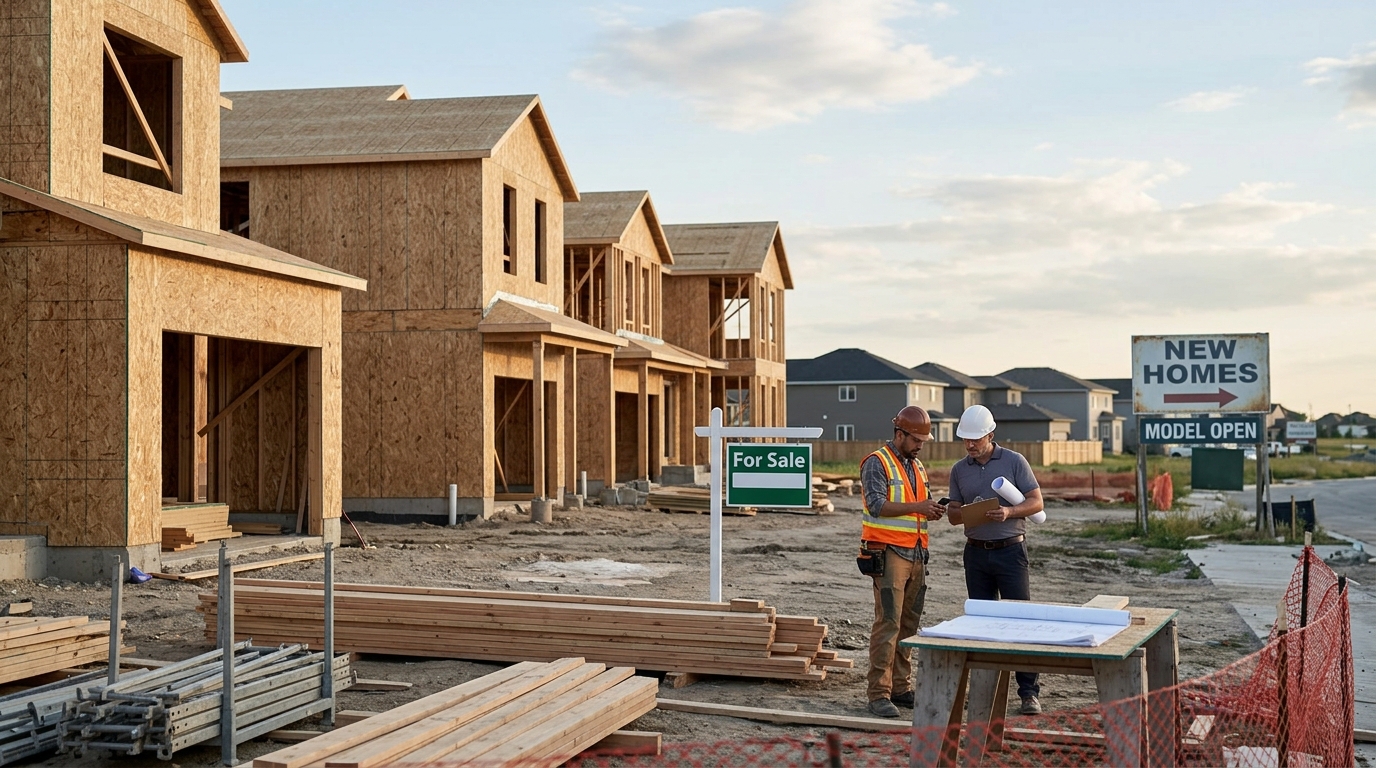
Before Tuesday’s open, the housing complex was already carrying three weeks of bad data. Then two more reports landed simultaneously and removed any remaining ambiguity about the direction of demand.
The Conference Board’s consumer confidence index dropped to 89.4 in August, the lowest since January, against economist forecasts of 90.2. The Expectations Index fell 5.8 points to 68.2, its second consecutive monthly decline. Buried inside that sub-index is the figure that matters most for homebuilder stocks: only 5.2% of consumers intend to buy a house in the next six months, down from 6.5% in July. That is the largest single-month drop in buying intentions in more than five years.
The Census Bureau confirmed the picture from the supply side. New home sales fell 10.5% in July to a 607,000 annualized pace, a six-month low and well below consensus, with median new-home prices dropping to $393,800 from $403,100 in June. Housing starts in July came in at a seasonally adjusted annual rate of 1,239,000, down 12.4% from the revised June estimate of 1,415,000 and 13.5% below July 2025. Permits moved the other way, rising 5% in July, but stronger permits are only meaningful if buyers show up to close.
They are not showing up. The intentions collapse is where this trade begins.
The Rate Ceiling Doing the Damage
The 30-year fixed-rate mortgage averaged 6.65% as of August 20, 2026. That alone is enough to keep first-time buyers on the sidelines, but the rate risk runs higher from here. Despite the FOMC holding steady in July, markets have been pushed toward a higher-hike narrative by the rise in 10-year yields to around 4.7% and three dissents at the July meeting from policymakers who favored an immediate increase. Prediction markets have recently put a 25-basis-point September hike at roughly 35% odds.
If the rate hike scenario materializes, the 7% threshold that has historically acted as a psychological ceiling for buyers could be breached, with real consequences for transaction volume. For the builders, that ceiling is not abstract. High mortgage rates reduce the pool of eligible buyers, forcing builders to offer incentives like rate buydowns, which act as hidden price cuts and directly compress profit margins on each home sold.
The Builders: Who Is Most Exposed
DHI is the most exposed to the 6.65% mortgage rate hurdle, though its massive scale allows it to offer more aggressive financing incentives than any smaller builder. That scale advantage becomes a cost center when demand falls off a cliff. D.R. Horton already lowered its fiscal 2026 consolidated revenue guidance to $32.5–$33 billion, and cut its closings outlook to 83,800–84,300 homes. A September hike would push that guidance lower still.
LEN and PHM face the same affordability arithmetic. Mortgage rates have moved back up near 6.7% while the supply of new homes sits at more than nine months of inventory at the current sales pace, and builders continue to rely on pricing concessions and incentives to move that inventory. TOL is somewhat insulated by its luxury buyer base, but the intentions data is broad-based, not segment-specific.
The ETF picture reinforces the caution. XHB has posted less than 1% returns year to date, and ITB is down almost 2%. ITB has seen three-month net outflows of $350.77 million, a sign that institutional money was already rotating out before Tuesday’s data.
The Trade: Levels and Risks
The housing complex sits at a technical inflection. XHB at $106 needs to hold its August range; a break below would confirm the intentions data in price. ITB, the purer homebuilder vehicle, faces more direct downside given its concentration in DHI and LEN. WSM and HD extend the thesis into furnishings and home improvement, where demand typically follows new home sales with a one-to-two quarter lag.
The bull case for the group rests on one condition: stronger permit issuance means homebuilding could quickly pick up again if mortgage rates fall back. That requires either a September hold from the Fed or a material softening in inflation data between now and the September 16 decision. Year-over-year purchase volume is already down 3.4%, according to an analysis by Keefe, Bruyette and Woods. Another 25 basis points would not need to do much to push closings further below guidance.
Watch DHI for the cleanest read on whether institutional money steps in to defend the sector or continues to exit. If it cannot reclaim its pre-report level before the September FOMC, the group’s technical structure argues for patience rather than position-building.