August 26, 2026
Bonus Content: 72 Hours That Set September’s Tone
Hi,
Take a look at this…
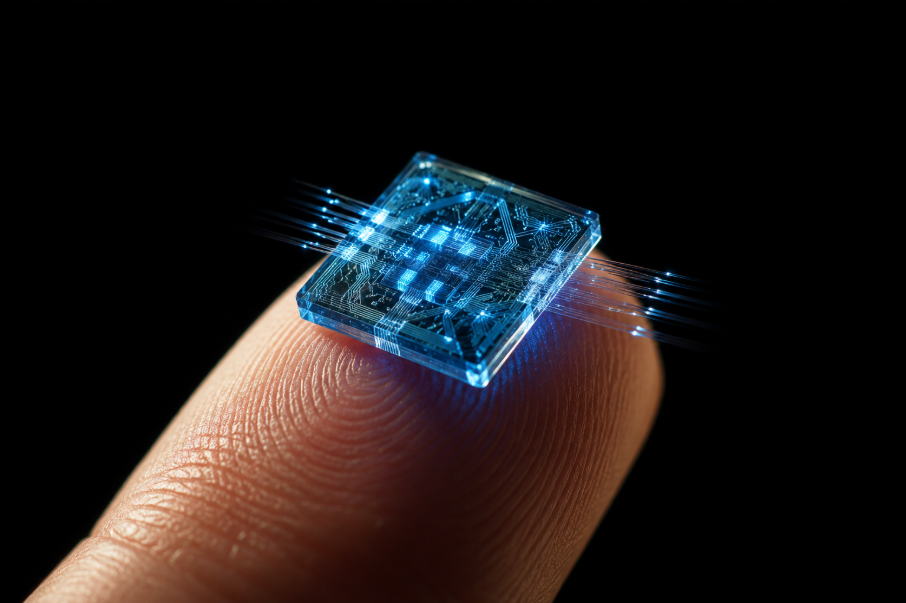
It’s smaller than a fingertip…
It’s made of glass…
And it’s about to unlock the next wave of AI growth.
Jensen Huang, Nvidia’s CEO, says this “light-speed” device is shattering the limitations of AI… and without it, AI can’t scale.
Google Ventures says it’s the future of AI compute…
And Sequoia Capital – the firm that backed Anthropic and OpenAI – calls it a “holy grail.”
Already, Elon Musk, Mark Zuckerberg, Cathie Wood, and Bill Gates are moving money to prepare for what’s coming…
Yet most Americans have never heard of it.
Wall Street insider Jason Bodner – the same man who called Nvidia at $4.50 – says this device is about to launch a whole new wave of AI winners…
And to prove it, he’s giving away his #1 stock involved with it – for free.
Click here to learn more. (No purchase necessary.)
We have so much to look forward to,
Jeff Brown
Founder & CEO, Brownstone Research
P.S. Stocks tied to this “light-speed” device already surged 133%, 217%, and even 320% – in a few short months. But it’s just getting started. Click here before the mainstream catches on.
72 Hours That Set September’s Tone
Four sessions separate the market from September, and the first 72 hours of that month arrive with more rate-sensitive catalysts compressed into a tighter window than any opening stretch in recent memory. The SPX closed Tuesday at 7,677.28, up 0.32%, with the VIX at 15.45. Comfortable enough. But the next three days will do more to define September’s character than the entire preceding month.
Market Snapshot
Tuesday’s session was orderly: the Nasdaq gained 0.66%, the Russell 2000 added 0.50%, and the long bond sits at a 5.23% yield after the 30-year pushed toward 5.24% during last week’s rough patch. The 10-year is around 4.68%. Gold is elevated. Consumer confidence is at a seven-month low. The backdrop is not bearish, but it is not forgiving either, and that matters when three sequential catalysts each carry the power to move rates pricing by 10 to 15 basis points on their own.
Stocks in Focus
Nvidia (NVDA) reports today after the close, with an earnings call at 5:00 p.m. ET. The consensus Q3 guide is $104 billion, but as one CIO noted, “the buyside is whispering higher, and that gap is where the stock lives or dies.” The most closely watched disclosure will be China revenue: no shipments of Data Center Hopper products to China occurred in Q1 fiscal 2027, and Q2 guidance explicitly excluded any Data Center compute revenue from China. A guide above $107 billion would likely carry the index; a guide at or below consensus after four consecutive post-earnings declines despite beats would not.
Moderna (MRNA) is still digesting its Phase 3 melanoma data from August 19, when it closed up 177% in a single session after announcing landmark results for its personalized mRNA cancer vaccine, intismeran autogene, combined with Merck’s Keytruda. The stock went from the mid-$50s to a close of $159.04 on Tuesday. Barclays lifted its price target to $125 from $48; UBS moved to $150 from $50. Watch whether the stock can hold above the $150 area as traders weigh the gap between a genuine clinical breakthrough and the commercial timeline needed to justify a near-tripling.
Dick’s Sporting Goods (DKS) reported Tuesday before the bell and fell 30%, its worst single session since 2023. Adjusted EPS came in at $3.53 versus $3.76 expected; revenue of $5.59 billion missed the $5.65 billion estimate. The company lowered its full-year outlook, citing a challenging athletic footwear and apparel market and margin pressure from its Foot Locker acquisition. Dick’s core stores did post 4.9% comparable sales growth, but Foot Locker’s EMEA drag overwhelmed that. Watch the $130 area as first technical support; a bounce without guidance revision is likely a fade.
Bank of Montreal (BMO) reported Tuesday and beat. Adjusted EPS of C$3.96 came in 22% above the prior year, with all four business segments posting record pre-provision pretax earnings. Capital Markets net income rose 45% year-over-year. The headline net income figure looked weak at C$1.75 billion due to a C$962 million charge from selling its transportation business. Adjusted for that, BMO is in solid shape. The stock has gained 33% year-to-date. In a rate-sensitive week, a well-capitalized Canadian bank beating on capital markets revenue is a useful data point on institutional activity.
The 72-Hour Catalyst Grid
- Tonight, after close: Nvidia Q2 FY2027 earnings. Key level: Q3 revenue guide versus $104 billion consensus. Above $107 billion is the bar for a positive reaction given the stock’s pattern of selling off on beats that do not raise the forward bar.
- Friday 8:30 a.m. ET: July PCE. Headline expected at 3.6% year-over-year, down from June’s 3.7%. Core expected at 3.2%, down from June’s 3.3%. A core reading above 3.3% month-over-month would harden the September hike case meaningfully. A reading at or below consensus keeps the decision in Warsh’s hands 90 minutes later.
- Friday 10:00 a.m. ET: Warsh’s first Jackson Hole keynote as Fed Chair, streamed by the Kansas City Fed. The September 15–16 FOMC meeting is 19 days out. Kalshi currently prices roughly a one-in-three probability of a 25-basis-point hike at that meeting. A hawkish lean, specifically language around “vigilant” or “risks are two-sided,” would push that higher and pressure equities immediately. A patient, data-dependent tone would extend the risk-on condition that carried Tuesday’s session. New Fed chairs use their first major address to set communication norms, which gives this speech more durable market impact than a typical mid-cycle address.
Sector Watch
Semiconductors and AI infrastructure carry the most single-name event risk tonight. If Nvidia’s guide disappoints, the damage is unlikely to stay contained to NVDA. Biotech is in a different mode entirely: MRNA’s move has reopened the sector’s appetite for mRNA platform re-rating stories. Watch Merck (MRK) for any sympathy moves as the Keytruda collaboration becomes a larger part of the cancer vaccine conversation. Financials look constructive near-term; BMO’s capital markets beat fits a pattern of institutional activity holding up even as consumer-facing retail weakens.
Risk Radar
- September seasonality with a front-loaded macro calendar: Over the last 75 years, the S&P 500 has averaged a -0.7% return in September, the worst of any month. When the month finishes negative, the average loss is -3.8%. The index enters September at 7,677.28 with confidence at a seven-month low and a rate decision 19 days in.
- PCE surprise to the upside: If July core PCE comes in hot, it arrives 90 minutes before Warsh speaks, removing any ambiguity about the dovish case and compressing two separate hawkish shocks into one session.
- Nvidia guide as an index event: NVDA represents more than 7% of the S&P 500. A post-earnings decline after consecutive quarters of selling on beats could subtract meaningful index points before Friday’s macro events even begin.
- Warsh communication risk: Markets are still calibrating his language. A phrase that reads as hawkish even without the intent to signal a hike could be misread by algorithm-driven flows at 10:00 a.m., adding volatility to an already compressed calendar.
The Cheat Sheet
- Top Market Theme: Three sequential catalysts in 36 hours will either validate September’s historically weak reputation or give the bulls a reason to ignore it.
- Stock to Watch: Nvidia. The Q3 guide relative to the $104 billion consensus is the first and largest variable in the chain.
- Sector to Watch: Technology and semiconductors, with biotech as the secondary theme if MRNA stabilizes above $150.
- Biggest Risk: A hot core PCE reading at 8:30 followed by hawkish Warsh language at 10:00, compressing two rate-positive shocks into one session with September’s worst-month seasonality already in the background.
- Biggest Opportunity: A Nvidia guide above $107 billion combined with an in-line PCE and a patient Warsh tone would likely produce a sharp risk-on move with broad sector participation into the long weekend.
- One Thing to Remember: The levels traders set today are the levels that will define the range for the next 30 days. Position size accordingly before 5:00 p.m. ET.