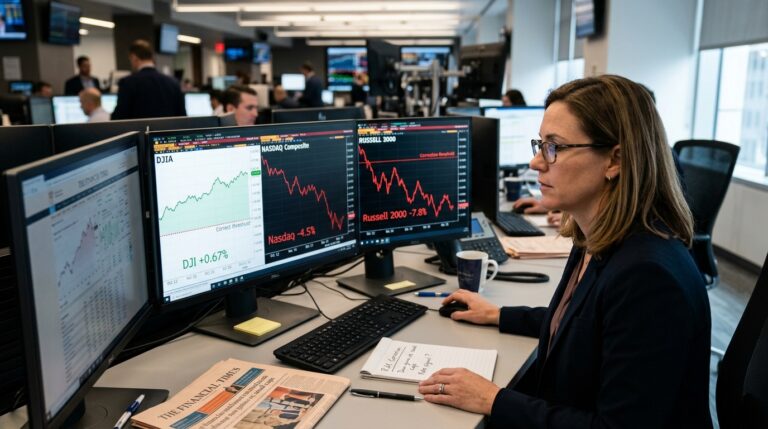

Salesforce dropped from an all-time closing high of $363.22 in December 2024 to a summer 2026 low in the $160s. The subsequent recovery has been real but uneven, and as of September 2, shares sit around $257.
That leaves CRM down only a couple of points year to date, while the S&P 500 is up about 12% over the same period. The gap between those two lines is worth taking seriously.
What the Quarter Actually Showed
Salesforce reported fiscal Q2 2027 results on August 26, posting revenue of $11.35 billion, up 11% year over year, against Wall Street consensus of roughly $11.32 to $11.33 billion. Non-GAAP EPS came in at $5.90, a 103% increase from the prior year, while GAAP EPS hit $4.29, up 119%. Management followed the beat with a guidance raise: full-year FY27 revenue guidance moves to $46.1 billion to $46.4 billion, up 11% to 12% year over year.
The Agentforce numbers were the headline. Agentforce ARR exceeded $1.5 billion, up over 240% year over year. Agentic Work Units hit 3.2 billion in Q2 alone, growing 97% sequentially, while bookings from Agentforce One Edition and Agentforce for Apps more than doubled quarter over quarter. Management also said nine of the top ten AI companies have standardized on the Salesforce platform, increasing their collective spend by 435% year over year.
A multi-billion dollar U.S. Army expansion is expected to drive up to 55 million monthly Agentforce conversations for the Human Resources Command. That is not a pilot. It is a deployment at scale.
The Bookings Signal
Current remaining performance obligations, the measure of contracted but unrecognized revenue, reached $33.5 billion, up 14% year over year. Analysts tracked by StreetAccount were looking for about $33.22 billion, making this the clearest sign that enterprise customers are signing forward commitments rather than simply experimenting. Management called it the strongest quarter for net new annual order value in four years.
The Hidden Qualifier
Skeptics have earned some credibility here. The earnings surprise was partly flattered by $2.613 billion in net gains on strategic investments, and management discussion on the earnings call indicated those gains were a major contributor to the quarter’s non-GAAP EPS upside. Investment gains swing quarter to quarter and should not be extrapolated. Management also acknowledged seeing “headwinds and volatility” in selling licenses for integration and analytics software. The core Agentforce Apps segment, covering Sales, Service, and Commerce clouds, grew at just 8% constant currency against the company-wide 11%, a gap that widens if the AI halo fades.
Competitive exposure is real. Microsoft Copilot, ServiceNow’s agent products, and a growing field of vertical-specific AI tools are all drawing from the same enterprise budgets Salesforce depends on. Any large customer that opts to build in-house shrinks the addressable opportunity faster than Agentforce can replace it.
Capital Return and Near-Term Catalysts
Salesforce says it initially delivered about 103 million shares under its $25 billion accelerated repurchase program, and it has said final settlement is expected in its fiscal third or fourth quarter of FY27. Separately, the company has described the ASR as an immediate execution of half of the $50 billion aggregate share repurchase program authorized by its board.
The September 16 Investor Day at Dreamforce and the ASR final settlement timing are the two near-term catalysts most likely to move the stock. Shares trade at roughly 15 times forward earnings against FY27 non-GAAP EPS guidance of $16.67 to $16.71. That multiple is below broad enterprise software averages and reflects AI skepticism that Agentforce’s current trajectory does not appear to justify. Dreamforce is where management has the first real opportunity to close that gap.