On September 11, the CDC declared the multistate cyclospora outbreak linked to iceberg lettuce over. Restaurant stocks, Chipotle included, bounced on the news. That relief is real. The food-safety overhang that had rattled dining rooms since July is gone. But for CMG shareholders, clearing one headwind simply puts the underlying cost problem in sharper focus.
During the Q2 earnings call, CFO Adam Rymer noted a softening of roughly 200 basis points in traffic trends tied to the cyclospora issue affecting the industry. Now that drag is fading. What stays is beef.
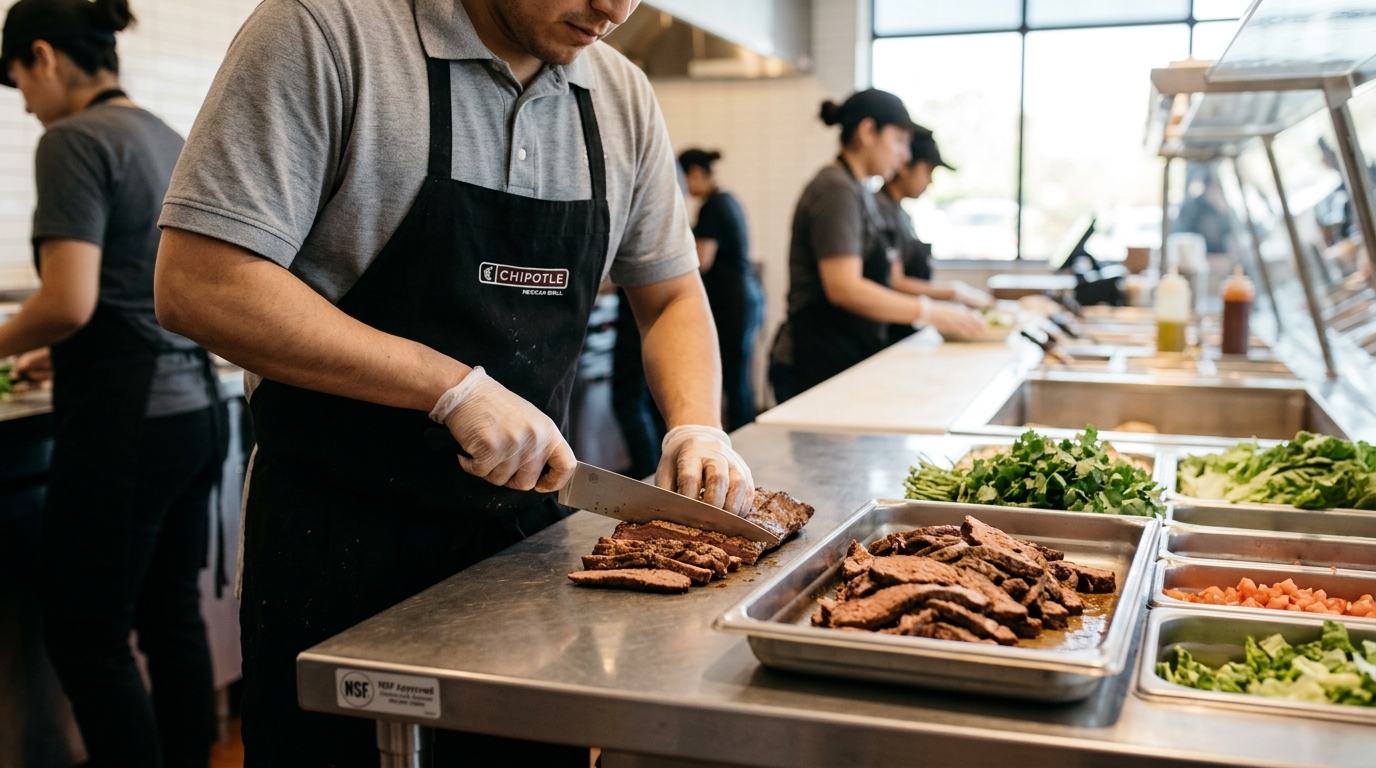
Food, beverage, and packaging costs in Q2 2026 hit 29.7% of total revenue, up from 28.9% a year earlier, driven primarily by inflation in beef and freight. Restaurant-level margin fell 220 basis points year-over-year to 25.2%, weighed down by higher labor, marketing, and other operating costs. Those are not small moves for a company whose premium valuation rests on expanding margins, not compressing them.
Management’s answer is measured: pass some of it on. CFO Adam Rymer told investors that margins in 2026 would be under pressure and that the company planned 1% to 2% menu price increases, which is modest relative to where the company pegged industry pricing. That increment is modest relative to the cost gap. For Q3, management projected inflation running near 3% against pricing in the mid-2% range, a combination that could keep pressing margins.
The confidence behind those price increases comes from a deliberate customer segmentation. CEO Scott Boatwright said internal research shows roughly 60% of Chipotle’s core customers earn more than $100,000 annually, a finding that has given executives confidence to lean into that group even as some lower-income diners pull back.
The comps tell a more cautious version of that story. Q2 comparable sales grew 2.2%, comprising a 1.2% increase in average check and a 1.0% gain in transactions. Management guided full-year comp sales growth to the low single-digit range, citing cautious consumer behavior and industry headwinds. Low single digits on a 33-times-earnings stock is a narrow margin for error.
The Real Question at This Valuation
Chipotle’s trailing price-to-earnings ratio stood near 34 in late August. Measured against that history, CMG looks compressed. But measured against the current growth rate, 33-to-34 times earnings still prices in a recovery that has not arrived yet.
The cyclospora episode will not appear in the full-year results as a lasting scar. Federal health officials described nearly 13,000 reported cyclospora cases tied to the multistate outbreak in 21 states, concentrated in a summer window that is now closed. What the episode did was delay an honest accounting of what CMG is worth when beef costs stay elevated and comp growth runs in the low single digits.
Long-term investors who believe Chipotle’s brand and unit economics are durable have a genuine argument. Rewards enrollment reached nearly 23 million active members, with daily sign-ups running nearly 20% higher since the April relaunch. The customer relationship is intact. The company’s innovation pipeline for the second half of 2026 includes additional limited-time protein options and more meaningful beverage innovation. These are real assets.
The wealth-building lesson here is not whether Chipotle is a good business. It clearly is. The question is the price you pay for patience. At current levels, CMG is not obviously cheap. Investors willing to own it through a beef-cost cycle at 33 times earnings are making a quality bet, not a bargain one. That is a legitimate strategy, but it requires knowing exactly what you are holding while you wait for margins to recover.