
Two weeks of anxiety about Nvidia’s order book ran into a $40 billion rebuttal on Saturday night.
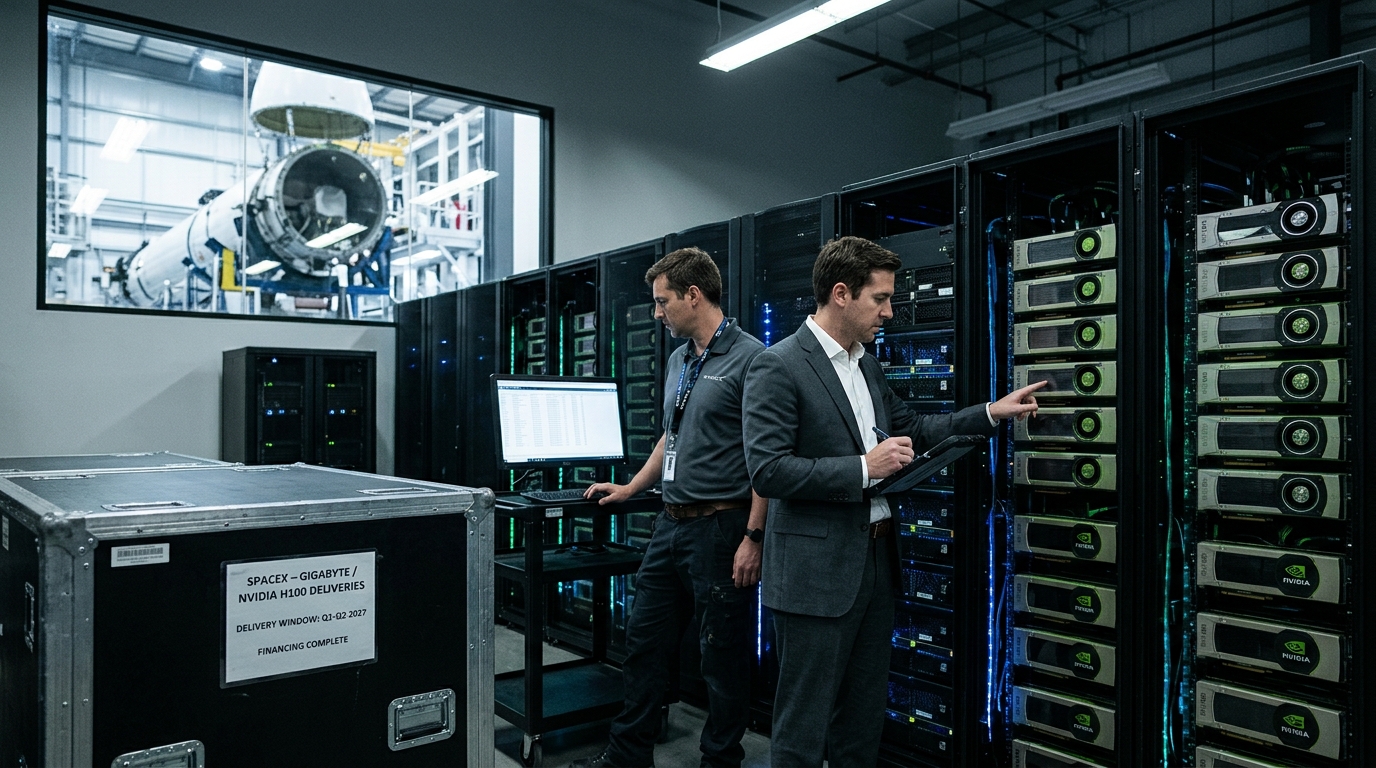
In a post on X on Sunday, Elon Musk said SpaceX had closed the financing, noting that the company is investment grade and generates revenue from its Starlink satellite internet and rocket launch businesses. In a follow-up post, he added that the financing, primarily consisting of callable debt for graphics processing units, is expected to arrive in the first and second quarters of 2027. That is precisely the delivery window that skeptics spent October questioning.
The deal had been complicated from the start. SpaceX was previously reported to be seeking $40 billion to purchase Nvidia chips, with market turmoil complicating financing talks. Earlier reports cited Apollo Global Management as the lead investor, with the money expected to come from around $10 billion in bank loans and $30 billion in investment-grade debt. Bloomberg reported Sunday that pricing talks were still ongoing even as Musk declared the deal closed, a nuance worth watching, but one that does not change the directional signal for Nvidia.
The Credit Divide That Defines This Moment
The more consequential part of Musk’s post was not the SpaceX headline. It was the warning that came with it. Musk wrote that debt markets have “almost entirely shut off access to money for any company that doesn’t have substantial revenue independent of AI data centers,” adding that the 200-plus neoclouds are “going to see guppy-level death and consolidation” with only a few surviving.
That language lands differently depending on which stock you hold. CoreWeave, which led the neocloud sell-off last week, bounced around, hit a 52-week low, and ultimately closed fractionally lower, while its bond yields remained in distressed territory. S&P Global Ratings rates CoreWeave ‘B+’, in sub-investment-grade territory. The Evercore ISI trading desk described the market as “basically saying ‘no mas’ to AI debt without operating cash flow support.”
SpaceX is the mirror image of that problem. Musk added that SpaceX’s investment-grade credit status, along with the revenue generated from Starlink satellite internet and launch services, has helped the company maintain its ability to secure credit financing. Lenders are not walking away from AI hardware demand. They are walking away from borrowers who have nothing to show lenders if the AI spending cycle slows.
Why This Lands as a Positive for Nvidia
The AI credit panic of the past two weeks rested on one implicit fear: that the companies buying Nvidia chips could no longer finance those purchases, which would hollow out the demand pipeline. SpaceX’s deal challenges that reading directly.
In fiscal 2026, Nvidia’s data center business generated $194 billion in revenue, representing a 68% year-over-year increase. The company expects roughly $108 billion in fiscal Q3 revenue. Capital spending by the top five hyperscalers is expected to rise from roughly $800 billion in 2026 to $1.3 trillion in 2027. The SpaceX deal adds a $40 billion commitment on top of that, confirmed for the same H1 2027 window that is most in question.
According to 62 analysts, the average rating for NVDA stock is “Strong Buy,” with a 12-month price target of $328.95, representing roughly 56% upside from the late-October price around $211. Those targets were set before Saturday’s announcement.
What Could Go Wrong
The risk is that the SpaceX deal proves the exception rather than the rule. Musk predicted that more than 200 neocloud companies would face widespread failures and consolidation, with only a small number surviving. If that shakeout is real and sharp, it concentrates chip buying among fewer, larger customers who carry far more negotiating leverage with Nvidia on price. A smaller pool of creditworthy buyers does not automatically mean the same volume of orders.
People familiar with the SpaceX discussions told Bloomberg News that talks over pricing were still ongoing as of Sunday, so the deal’s structure is not fully settled. And Musk himself noted the callable nature of the debt means the obligations can be unwound if conditions change.
Still, the framing that dominated October, that Nvidia’s forward order book was weakening, took a meaningful hit this weekend. The company most willing to commit $40 billion to its chips just did exactly that, with deliveries penciled in for the first half of 2027. For investors who spent two weeks watching the AI credit story darken, that is a harder fact to argue with than the anxiety that preceded it.