Gold and silver are in a powerful bull market – and one ultra-low-priced small-cap precious metals company has quietly built a unique way to capitalize on this historic uptrend.
The company is already generating record revenue from producing gold and silver mines.
It has attracted some of the biggest names in the resource arena.
And it just announced the largest transaction in its history.
Yet incredibly… shares remain largely undiscovered below $1.
That creates an intriguing opportunity to get in early and low as this fast-emerging company enters its biggest growth phase yet.
What makes this story especially compelling is the business model.
Unlike the typical mining firm, this company doesn’t have to build or operate a single mine.
Instead, it puts its capital to work in carefully selected mining projects in exchange for a share of the gold and silver produced:
✔ Exposure to multiple producing mines without operating them
✔ Exploration upside and mine-life growth funded by mine operators
✔ Diversification across multiple metals and jurisdictions
✔ Growing cash flow to be deployed into new royalties and streams
✔ Powerful leverage to rising gold and silver prices
In other words… put capital to work once… generate cash flow… reinvest that cash flow into the next opportunity… rinse and repeat.
That’s the power of the royalty and streaming model – and this soon-to-be-known sub – $1 company is reaching a critical inflection point as you read this.
And there’s another piece of this story you absolutely need to know.
Behind the company is a longstanding strategic relationship with a major mining-focused investment firm – giving it direct access to a steady pipeline of deals across the global mining landscape.
And we’re already seeing that secret weapon hard at work.
The company has just inked a new gold streaming deal on an established producing gold mine – by far the largest transaction in its history – signaling just how much bigger this story is becoming.
And the smart money is already paying attention.
One of the sector’s best-known financiers has put his own money behind the firm and believes it has a durable competitive advantage in the royalty and streaming space.
Better still, he joins the company’s CEO in our exclusive interview.
We’ve put together a FREE online report revealing the full story – including:
✔ The royalty and streaming advantage
✔ Producing assets already generating cash flow
✔ Largest transaction in company history
✔ The secret weapon driving the deal flow
✔ Our exclusive in-depth interview with the CEO and special guest
And with shares still below $1, the opportunity to get in early is right now.
Click here for instant access… and discover this fast-emerging gold-silver royalty firm before the rest of the market catches on.
Anthropic Needs One Upgrade to Change This Deal
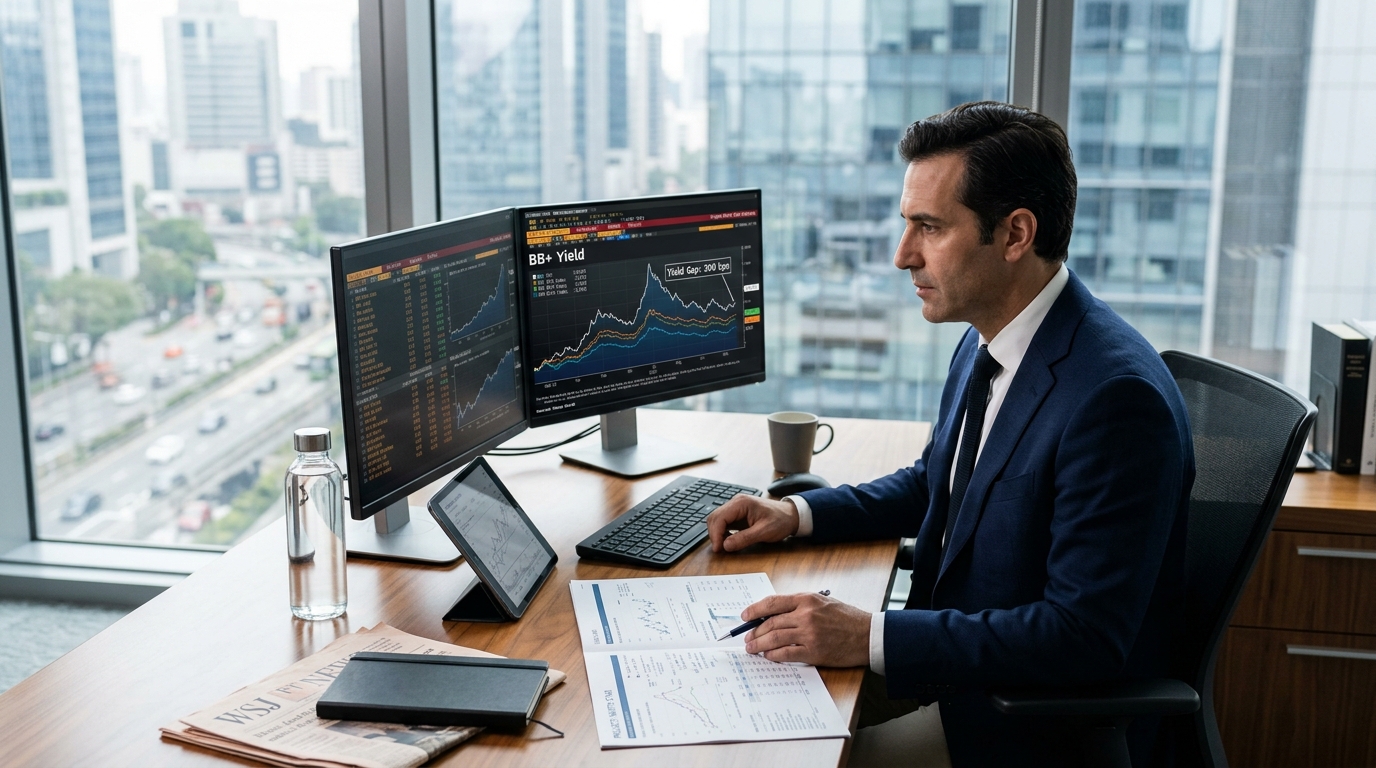
There is a number buried inside Project North Star that tells you everything about where Anthropic stands in the credit markets right now: 300 basis points. Similarly rated issuers on the ICE BofA BB High Yield Index were yielding about 7% in late September 2026. Anthropic is offering Blackstone above 10%. That gap is not a rounding error. It is the price of being one rating notch short of investment grade on one of the largest chip financing deals ever assembled.
The Deal Itself
Anthropic has offered Blackstone a coupon above 10% to anchor the junior tier of a $60 billion debt package arranged by Broadcom. Blackstone-managed funds would commit $9 billion of their own capital, half of an $18 billion Class B junior tranche, and syndicate the rest. A $42 billion Class A senior-secured tranche is led by banks.
The money underwrites Anthropic’s five-year lease for Google tensor processing units. The $42 billion loan covers roughly one-third of the $125.2 billion Anthropic has committed under that lease, with about 3.5 gigawatts of Google-TPU capacity expected to come online starting in 2027. Internally the package is called Project North Star, and it would be among the largest chip financing arrangements to date.
The TPU lease at the heart of this structure has its own internal tensions at Google. Google’s own researchers have been competing for TPU access even as large capacity blocks are locked into external deals like Anthropic’s.
The Rating Problem
KBRA assigned Anthropic an issuer rating of BB+ in June 2026, one notch below investment grade, based on limited financial information from the company. That rating is the ceiling of junk territory, and it is doing real damage to Anthropic’s cost of capital. Compare the two tranches inside Anthropic’s earlier $35 billion Apollo deal: about $4.5 billion of junior debt directly exposed to Anthropic’s credit risk sold at roughly 8.5% yield, while senior debt, supported by Broadcom’s residual-value guarantee, carried about 5.75%. Now, four months later, the junior tranche of North Star is being offered at 10%-plus. The direction of travel is not favorable.
The rating itself is built on thin disclosure. KBRA used a risk score rather than full financial models because Anthropic supplied Q1 2026 revenue, adjusted operating income and an annualised run-rate, plus an internal Q2 forecast, but not free cash flow or EBITDA, so analysts estimated those. For a borrower raising tens of billions, that is a slim disclosure file.
Why Investment Grade Is the Real Trade
An investment-grade rating can lower borrowing costs and allow a company to raise funds from a wider set of institutional investors, including life insurers and pension funds. In recent reporting, bankers backing Anthropic and rival OpenAI have sought to persuade the major credit rating firms to grant investment-grade ratings once the two companies list.
That distinction matters because it is the dividing line between junk and the debt that pension funds, insurers, and other large institutional buyers can hold without restriction. At 10%-plus on junior paper, Anthropic is not just paying for compute. It is paying for the absence of that buyer base.
The transaction highlights the challenge for the five-year-old company as it works toward an investment-grade rating. The structure extends an AI XPV partnership that Broadcom, Apollo, and Blackstone struck in June, which launched with a $35 billion tranche and has the stated aim of financing more than 20 gigawatts of AI compute deployments through 2028. If that pipeline stays priced at junk spreads, the cost compounds fast.
What Traders Watch
- BX: Blackstone anchoring $9 billion at 10%-plus is a signal, not just an allocation. Monitor whether the remaining $9 billion of the junior tranche syndicates at the same level or wider.
- AVGO: Broadcom’s credit support on the senior tranche keeps that paper closer to investment grade regardless of Anthropic’s issuer rating. That guarantee is a structural advantage worth watching as deal volume grows.
- GOOGL: The TPU lease underpinning the whole structure ties Google directly to Anthropic’s financing health. A stumble in syndication would surface here first.
- APO: Apollo led the prior $35 billion round. Whether it participates in North Star’s syndication reveals how private credit is sizing Anthropic’s credit risk at current yields.
The Cheat Sheet
Top Theme: Compute financing is now a credit-market product, and Anthropic’s rating path will determine whether it becomes a moat or a ceiling on AI expansion.
Stock to Watch: BX. Blackstone is effectively setting the price discovery for AI lease debt at scale. If the tranche syndicates cleanly, that tells you institutional demand is real at 10%.
Biggest Risk: Syndication fails or prices wider, confirming that the 10% handle is the floor, not the ceiling, for junior AI debt.
One Thing to Remember: One rating notch separates Anthropic from a capital pool that could cut its borrowing costs by hundreds of basis points. Every deal it closes at junk spreads raises the stakes of that upgrade.