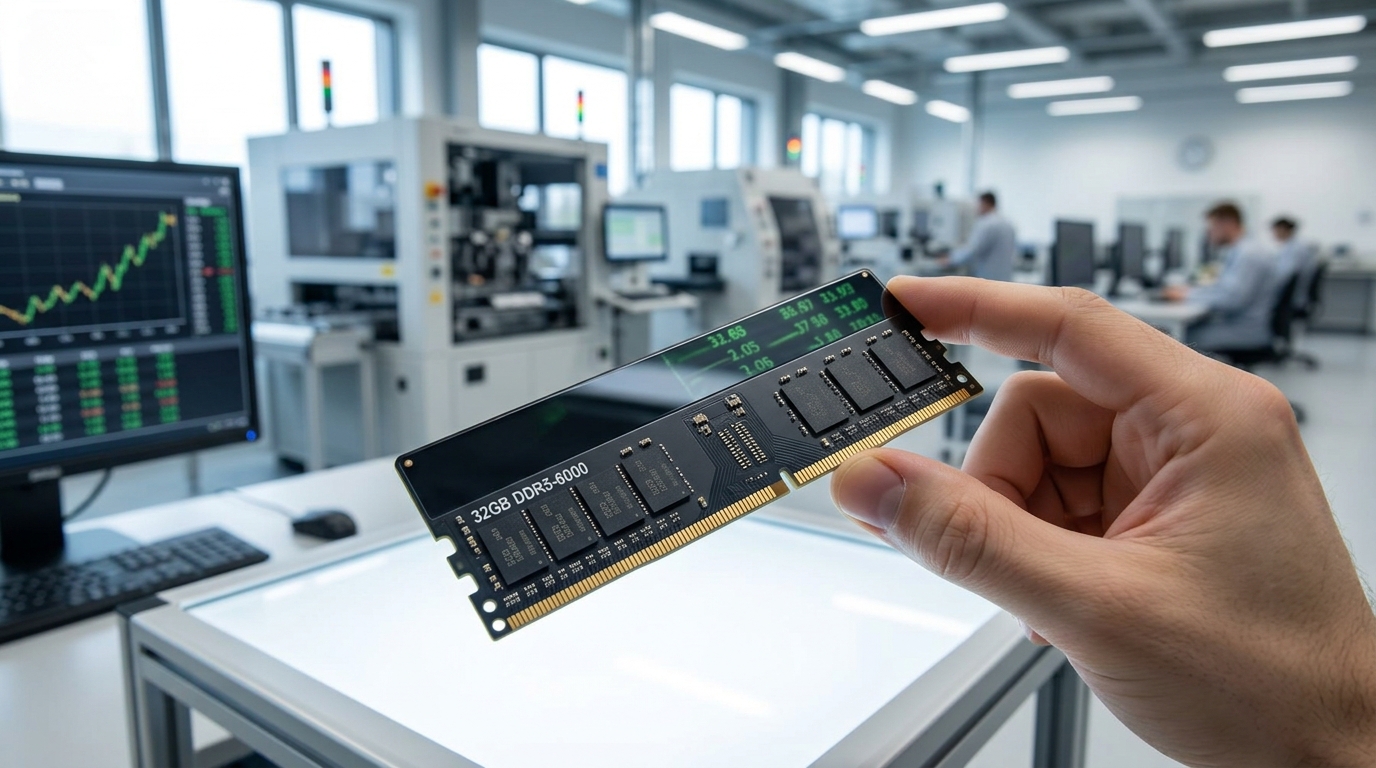
Here is a number worth sitting with: a 32GB DDR5-6000 memory kit that sold for roughly $90 in the summer of 2025 now costs about $450, according to Tom’s Hardware, which tracked the figure on October 14, 2026. That is not a supply chain disruption. That is a margin cycle, and the companies collecting those margins are SK Hynix and Samsung Electronics.
The retail price is only half the picture. Reports in niche supply-chain newsletters have flagged sharp week-to-week moves in HBM4 contract pricing as GPU and accelerator vendors scramble for supply. AMD CEO Lisa Su visited South Korea in 2026 and met successively with the heads of Samsung Electronics and SK hynix’s semiconductor divisions, underscoring how memory, not logic chips, has become the tightest link in the AI supply chain. When a customer’s CEO is flying to your headquarters twice in one year, you are not in a commodity business anymore.
The Mechanism Behind the Squeeze
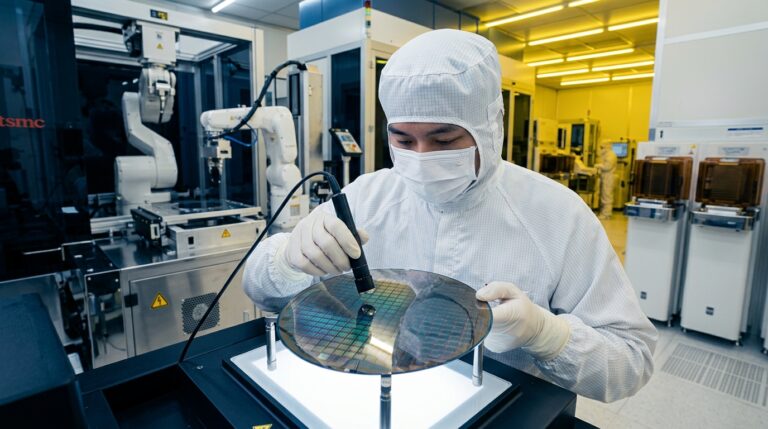
The explanation that keeps surfacing across industry coverage is capacity allocation, not a sudden drop in total manufacturing output. Memory makers are not running fewer wafers through their fabs; they are running a larger share of those wafers toward high-bandwidth memory destined for AI accelerators instead of toward conventional DDR5 modules destined for desktops and laptops. Digitimes’ October 16, 2026 coverage described both companies racing to expand HBM-related technology, with supply-chain sources suggesting memory prices will likely stay elevated into 2027 because of ongoing manufacturing constraints.
HBM4 is now commonly modeled at roughly $550 per stack for a 36GB 12-high configuration, compared with HBM3E in the mid-$300 range. Some analyst reporting, summarizing a TrendForce forecast, has pointed to 2027 HBM pricing that implies about $1,300 per 36GB stack, roughly a 121% year-over-year move. That trajectory is not a forecast, it is a multi-year supply agreement being locked in right now.
What the Margin Numbers Actually Say
SK Hynix reported record Q2 2026 revenue of KRW 79.3187 trillion, up 256.8% year-on-year, with operating profit reaching an all-time high operating margin of 76%. Micron, the U.S. pure-play, reported fiscal 2026 revenue of $133.188 billion against $37.378 billion the prior year, with gross margin around 81%.
Memory, once called the quintessential cyclical industry, is now generating profit margins like a software company. That sentence used to be hyperbole. The filings say otherwise.
The Costs Landing Everywhere Else
Someone always pays the other side of a margin cycle. HPE CEO Antonio Neri told investors in March 2026 that DRAM and NAND now make up more than half the bill of materials cost of a traditional server, and he said elevated memory prices are expected to persist well into 2027.
Bull Case, Bear Case
The bull case for SK Hynix and Samsung is simply that the supply constraint is structural. IDC has argued that memory demand is shifting toward AI infrastructure and that memory is no longer behaving like a cyclical commodity. SK Hynix has said HBM4 yields and quality are close to mature-stage HBM3E levels, and it has targeted HBM4E mass production for 2027, compressing the upgrade cycle and extending the pricing window.
The bear case is Samsung. Samsung has been working to close the gap in HBM4, and reporting and industry trackers indicate Samsung has achieved qualification for Nvidia’s Vera Rubin platform. If Samsung ramps HBM4 aggressively through the second half of 2026, SK Hynix’s market share could slide, which would introduce real pricing competition for the first time in this cycle. Any investor holding SK Hynix on a pure pricing-power argument needs Samsung’s ramp to stay slow.
What to Watch
Three metrics matter most from here: Samsung’s HBM4 yield disclosures in Q3 earnings, any shift in Nvidia’s Vera Rubin allocation between the two Korean suppliers, and whether consumer DDR5 retail prices hold above $400 through November. Many analysts are still pointing to constrained supply until new fab capacity ramps in 2027, which means the next twelve months belong to whoever controls HBM4 output. Right now, that is SK Hynix, with Samsung closing the gap.
A 32GB kit at $450 is a consumer headline. The 76% operating margin sitting behind it is the investment story.